Price:
The new Bajaj Pulsar 150 has been launched, and it’s a major update over the previous one. Prices of all the variants are: Rs 1,15,233 for the SD Single Seat, Rs 1,22,184 for the TD Single Seat, and Rs 1,23,187 for the TD Split Seat. All prices are ex-showroom Delhi.
Design:
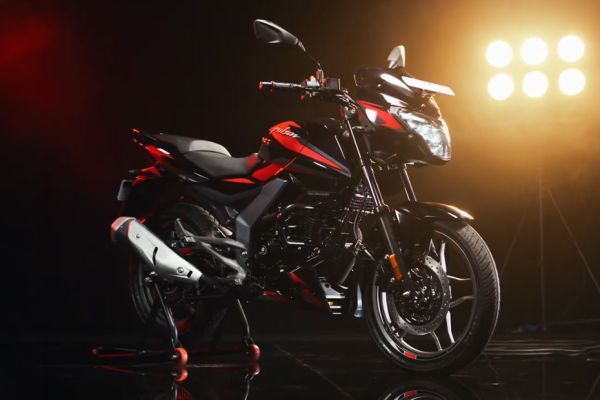
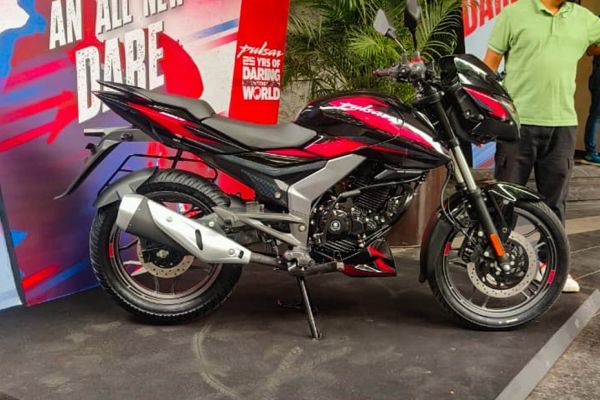
The latest-gen Pulsar 150 comes with an all-new LED headlight design with integrated DRLs (the Wolf-eyed lamps are even meaner-looking LEDs now). The graphics look sportier, and the tank extensions have been revised too. It is available in single- and split-seat variants. The front number plate mounting looks gaudy in our opinion as it juts out from the otherwise clean-looking flyscreen.
Features:
This bike gets the new 5-inch TFT console with Call/SMS alerts, full-fledged Google Maps navigation, and document storage, but only on the top variant. The lower variant, however, gets a colour LCD console, but with turn-by-turn navigation.
The bike gets 3 ride modes: Sport, Road, and Rain. On top of that, it gets Crawl Tech, which allows you to ride at low speeds in bumper-to-bumper traffic without stalling, just by clutch modulation. There’s also a silent starter motor for noiseless starts. Unfortunately, the TFT display and ISG feature are limited to the top two variants only; the base variant gets a coloured LCD console with Bluetooth connectivity and turn-by-turn navigation and no silent starter. Having said that, all variants get a kick start lever.
It also gets a Type-C charging port underneath the display on the left side for convenience, and a hazard light switch for safety. The top two variants get a belly pan and hazard lights, while the double horn is standard across the range. Also, the base variant has bulb indicators, whereas the higher-end variants have LEDs.
Engine:
The engine is a completely new 149.5cc air-oil cooled unit, mated to a 5-speed gearbox. The power and torque figures are: 14 PS at 8000 rpm and 14.1 Nm at 6500 rpm. Comparatively, the older engine made the same 14 PS of power at 8500 rpm and a slightly lower 13.25Nm of torque at 6500 rpm.
Suspension, Brakes & Other Details:
The new diamond type frame, which replaces the previous double cradle structure and significantly reduces weight, is a substantial improvement to the chassis. Additionally, the bike now has a monoshock in the back rather than the two shock absorbers found on the last generation. However, the bike will continue to get a telescopic fork (but a new 33mm unit), and the same 17-inch alloy wheels as the current outgoing model (80-section front and 100-section rear).
A 260 mm front disc is common across all variants. The Single Disc variant gets a 130 mm rear drum brake, whereas the Twin Disc variants use a 230mm rear disc brake. Single-channel ABS is common across all. The ground clearance has gone up from 165 mm on the last-gen to 186 mm on this latest model.
The newer version is significantly lighter at just 141 kg (kerb) than the last-gen model which weighed 148 kg to 150 kg (kerb), depending upon the variant. The seat height is also very accessible at 795 mm. Lighter kerb weight did not come at a cost of tank capacity which remains unchanged at 15 litres.
Rivals:
The new Bajaj Pulsar 150 competes with the Yamaha FZ-S FI, the TVS Apache RTR 160 2V, the Honda Unicorn, the Hero Xtreme 160R 2V, and the Honda SP160.