Bajaj Pulsar 250F - September 2021 Update | Here’s What The Spy...
- Sep 13, 2021
- Views : 15037



 Follow us

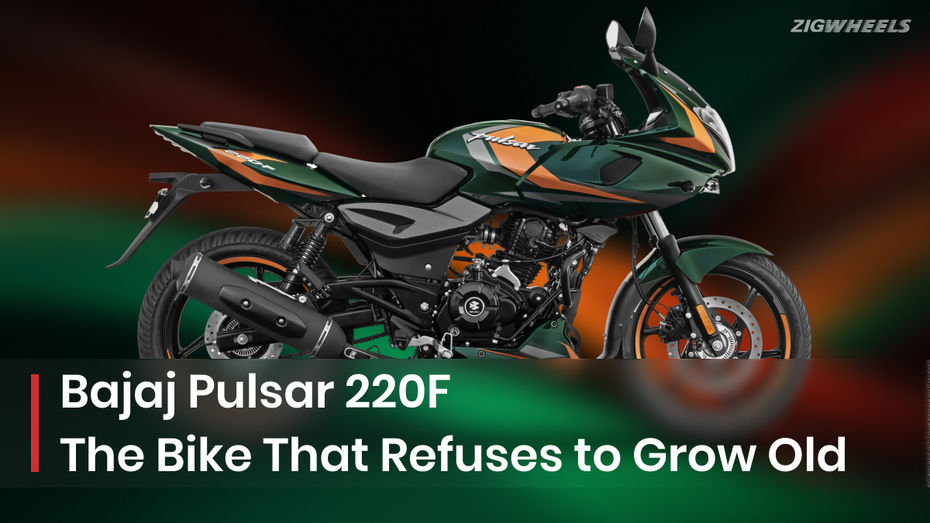
When Bajaj first brought the Pulsar 220F to market in 2007, it was a direct shot at the Hero Honda Karizma. The Hero was India’s first “faired” (although only a bikini) performance bike that debuted 4 years before the Pulsar, in 2003 at around Rs ~70,000. Then came Yamaha with the R15 in 2008, but the Bajaj Pulsar 220F has stood the test of time.
The original Karizma laid the groundwork with its torquey 223cc single from Honda, and relaxed sport-touring ergonomics, quickly becoming a benchmark after its 2003 debut. It was renamed the Karizma R in 2007, gaining a plastic engine cowl, and the price increased to about ~Rs 80,000.
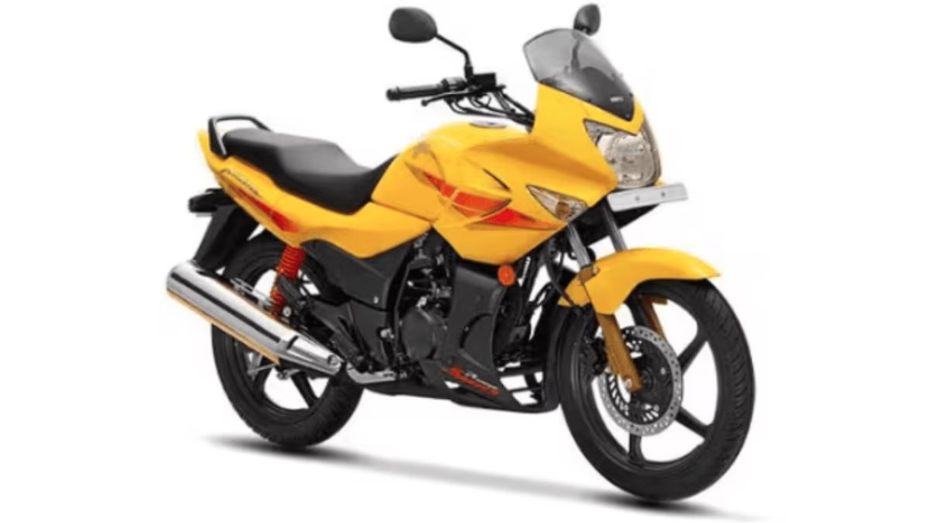
Then came the Karizma ZMR which arrived at around Rs ~90,000 in 2009 with a full fairing, refreshed styling, and fuel injection. The original ZMR was a decent seller and helped keep the brand relevant, but it never matched the popularity of the original Karizma or the Karizma R.
Things went downhill in 2014 when Hero, fresh off acquiring a major stake (49.2%) in Erik Buell Racing – gave the Karizma R and ZMR a radical EBR 1190RS-inspired redesign. The sharp, unconventional styling proved polarising, sales dropped sharply, and the bike never recovered. The ZMR lingered on until it was finally discontinued in 2020 when BS6 norms kicked in.
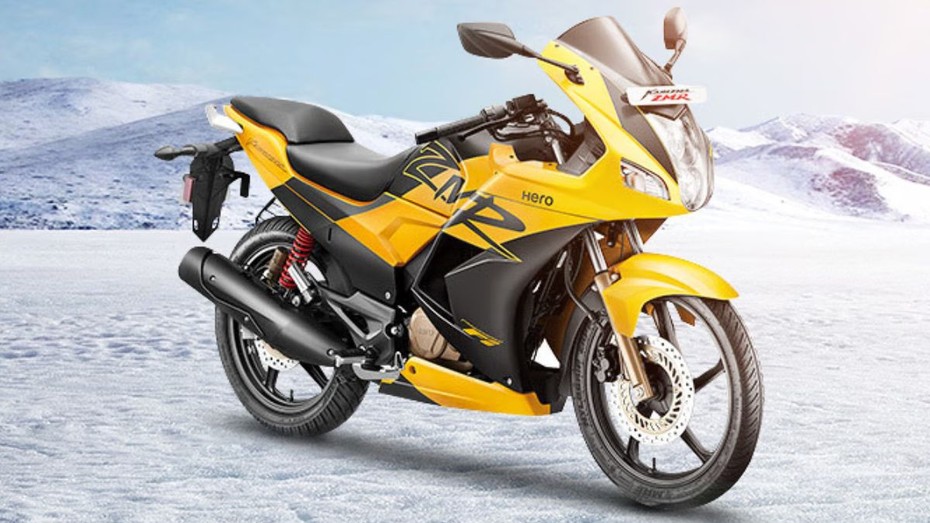
The nameplate was eventually resurrected in 2023 as the Hero Karizma XMR (priced from Rs 1.73 lakh) – taking a page out of Yamaha’s book – proper supersport inspired styling, and a liquid-cooled engine with a 6-speed gearbox. While the design is all sportbike, the ergonomics are a hark back to the OG Karizma – all sport-tourer. This is a proper modern reincarnation loaded with features like a TFT console, connected tech, and everything else to keep up with the times.
Yamaha entered the scene with the R15 in 2008, priced at Rs 97,000 (ex-showroom), introducing Indian riders to a completely different philosophy. It was a proper full-faired sportbike with a liquid-cooled engine, lightweight chassis, and committed riding ergonomics. The R15 V2 came in 2011 at Rs 1.07 lakh. It got sharper styling and improved dynamics, further strengthening the R15’s reputation as the handling benchmark.
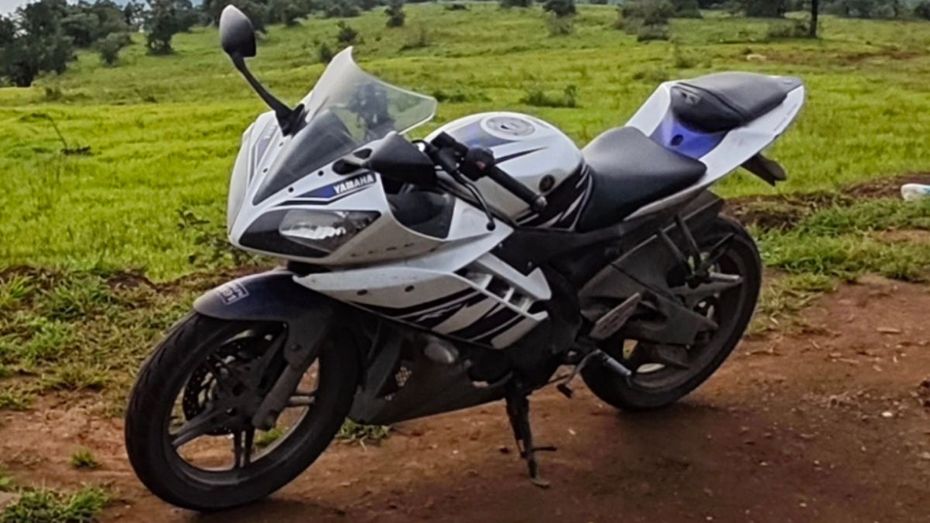
The Yamaha R15 V3, unveiled at the 2018 Auto Expo at Rs 1.25 lakh. It brought along Variable Valve Actuation (VVA) – Yamaha’s version of VTEC kicked in, yo! It took things further by increasing engine capacity from 149cc to 155cc, adding LED lights, an assist-and-slipper clutch, much more aggressive supersport styling.
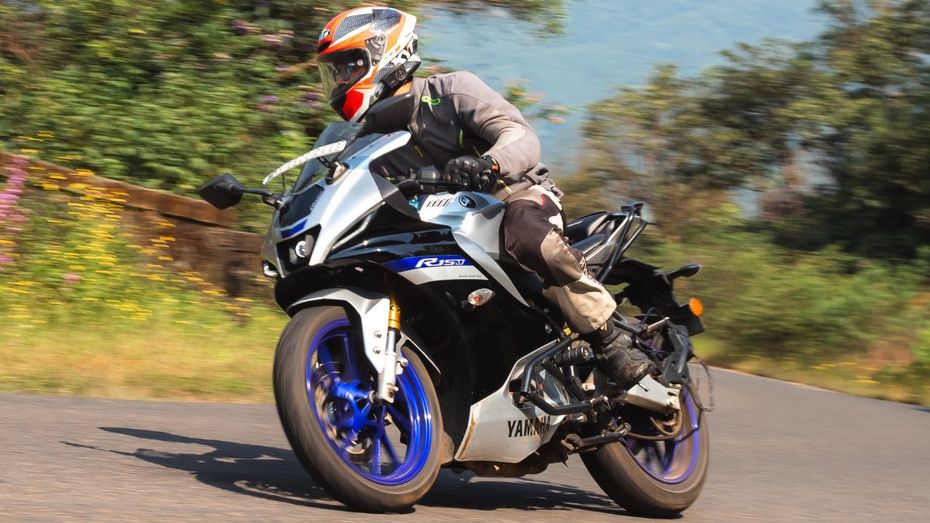
The current Yamaha R15 V4, launched in 2021 at Rs 1.68 lakh, upped the ante yet again with traction control, an upshift quickshifter, an upside-down fork and sharper aerodynamics (from a distance, you could even mistake it for the Yamaha R7) – firmly placing it at the cutting edge of the entry-level supersport segment.
In contrast to these evolutions, the Bajaj Pulsar bike continues with its 220cc air/oil-cooled single with strong mid-range punch, semi-fairing, relaxed ergonomics and everyday usability. It has remained more or less the same over time, even as emissions and safety norms forced minor tweaks. Bajaj tried replacing the 220F with the Bajaj Pulsar F250, but it was a sales flop and had to be discontinued within 3 years.
The Bajaj bike’s identity is so strong that it had to be brought back from the dead due to persistent demand, especially in smaller towns. It came back with updated emissions compliance, new colours, and feature updates like an LCD console, Bluetooth connectivity, LED indicators, and ABS (although only single-channel).
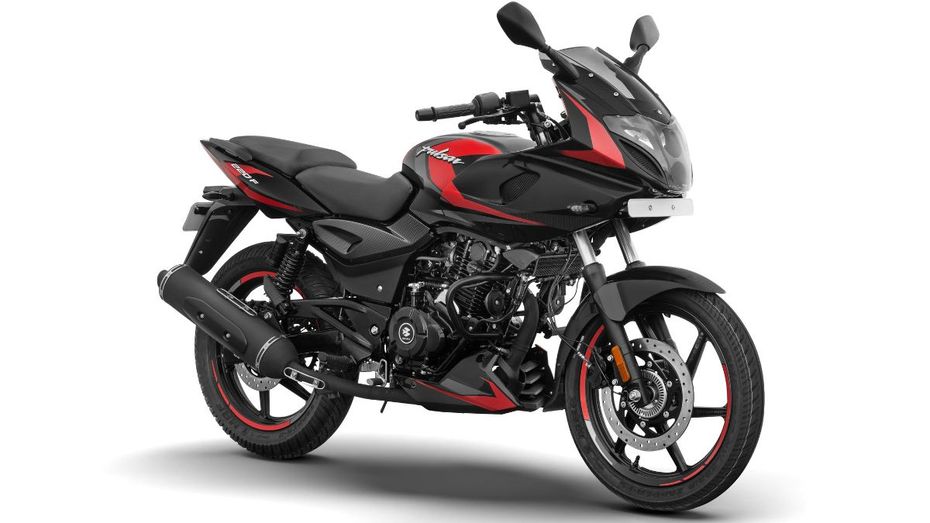
Today, where the R15 V4 represents Yamaha’s high-tech, aggressively developed sportbike DNA and the Karizma XMR channels a reinvigorated sport-touring legacy with modern features and performance to match, the Pulsar 220F stands as the rugged everyman’s classic that never quite needed reinvention. Its continued strong sales nearly two decades after launch show that sometimes staying true to what made riders fall in love with a bike in the first place matters just as much as chasing the latest tech.


Bajaj Pulsar 250F - September 2021 Update | Here’s What The Spy...
2025 Bajaj Pulsar 220F Launched: Top 5 Key Highlights
Bajaj Pulsar F250, CT125X and Platina 110 ABS Discontinued
2024 Bajaj Pulsar 220F: Same Price Other Options
Updated 2024 Bajaj Pulsar 220F Launched With New Graphics And A Fully...
Iconic Indian Bikes That Made A Comeback: Bajaj Pulsar 220F, LML Star...
Bajaj Bids Adieu To Pulsar 220F
No, The Pulsar 220F Will Not Be Discontinued...
Bajaj Pulsars Get More Expensive
Bajaj Pulsar NS200
Bajaj Pulsar N250
Royal Enfield Hunter 350
Royal Enfield Classic 350
India's largest automotive community
Bajaj Pulsar N160 S
Bajaj Pulsar NS200
Bajaj Pulsar 150
Bajaj Pulsar 125
Bajaj Pulsar NS160
 Bajaj Chetak
Rs. 1.19 Lakh
Bajaj Chetak
Rs. 1.19 Lakh
 Bajaj Chetak C2501
Rs. 1.05 Lakh
Kia Sorento
Rs. 25.00 Lakh
BMW i7 Facelift
Rs. 2.10 Crore
BMW 7 Series Facelift
Rs. 1.80 Crore
Skoda Superb 2026
Rs. 50.00 Lakh
Skoda Slavia Facelift
Rs. 11.99 Lakh
Bajaj Chetak C2501
Rs. 1.05 Lakh
Kia Sorento
Rs. 25.00 Lakh
BMW i7 Facelift
Rs. 2.10 Crore
BMW 7 Series Facelift
Rs. 1.80 Crore
Skoda Superb 2026
Rs. 50.00 Lakh
Skoda Slavia Facelift
Rs. 11.99 Lakh