New Bajaj Pulsar 125: First Look Review
- Aug 16, 2026
- Views : 13719



 Follow us

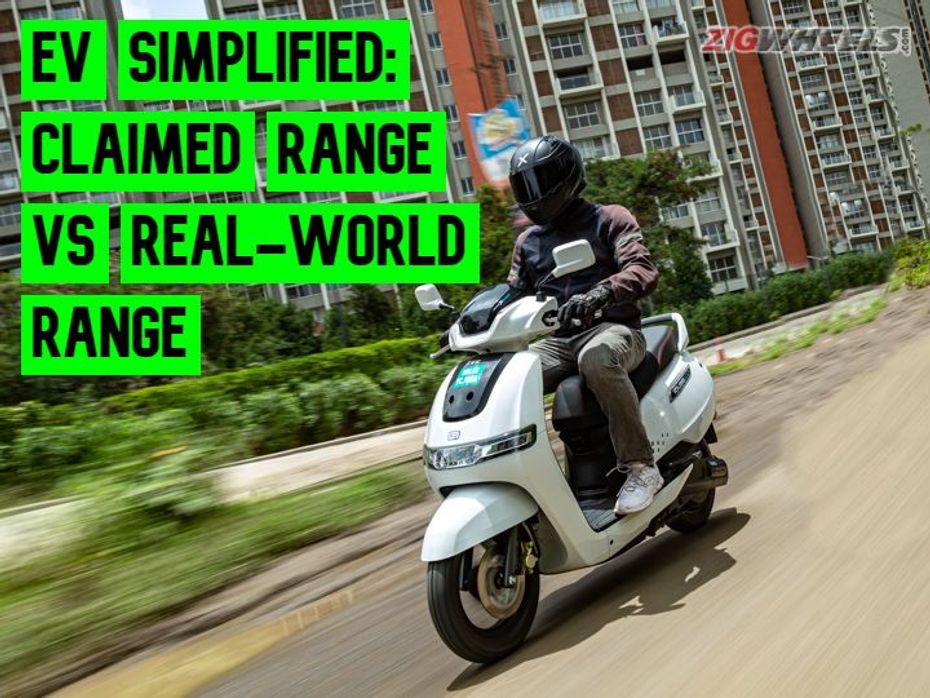
Keeping the preposterous numbers that some EV manufacturers claim their vehicles can achieve aside, we often come across tweets and forums where customers complain of getting lesser range than what is claimed. There’s a good reason why that isn’t the manufacturer’s fault and more down to the way the vehicles receive their necessary homologation certification.
Yes, one of the main reasons why the claimed range is so high is because when two-wheeler manufacturers send their products to authorised testing centres, like ARAI or ICAT, the range testing done is pretty standardised and primarily done within the confines of a laboratory. Multiple real-world factors like temperature, load on vehicle, throttle input and riding style aren’t taken into account. Additionally, it is done at a standard speed and hence the certified range figure is usually high.
When you do buy an EV, range is affected by the terrain you ride on, gradient you encounter on your commute, the heft that the vehicle has to deal with and other natural factors. These affect battery operation. Like in too cold or too hot zones of the country, battery performance will not be optimal. Similarly, if you are living in a hilly region and have to spend your day climbing several twisties, range is bound to be affected.
The biggest reason, though, remains your right hand. Yes, the way you accelerate, how long you keep the throttle pinned, and, if you are riding something that has ride modes, your selected riding mode alters the range dramatically.
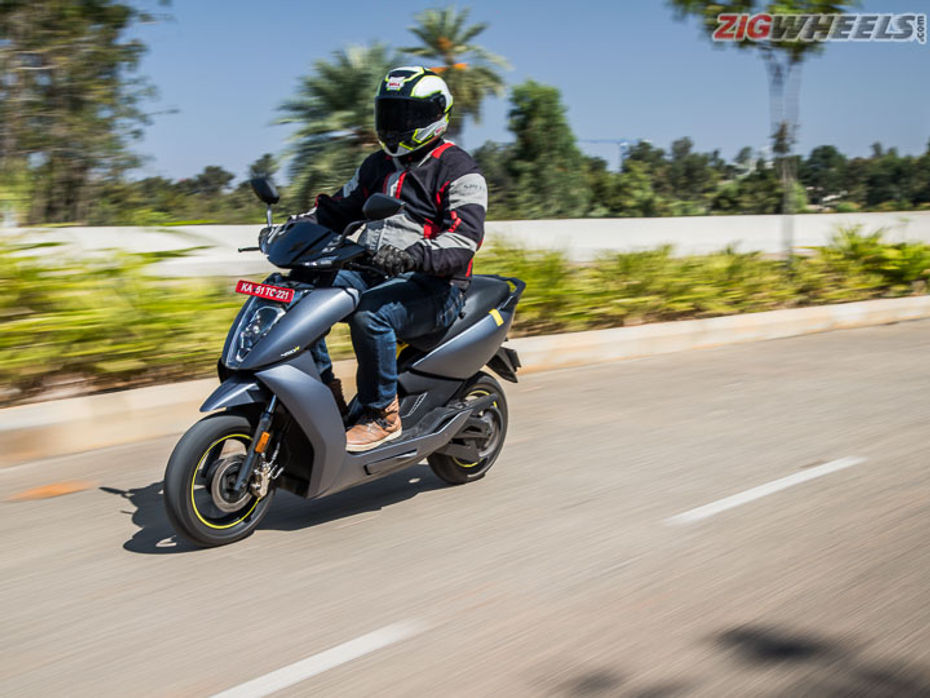
Take the Ather 450X for instance. The certified range of the scooter is 116km. However, Ather also provides a ‘TrueRange’ figure (its lingo for real-world range) of 85km in Eco mode. This figure then drops to 70km in Normal, 60km in Sport and for Warp, the website simply states: “Why Care?” which to be honest, is quite accurate for the last mode.
Hence, when we get an EV, we put it through a decent course around our HQ that takes every sort of road, traffic condition and a bit of gradient into account. We test the product in the mode that we feel is manageable for commuting. For instance, on the Ather 450X, if the Eco mode felt insufficient to handle daily duties, which it isn’t, we would’ve tested it in Normal mode. Similar was the case when we tested the TVS iQube Electric.
Compared to the TrueRange quoted by Ather, we were able to ride the scooter for 91.4km in Eco mode. To achieve that our tester rode ultra smoothly and with a lot of patience. On the other hand, when the more spirited riders of our team rode the scooter (aka yours truly and a few others), we managed to deplete half the battery capacity in Sport mode in just 21km.
So ultimately, the key to great range lies in your right hand. Use it wisely.


New Bajaj Pulsar 125: First Look Review
5 Things We Know About The Upcoming Ather Konarc Electric Scooter
Next-Gen Bajaj Pulsar 125 TFT Variant Spotted: New Details Revealed...
TVS Hikes Two-Wheeler Prices Up to Rs 10,400; Ntorq 125 Cuts Up to Rs...
Ather Konarc Spy Shots Reveal Key Details Ahead Of Launch
BREAKING: Yamaha R2 Launched In India: KTM RC 200 Rival Is Finally...
Ather's Electric Motorcycle Delayed Beyond 2028: Brand To Focus...
Royal Enfield Himalayan 750 Showcased In Brazil
BREAKING: Bajaj Pulsar 150 To Get A TFT Console & More: OG Pulsar...
India's largest automotive community
Yamaha YZF-R2
₹ 2.31 Lakh
Honda Rebel 300
₹ 2.60 Lakh
Honda ADV 160
₹ 1.60 Lakh
Bajaj Pulsar 150
₹ 1.15 Lakh
Bajaj Pulsar 125
₹ 92,990
 BREAKING: Jawa 42 FJ Gets New Shades For 2026
 Bajaj Pulsar 150 Evolution Over The Years
 TVS iQube Gets A New Special Edition To Celebrate 1 Million Sales Figure
 BREAKING: Honda ADV 160 & Rebel 300 Launched In India
BREAKING: 2026 Bajaj Pulsar 125 Launched In India: New Engine, Chassis And 5-Inch TFT
BREAKING: Honda ADV 160 & Rebel 300 Launched In India
BREAKING: 2026 Bajaj Pulsar 125 Launched In India: New Engine, Chassis And 5-Inch TFT