
2026 Renault Duster Drive Review: Tough SUV Now More Modern
- Mar 25, 2026
- Views : 6917



 Follow us

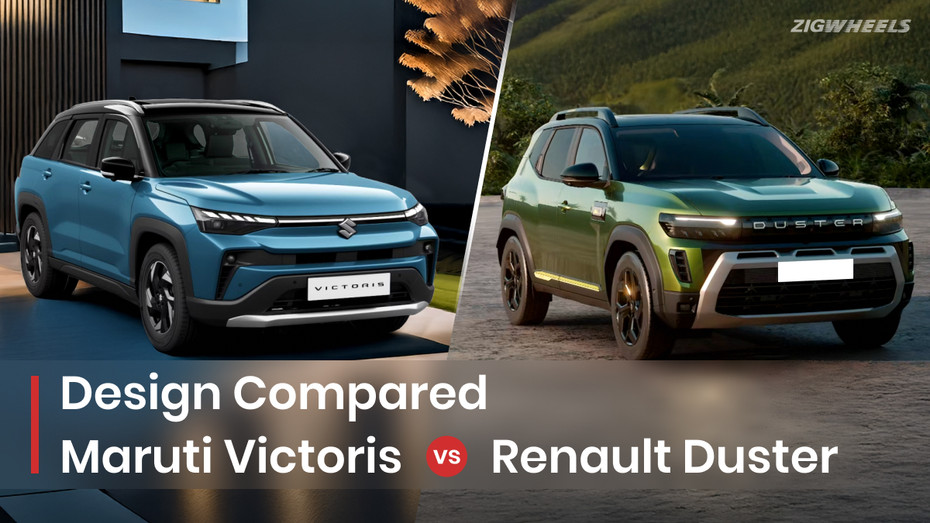
The new-generation Renault Duster arrived amidst much fanfare, capturing the fancy of old and new buyers alike. The butch looks, muscular lines, and pronounced wheel arches all scream rugged on the new Duster. The soul was retained with the new generation model, just the kind of familiarity you need when you need to take on the fierce competition.
The compact SUV segment is loaded with options, and not too long ago, the Maruti Suzuki Victoris also entered the market as part of the automaker’s two-pronged strategy. The Victoris arrives as the more family-friendly, urban SUV, which has found a lot of takers over the last few months. Will the new Duster’s arrival spoil the Victoris’ party, or are they two completely different SUVs for different buyers?
While we await the launch of the 2026 Duster in the market, let’s compare the new Renault Duster with the Maruti Suzuki Victoris to see which SUV wins the style battle.
Both the new Renault Duster and Maruti Suzuki Victoris are segmented as compact SUVs. Visually, both models look identical in terms of size, but compare the spec sheet, and it’s a different story. Here’s a look at the dimensions for both models:
|
Parameter |
2026 Renault Duster |
Maruti Suzuki Victoris |
|
Length |
4346 mm |
4360 (+14 mm) |
|
Width |
1815 mm (+20 mm) |
1795 |
|
Height |
1703 mm (+48 mm) |
1655 |
|
Wheelbase |
2657 mm (+57 mm) |
2600 |
|
Boot Space |
518 litres (+79 litres) |
320 litres (CNG) |
The Victoris has the clear advantage in terms of length. Its silhouette also ensures the longer stance is apparent, especially with the longer rear overhang. In comparison, the Duster appears shorter, stubbier and more beefed up. But the spec sheet tells a different story when it comes to overall proportions. While the Victoris is longer, it’s the Duster that’s actually 20 mm wider and 48 mm taller. What’s even more shocking is that the Duster gets the longer wheelbase, which is a substantial 57 mm more than that of the Victoris.
This is evident in the boot capacity of both models. The Duster gets a larger boot at 518 litres, which can be expanded to over 700 litres with the rear parcel tray removed. In comparison, the mild-hybrid version of the Victoris gets a smaller 439-litre boot capacity. This reduces even further on the CNG version at 320 litres. Maruti has not disclosed the boot capacity on the strong-hybrid version, but expect it to be less than the mild-hybrid model. The Duster may be shorter in length, but it wins on other parameters very well.
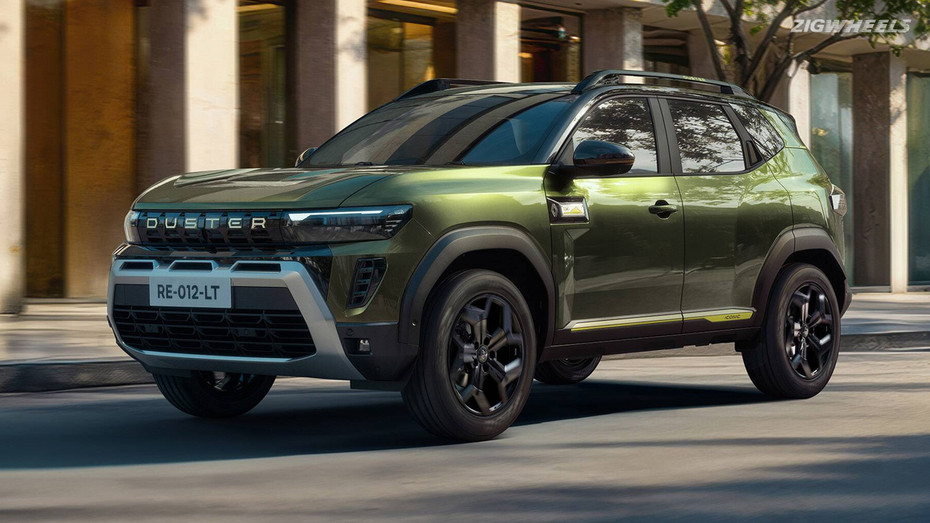
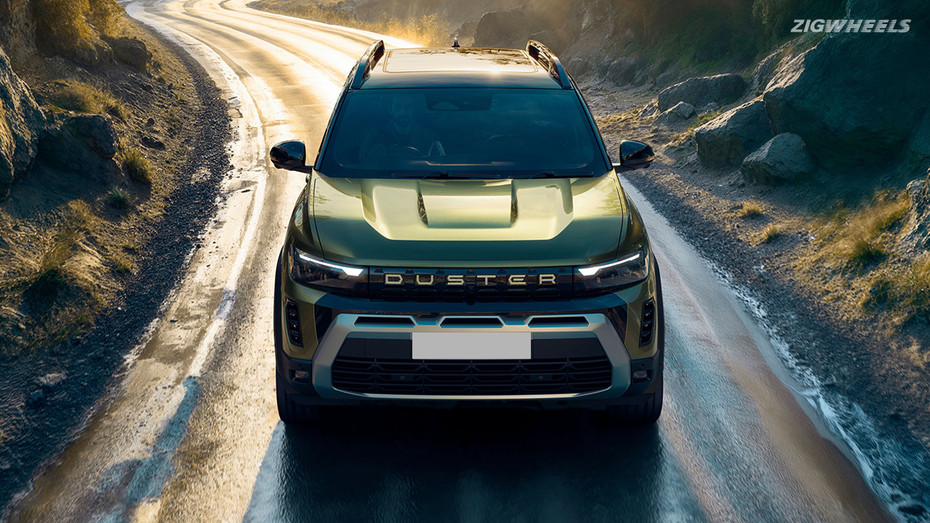
The new Renault Duster is undoubtedly the more brawny SUV here. It’s recognisable as a Duster even in this completely new avatar, and the massive branding up front certainly helps. Renault understands that the Duster is a bigger brand than the automaker itself in India, and this was a smart move by the company. The butch styling is accentuated by the skid plate on the front bumper. The large air intake is surrounded by the silver-finished skid plate, while there are air vents on either side at the edges. Adding to the upright stance is the bonnet with the muscular lines, which assert dominance. Renault has opted for a single headlamp unit as opposed to the split setup, like some of its rivals, and this adds an old-school charm to the SUV. The slim LED DRLs also lend a simple yet rugged vibe without the design feeling excessively flashy in any way.
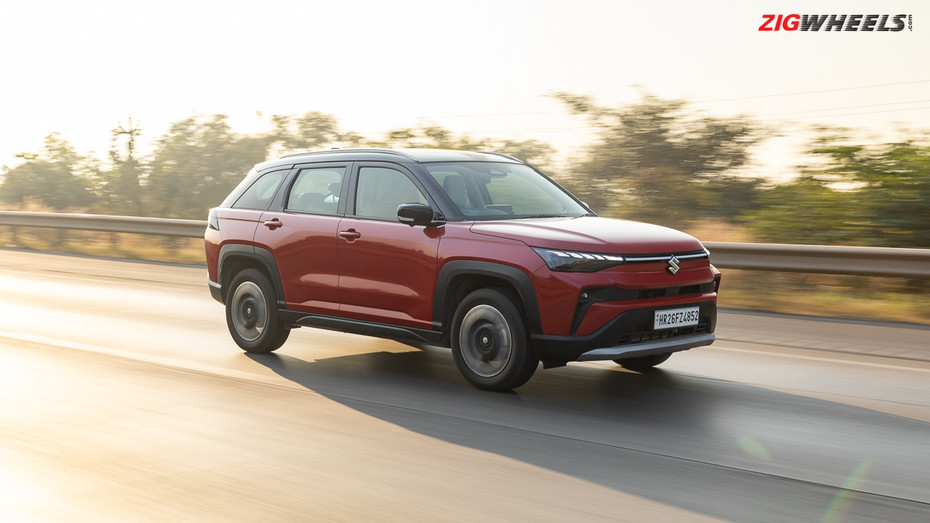
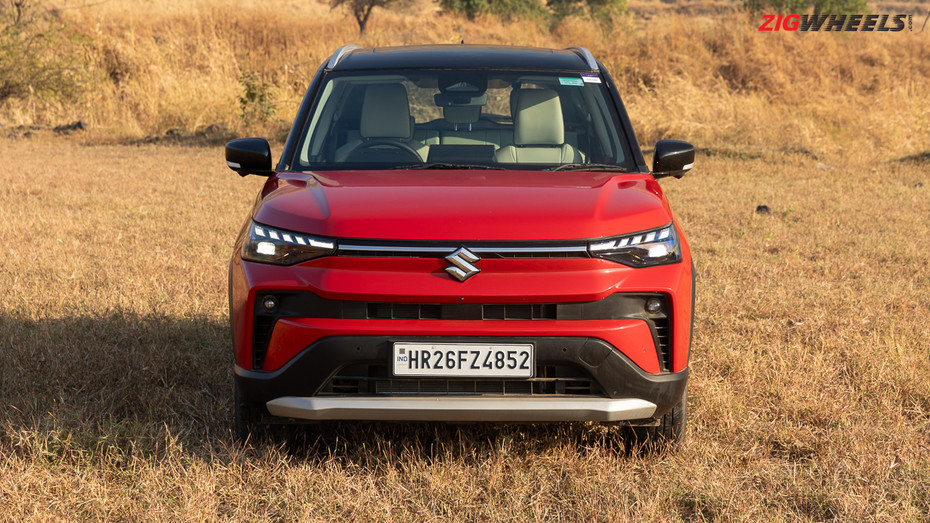
In contrast, the Maruti Suzuki Victoris is more laid back with its lines. The front is still upright, but the overall styling is much softer. The slim grille graces the front, flanked by LED DRLs on either side. There is minimal cladding on the bumper with vertical cutouts accommodating the fog lamps. The bonnet also gets softer lines, and the raked A-pillar lends a more estate-like feel to the Victoris than a proper SUV. Both are distinctive styling choices, but it’s safe to say that Maruti chooses to play it safe with the Victoris, while the Duster will grab more attention on the road.
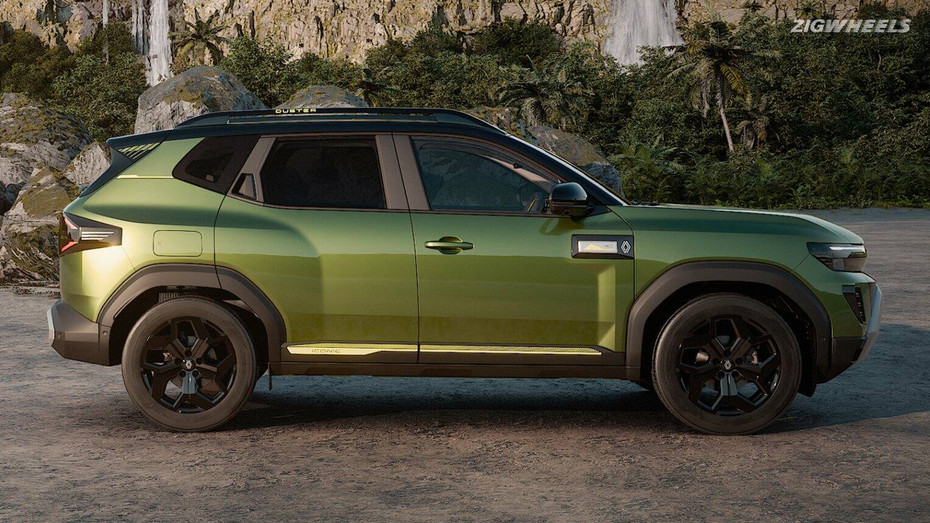
The side profile on the Duster brings it closer to the original version. The strong shoulder line makes for a muscular stance. The shoulder line sweeps up at the C-pillar, a bold design choice that partially compromises on the quarter-glass but gives the SUV so much character. This is further accentuated by the angular and pronounced wheel arches, while the 18-inch alloy wheels are a good fit in the wheel well.
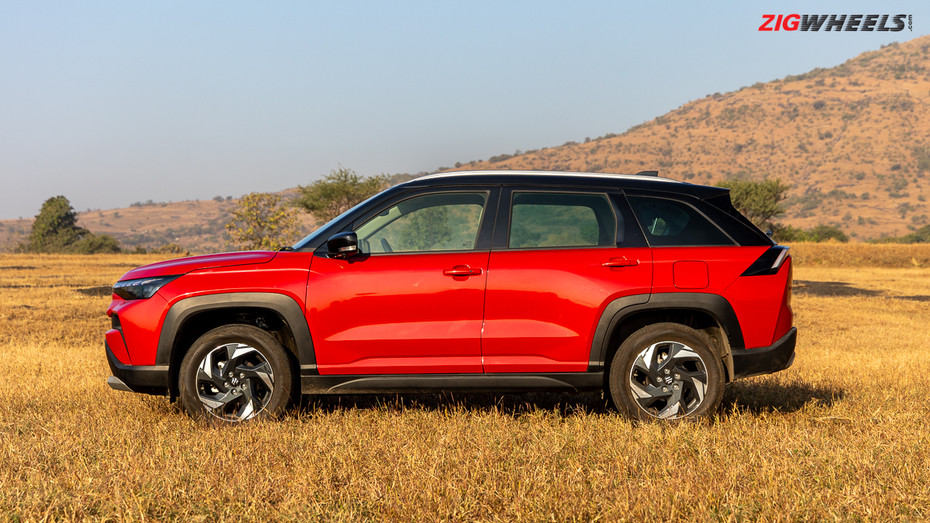
The Maruti Suzuki Victoris shows off its length more evidently from the side. The wheel arches are more squared-off, while the shoulder line is more assertive, running flat from one end to the other. The Victoris may not have the strong character lines as the Duster, but it knows what the passengers want. The glass area is bigger, including the rear quarter-glass. The roofline stretches further to the rear, aiming to maximise space for the occupants. The Victoris may not exude obvious style, but the design prioritises function, giving it more brownie points.
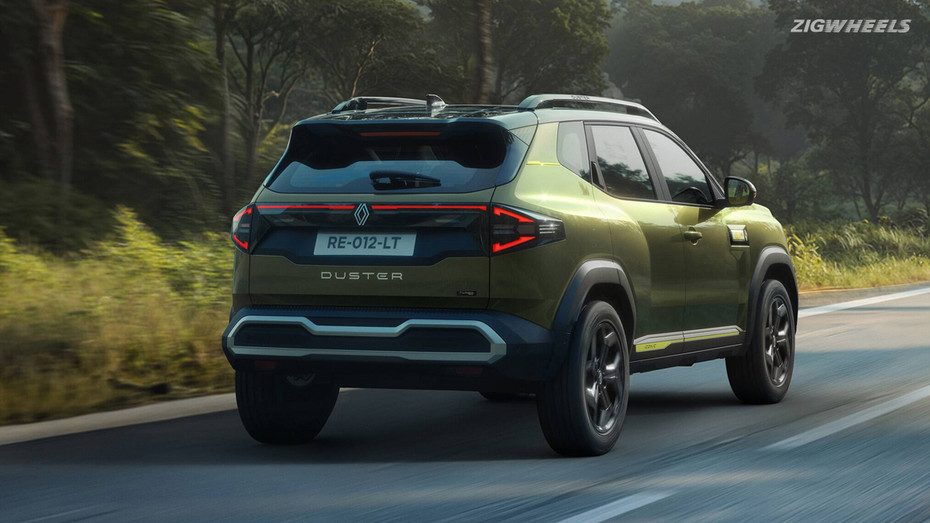
At the rear, the new Duster follows a sharp theme without overdoing the styling. You get connected taillights, but they’ve been done really well, and flatter the width of the car. The black cladding on the tailgate adds some drama but does not feel cheap or like an aftermarket fitment. The piano black detailing in the lights adds to the sporty feel, keeping the distractions to a minimum. Much like the front, you get silver finished cladding on the bumper, while the overall black body cladding ensures the rugged feel is retained. Another notable point is the short overhangs at the front and rear of the Duster, which help sell the SUV stance and help it achieve some aggressive approach and departure angles
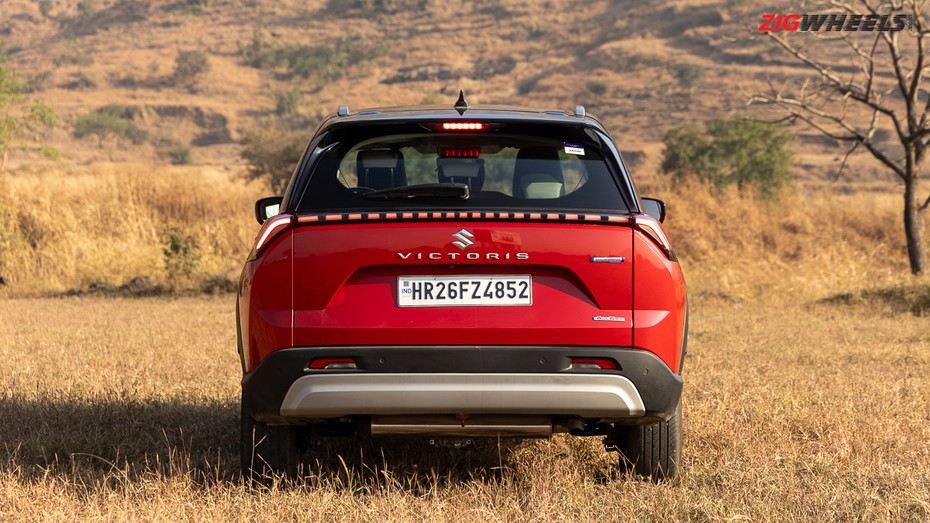
The rear profile of the Maruti Victoris is as efficient as the front. Cleaner lines on the tailgate and a brushed silver finish on the bumper bring a more upmarket feel. The connected taillights add a premium look, and while they do add some drama to its styling, it remains a polarising design element that will certainly divide opinions. Rounding off the styling is the large ‘Victoris’ lettering in the centre, stacked between the taillights and the number plate recess. There are fewer elements on the Victoris to grab your attention, unlike the Duster. Is it better-looking? Not quite. But it won’t offend anyone, and that’s largely the point.
Both the Renault Duster and Maruti Suzuki Victoris are as different as chalk and cheese. The Duster is more young, brash, and has a stronger personality. The Victoris feels more sober, nuanced, and easy on the eye. On the face of it, the Duster seems like the obvious winner; a more assertive styling does the job in making it an attention magnet. But Victoris is more of a silent soldier. It meets the requirements of a larger customer base, and while it may not be the most stylish SUV in this comparison, it certainly has a more universal appeal. That’s a rare quality to find in the flashy and extravagant designs of today.
Which of these SUVs do you think looks better? Let us know in the comments below!


2026 Renault Duster Drive Review: Tough SUV Now More Modern
Renault Duster 1-litre Turbo Petrol Driven: A Surprise All-Rounder
Renault Duster Continues To Impress Us; This Time With A 5-Star...
Renault’s “futREady” Plan For India: New Sub-4m SUV...
Planning To Buy The New Renault Duster? Check Out Its Pros And Cons...
2026 Renault Duster Short Review: What We Liked & What Needs To...
2026 Renault Duster Variants Explained: How Well Equipped Is Each...
2026 Renault Duster Makes A Comeback At Rs 10.49 Lakh; Iconic SUV...
All You Need To Know About The New 2026 Renault Duster Ahead Of Its...
Nissan Tekton
Hyundai Creta
Tata Sierra
Honda Elevate
Tata Harrier
India's largest automotive community
Renault KWID
Renault Triber
Renault Kiger
Maruti Suzuki Brezza
Tata Nexon
Tata Punch
Tata Sierra
Mahindra Thar
Kia Sorento
Rs. 25.00 Lakh
BMW i7 Facelift
Rs. 2.10 Crore
BMW 7 Series Facelift
Rs. 1.80 Crore
Skoda Superb 2026
Rs. 50.00 Lakh
Skoda Slavia Facelift
Rs. 11.99 Lakh
 MG Hector Tomahawk PHEV With 1100 Km Range LAUNCHED At Rs 25.69 Lakh
 MG Hector Tomahawk EV Launched At Rs 19.49 Lakh! With Claimed Range of 517 Kms
 2026 Audi Q3 Unveiled In India Finally! Looks Truly A Generation Ahead!
 Volkswagen To Bring A Sportier Kylaq With Sporty Sub-4-Metre SUV
BMW Unveils The i5 LWB For The First Time In India
Volkswagen To Bring A Sportier Kylaq With Sporty Sub-4-Metre SUV
BMW Unveils The i5 LWB For The First Time In India