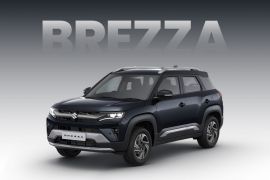

2026 Maruti Brezza Review: New Engine, More Features
- Aug 2, 2026
- Views : 11425


 Follow us


Yes, in part: a Bharat NCAP safety rating does not set your car insurance premium using a fixed formula, but it does feed into how insurers judge risk for own-damage cover. Your third-party car insurance stays fixed by engine size, while a well-rated car can earn a better own-damage rate.
A high safety rating can lower your own-damage car insurance because a safer car is seen as a lower risk. A 4- or 5-star Bharat NCAP car is built to better protect people, so it tends to result in fewer and smaller injury claims. Insurers reward that lower risk with better own-damage pricing.
For example, suppose two similar cars, one rated 5-star and one 2-star. The safer car may attract a slightly lower own-damage rate, all else being equal, because it is expected to cost the insurer less.
No, third-party car insurance is not based on safety ratings; it is fixed by your engine size. The regulator sets one rate for each engine band, the same for a 5-star and a 1-star car. So a safety rating changes nothing on the third-party part of your policy.
A basic third party insurance plan costs the same, whatever the crash-test result. The rating only matters for the own-damage cover you add on top.
A few factors determine your car insurance premium, and the safety rating is only one of them. The main ones are your car's insured value, its model, your city, your no-claim bonus, and any add-ons. The safety rating feeds into the risk view but does not override it.
Because of this, a top-rated car is not automatically the lowest-cost to insure. Its price, repair cost and location all pull on the premium too.
Safety features cut car insurance claims by preventing crashes and reducing injuries. airbags, anti-lock brakes, and stability control mean fewer serious accidents, which means fewer and smaller claims over time. That better claim record is what can earn a lower premium.
The catch is the repair cost. Cars packed with sensors and cameras are dear to fix, so a single knock can cost more, offsetting some of the savings.
No, not always: a top rating can trim your car insurance premium, but other things can push it back up. A safer car has fewer injury claims, yet it may also carry a higher insured value and expensive parts. The final premium is a balance of all these.
At renewal, a clean claim record usually matters more than the star rating. Keep your no-claim bonus, and compare quotes when you go for your next car insurance renewal to get the best rate for your car.
They can lower the own-damage part, since a safer car is seen as lower risk. They do not change the third-party premium, which is fixed by engine size. The rating is one input among your car's value, model, city and no-claim bonus.
No. Third-party premium is set by the regulator based on engine size, the same for every car in that band. A 5-star and a 1-star car of the same engine pay the same third-party rate. Only own-damage cover reflects the rating.
Because a high rating often comes with a higher insured value and costly parts. Fewer injury claims can lower the premium, but expensive repairs can raise it. The net effect depends on the exact car and its cover.
Yes. Air bags, anti-lock brakes and stability control prevent crashes and lessen injuries, so claims are fewer and smaller. That improved record can earn a better own-damage rate over time, though pricey sensors can add to repair costs.
Your no-claim bonus and a clean claim record usually matter most, along with the car's value and your city. A good safety rating helps on own-damage cover, but keeping a claim-free history is the surest way to a lower premium.
A high safety rating can lower own-damage cover, as a safer car is lower risk.
Third-party premium is fixed by engine size, not by the rating.
Value, model, city and no-claim bonus all shape the premium too.
A safe car is not always the lowest cost, since pricey parts can raise repair costs.


2026 Maruti Brezza Review: New Engine, More Features
5 Things We Love About the 2026 Maruti Brezza Facelift
2026 Maruti Brezza Short Review: All You Really Need
Maruti Brezza Prices Start At Just Rs 7.40 Lakh: Find Out Full...
2026 Maruti Brezza LAUNCHED! Updated SUV With Design Tweaks,...
Maruti Brezza Facelift Scores 5-Stars in BNCAP: Is This The Safest...
After Many Leaks, Maruti Brezza Facelift Is Set To Launch Tomorrow:...
2026 Maruti Brezza LEAKED Ahead Of Launch, Turbo-petrol BoosterJet...
2026 Maruti Brezza Teased! Comprehensive Update With Styling &...
Maruti Suzuki FRONX
Maruti Suzuki Victoris
Maruti Suzuki Grand Vitara
Hyundai Creta
Tata Nexon
India's largest automotive community
Maruti Suzuki FRONX
Maruti Suzuki Swift
Maruti Suzuki Baleno
Maruti Suzuki e Vitara
Maruti Suzuki Ertiga
Tata Sierra
Mahindra Thar OG
Hyundai Bayon
Tata Punch
Maruti Suzuki Brezza
Mercedes-Benz GLC Electric
Rs. 80.00 Lakh
Mahindra Thar E
Rs. 25.00 Lakh
JSW Chery iCar V23
Rs. 20.00 Lakh
JSW Jaecoo J5 EV
Rs. 20.00 Lakh
 Renault Duster Hybrid Short Review: What’s Good & What Isn’t
 Hyundai Bayon Explored In Detail With 17 Images: Is It Good Value For Money?
 Hyundai Bayon Launched At Rs 10 Lakh! A Cup Of Vanilla Ice Cream, Yet With Choco Chips And Sprinkles
 Jeep Announces Pickup Truck For India: Is The Gladiator Coming Soon?
2026 Mercedes-AMG GT Electric SUV Unveiled: Powerful Performance Now In An Electrifying Package!