
Hyundai Bayon Launched At Rs 10 Lakh! A Cup Of Vanilla Ice Cream, Yet...
- Oct 26, 2026
- Views : 1875


 Follow us

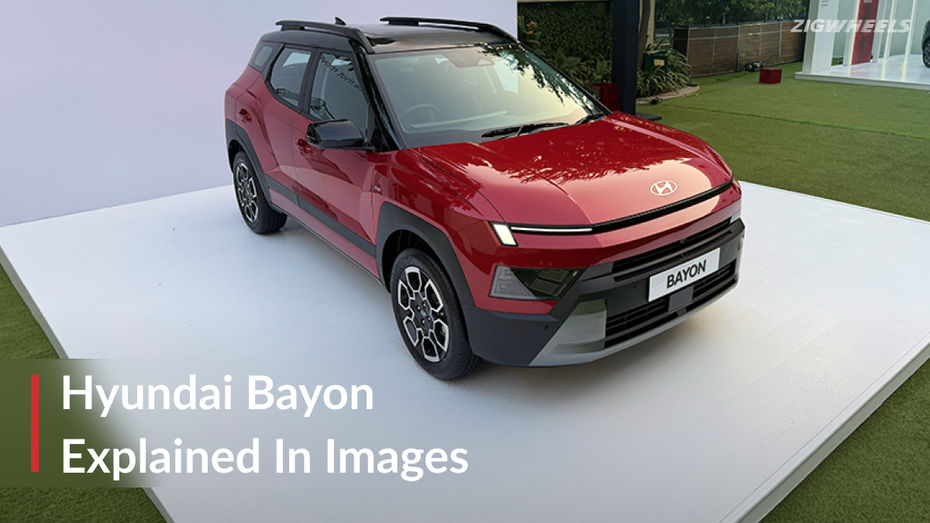
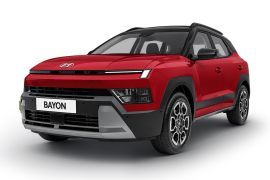
Hyundai has introduced another challenger into the fierce compact SUV segment: the Bayon, with prices starting at Rs 10 lakh (ex-showroom). The Bayon is an interesting product from Hyundai that is strategically positioned between the Venue and the Creta. Hence, to keep the prices in check, the Bayon packs some premium features yet plays it safe to keep the prices in check.
But how premium is the car, and is there a catch with weird feature misses? We inspect in detail with 17 images:
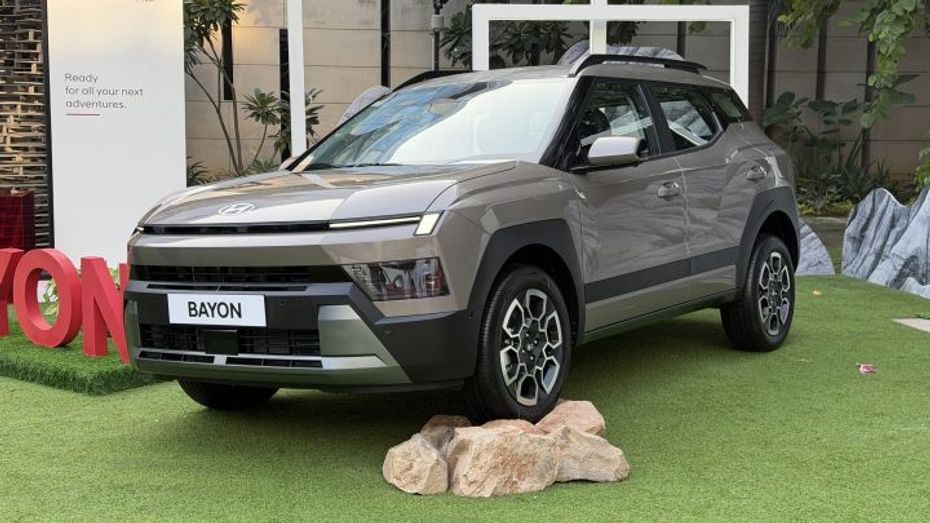
Up front, the Bayon follows the bandwagon of split headlamp designs. This means the L-shaped LED DRLs, which also double up as indicators, sit on top of the fascia, and the LED projector headlamps sit on the upper half of the bumper.
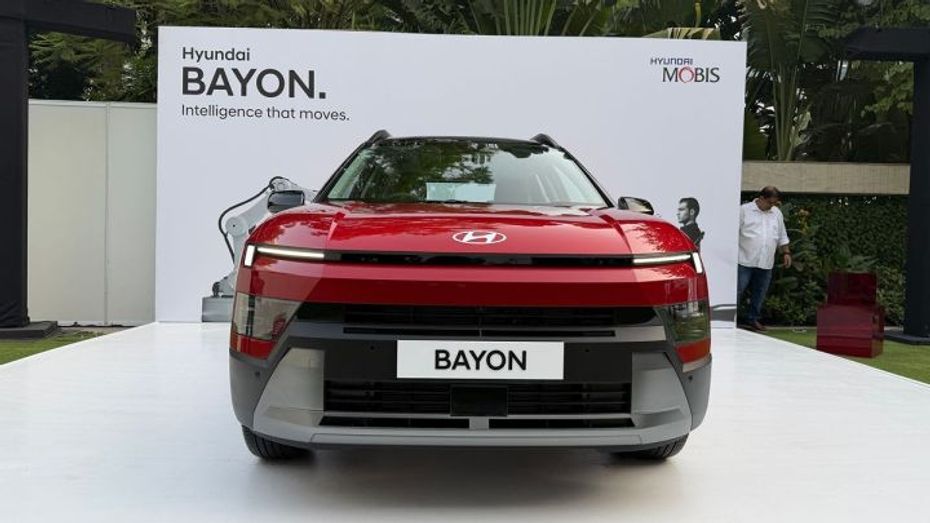
The overall design theme of the Bayon is sharp and muscular. And it shows with the chunky faux gunmetal grey coloured skid plate that gives the Bayon a rugged look.
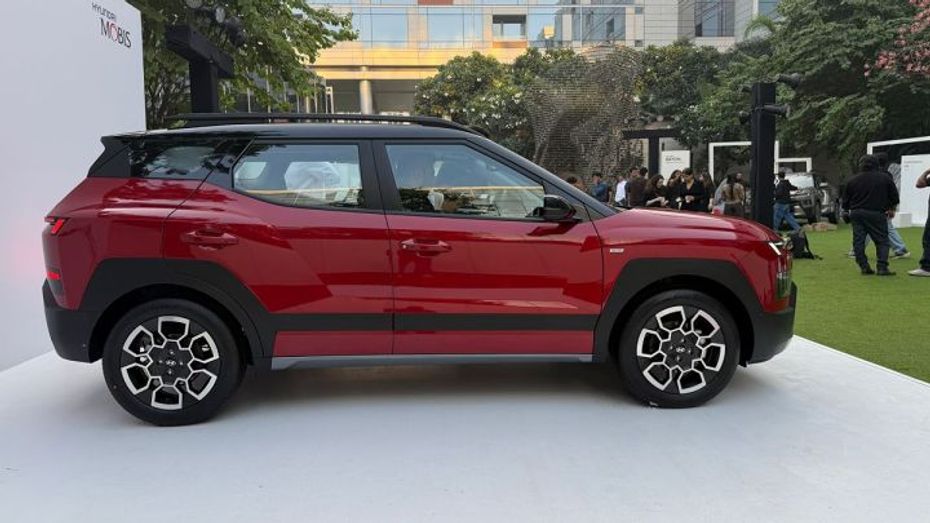
Over to the side, you notice the unmistakable crossover shape and the design touches that give the Bayon a premium vibe. Elements like the 17-inch dual-tone alloy wheels, chunky roof rails and the new outside rear-view mirrors give the Bayon a premium touch typical of a Hyundai.
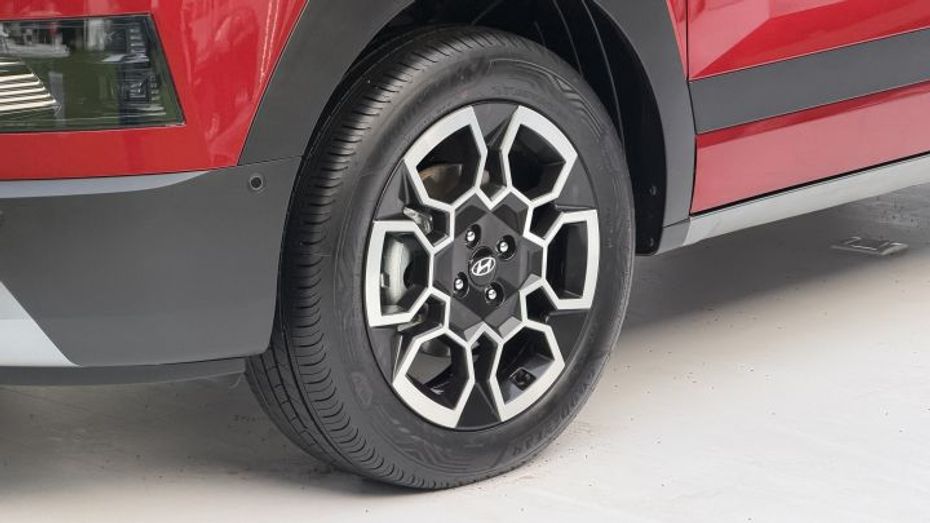
Notice the gunmetal coloured trim under the doors continues the theme from the front skid plate.
Overall, the side profile is handsomely designed, also thanks to the square-shaped wheel arch cladding that goes well with the edgy design theme.
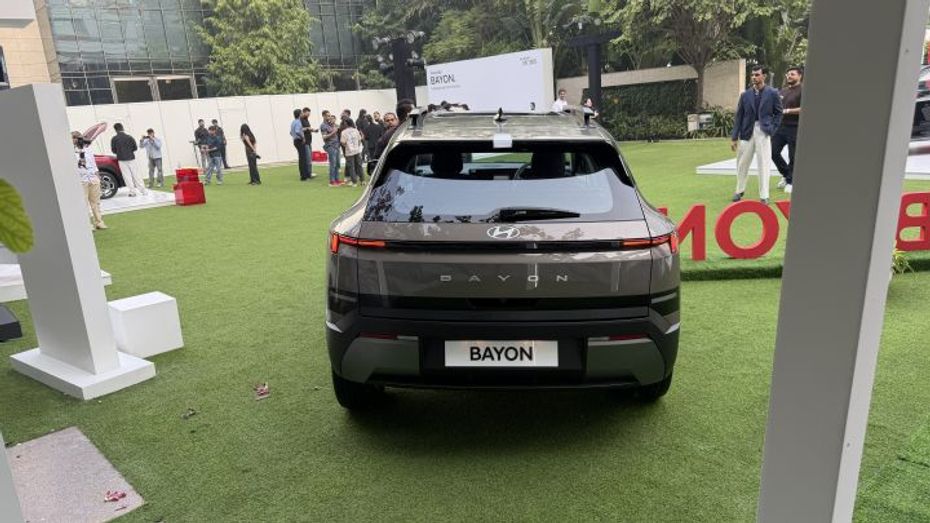
Over to the rear, the Bayon packs a few unique design elements. To begin with, the split lighting carries over here with the slim LED tail lamps in the middle and the brake lamps mounted on the upper half of the bumper.
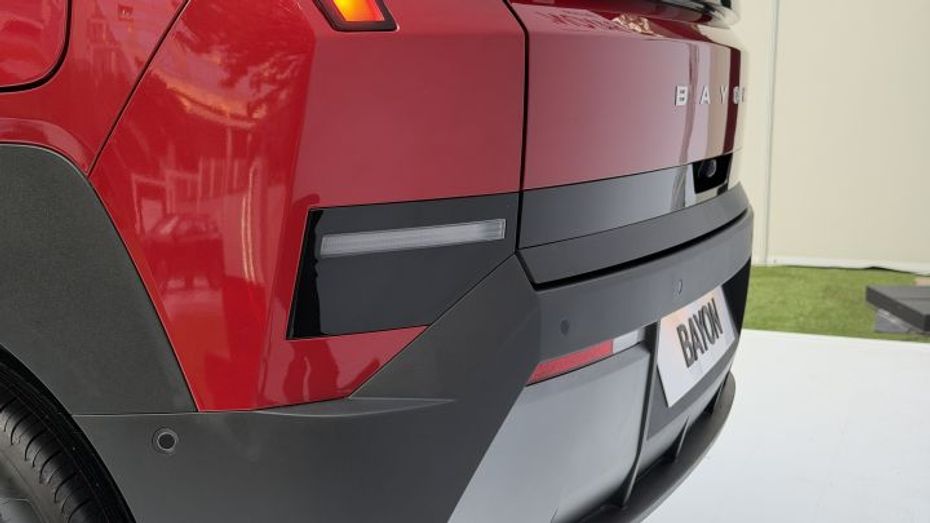
Another neat design touch is the high-mounted stop lamp which has a square shape and has a frosted look. Meanwhile, at the bottom, you find the reverse lamps and the reflectors housed just above the faux skid plate, which finishes the Bayon’s design.
The interior of the Bayon looks like it has good fit and finish with a mix of cloth, leatherette and plastic materials used in the cabin.
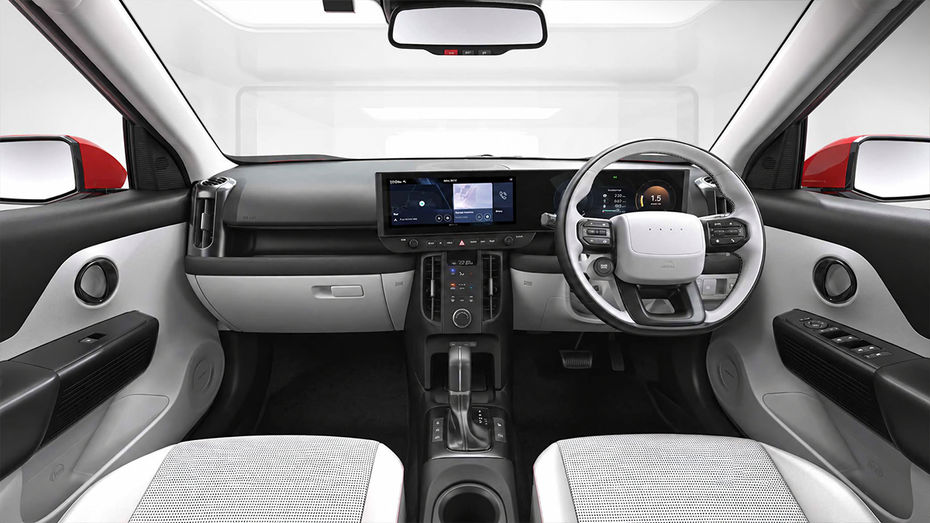
The curved dual-screen setup gives the interior a modern appeal. However, that also brings a balance here: the physical controls for the climate control are placed under the infotainment screen. Speaking of which, even the infotainment system gets a small set of shortcut buttons and rotary knobs to make life easier, as opposed to many manufacturers who include most of the controls in the touchscreen.
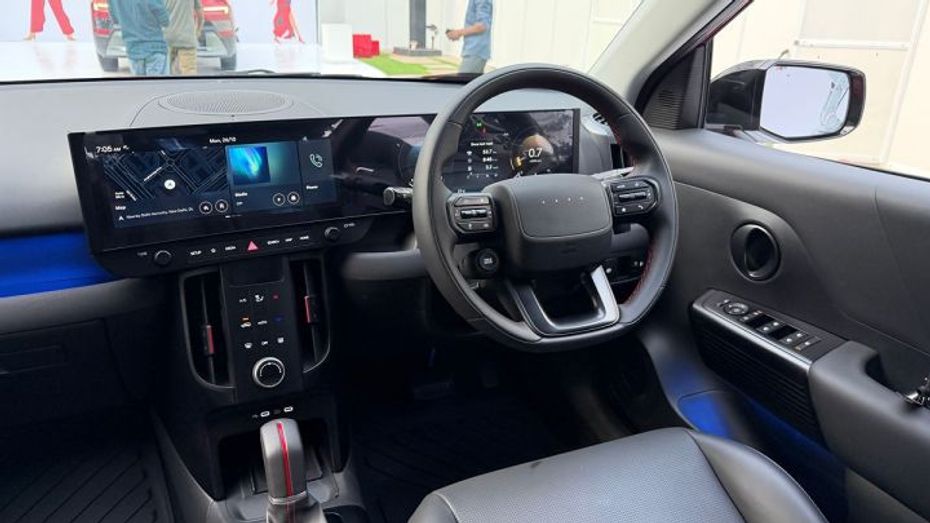
Notice the ambient lighting on the door pads and the dashboard, which is lit with a shadow effect.
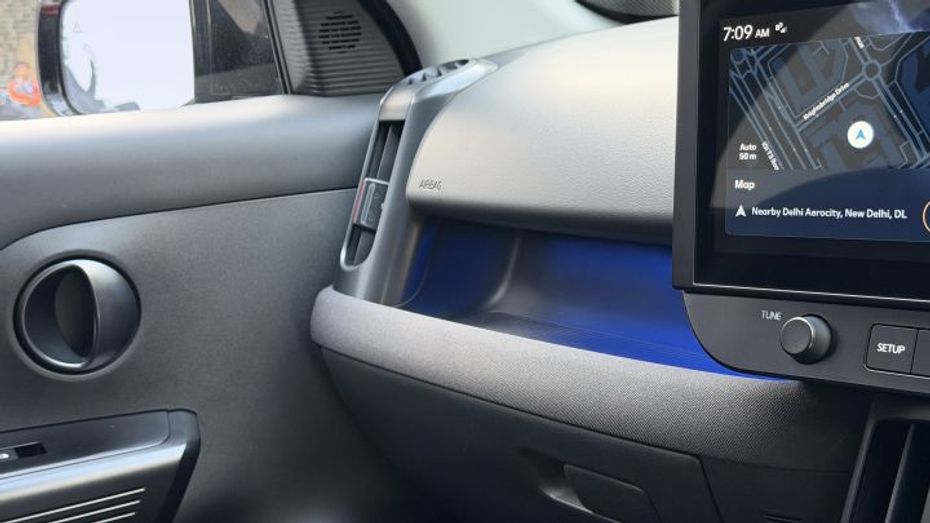
Do note that the dual-tone black and white interior theme is available with the monotone coloured cars, and the all-black interior with red accents is available only with the dual-tone colour options.
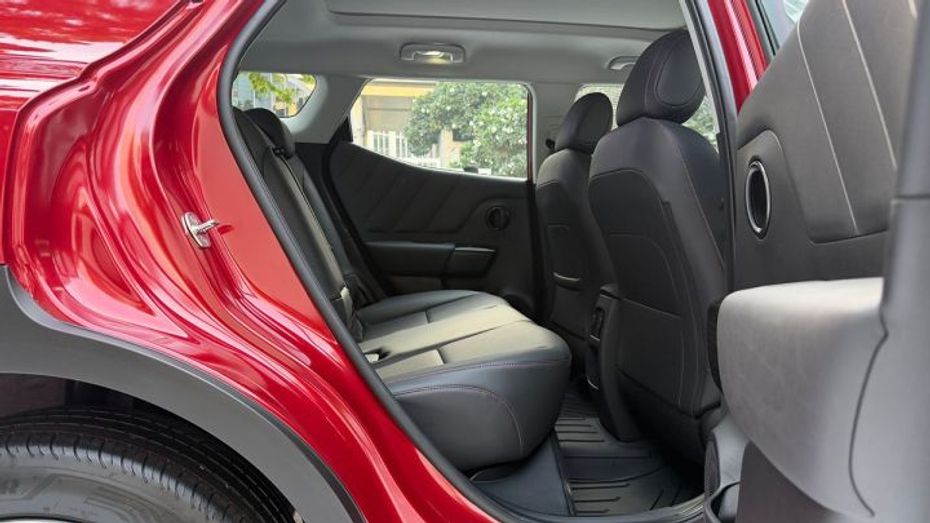
What is also interesting with the Bayon is that, despite the modern design, the approach towards practicality is rather family-friendly. The seats have a good upright posture, and the visibility outside is not something to complain about. You find storage pockets on all four doors with cup holders for front and rear passengers. Speaking of which, the rear passengers get three adjustable headrests and seatbelts. They also get rear AC vents with a USB-C charging port and a 12V socket. However, we wished to see window blinds for the rear windows, which is now becoming a common feature.
The Bayon bearing the Hyundai badge is expectedly packed with a good number of features. The dual-12.3-inch curved display setup is carried over from the Venue here. The one for the infotainment includes wireless Android Auto and Apple CarPlay, and the driver’s display is customisable for different themes.
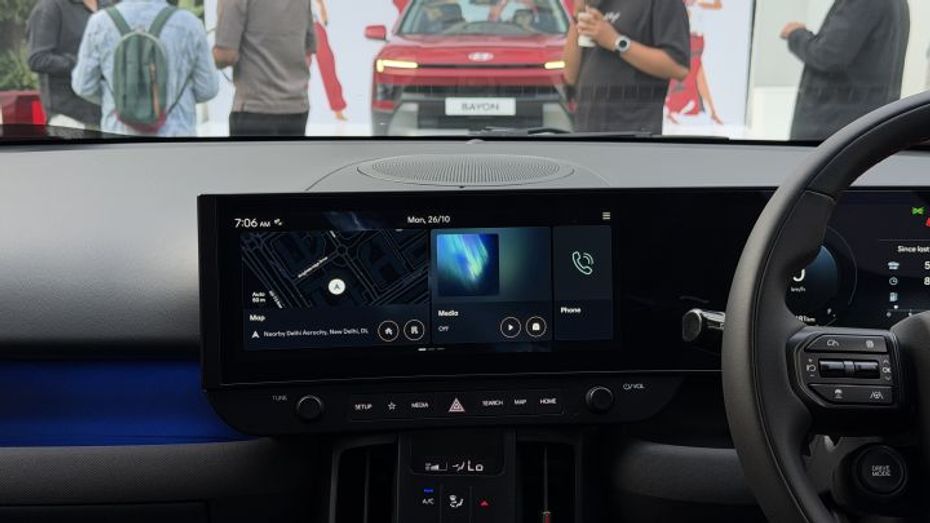
Other features include an 8-speaker Bose sound system, a wireless charger, automatic climate control, keyless entry with engine push-button start, and ambient lighting.
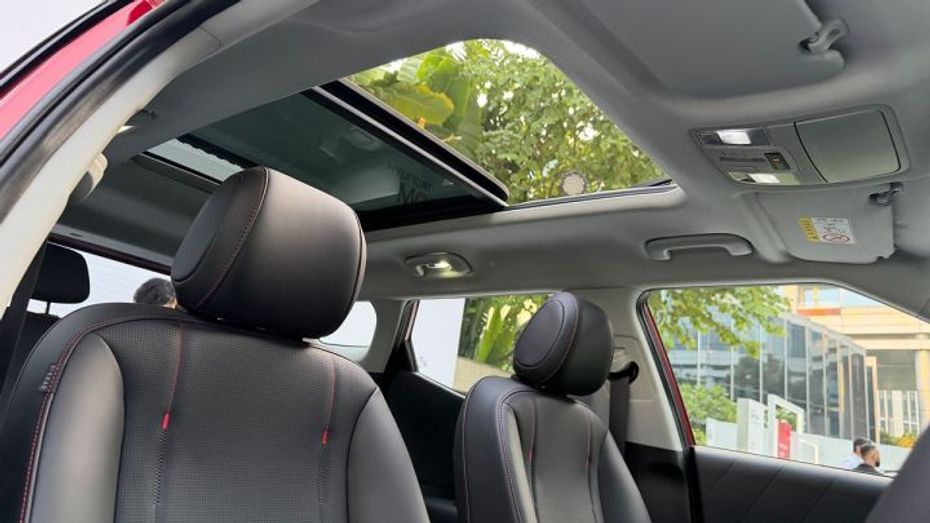
The Bayon also comes with a powered driver’s seat, ventilated front seats, drive modes, adaptive cruise control, connected car technology, panoramic sunroof and generative AI.
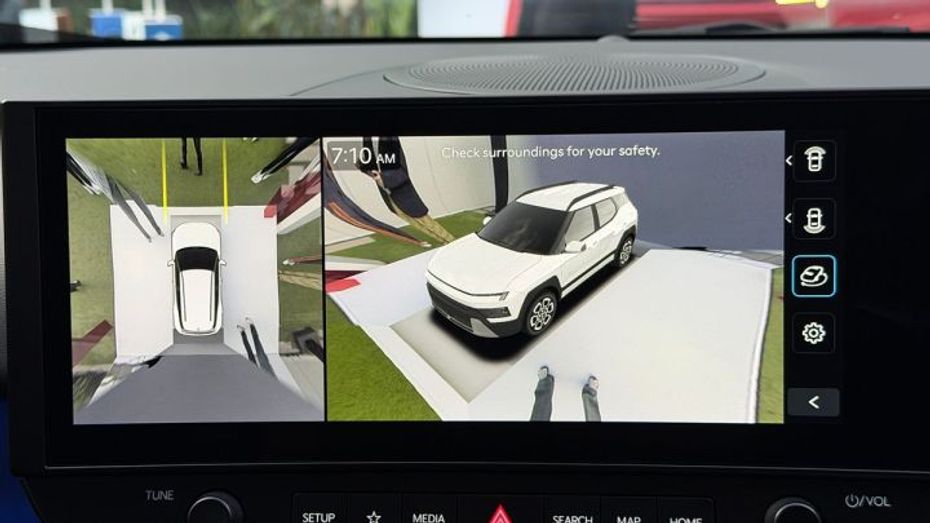
The safety kit includes ABS with EBD, 6 airbags, ISOFIX child seat mounts, electronic parking brake with auto hill-hold (EPB), a 360-degree camera and all-four disc brakes.
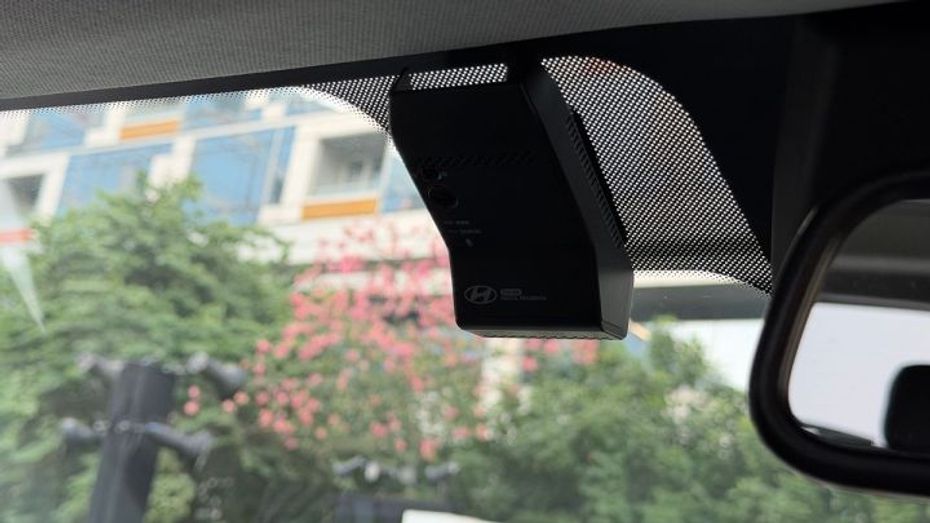
It also gets front, side and rear parking sensors, a tyre-pressure monitoring system, blind view monitor and an integrated dashcam.
The Bayon comes with a 1.5-litre naturally aspirated engine with a 6-speed manual and a CVT automatic transmission. Powertrain specifications include:
|
Engine |
1.5-litre naturally aspirated petrol |
|
Power |
115 PS |
|
Torque |
144 Nm |
|
Transmission |
6-speed MT / CVT |
MT- Manual Transmission, CVT- Continuously Variable Transmission (automatic)
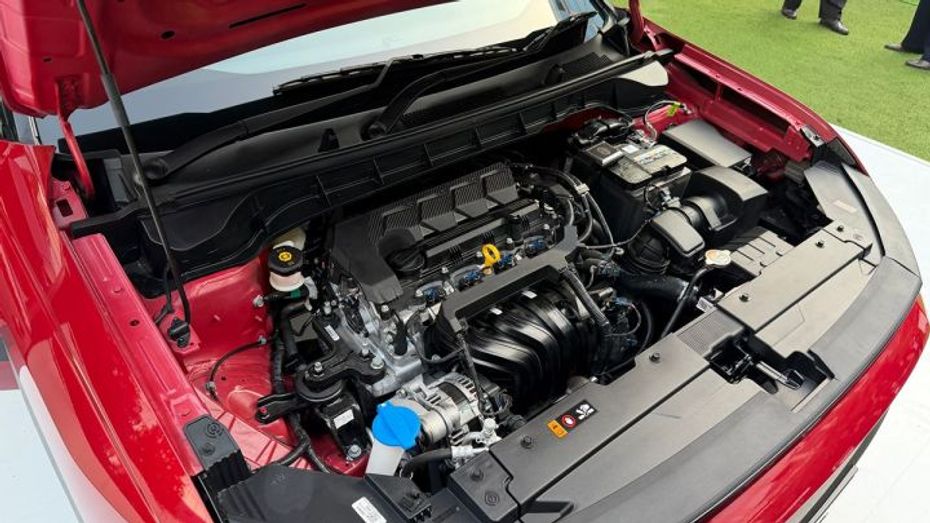
This powertrain is among the versatile ones out there. With reasonably good power for most Indian driving conditions and proven reliability, this will do a decent job in the Bayon.
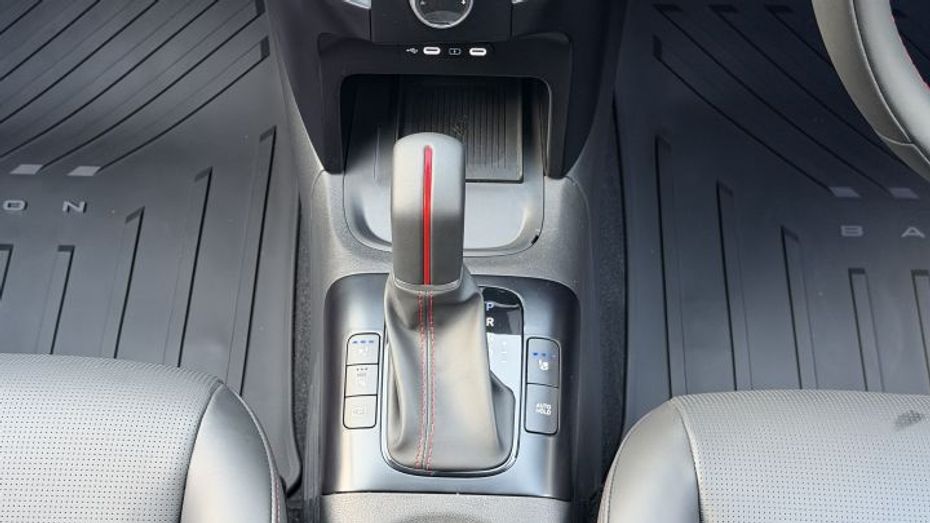
Hyundai has also confirmed the arrival of the CNG variant of the Bayon, which is set to arrive by January 2027.
The Hyundai Bayon was launched at Rs 10 lakh to Rs 18 lakh (ex-showroom).
The rivals include Hyundai Creta, Kia Seltos, Honda Elevate, Renault Duster, Skoda Kushaq, Volkswagen Taigun, Maruti Victoris, Grand Vitara, Toyota Hyryder, Nissan Tekton, Tata Sierra, Tata Curvv, Citroen Aircross X, and the MG Astor.
The Hyundai Bayon is an interesting product which smartly sits between Hyundai’s popular SUVs, the Venue and the Creta. With the Creta set to get a generational update and grow in size, it makes room for the Bayon to sit in between. Hence, striking a balance of features, price and the right amount of premium is key in the Bayon.
And it indeed looks like the balance has been achieved. With minor feature misses like rear window sunshades, rain-sensing wipers and a powered tailgate, it does not break the appeal of the Bayon. Being placed in a highly competitive segment, the Bayon sure offers something different in terms of style, size and positioning.
What do you think of the Hyundai Bayon? Let us know in the comments below.


Hyundai Bayon Launched At Rs 10 Lakh! A Cup Of Vanilla Ice Cream, Yet...
All-New Hyundai Bayon Compact SUV Revealed! Sportier Compact SUV To...
Hyundai Bayon Upcoming SUV Confirmed: To Rival Even Its Bigger...
Tata Sierra
Mahindra Thar OG
Hyundai Creta
Kia Seltos
India's largest automotive community
Hyundai Creta
Hyundai Venue
Hyundai Verna
Hyundai i20
Hyundai Exter
Tata Sierra
Mahindra Thar OG
Hyundai Bayon
Tata Punch
Maruti Suzuki Brezza
Mercedes-Benz GLC Electric
Rs. 80.00 Lakh
Mahindra Thar E
Rs. 25.00 Lakh
JSW Chery iCar V23
Rs. 20.00 Lakh
JSW Jaecoo J5 EV
Rs. 20.00 Lakh
 Jeep Announces Pickup Truck For India: Is The Gladiator Coming Soon?
 2026 Mercedes-AMG GT Electric SUV Unveiled: Powerful Performance Now In An Electrifying Package!
 Honda Elevate ZX+ Black Variant Explored: Is the Top-End Variant The Best Looking Elevate?
 Mahindra Bolero Bold Edition Launched: Exclusive Accessory Pack With Bronze Accents And Dual-tone Interiors!
2026 Universo Ferrari Exhibition Highlights: F50, Luce, 12Cilindri & SF-26 2026 F1 Car Showcased!