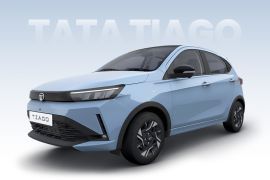

2026 Tata Tiago and Tiago EV Review: Great Product! Great Quality?
- Jun 8, 2026
- Views : 5752



 Follow us

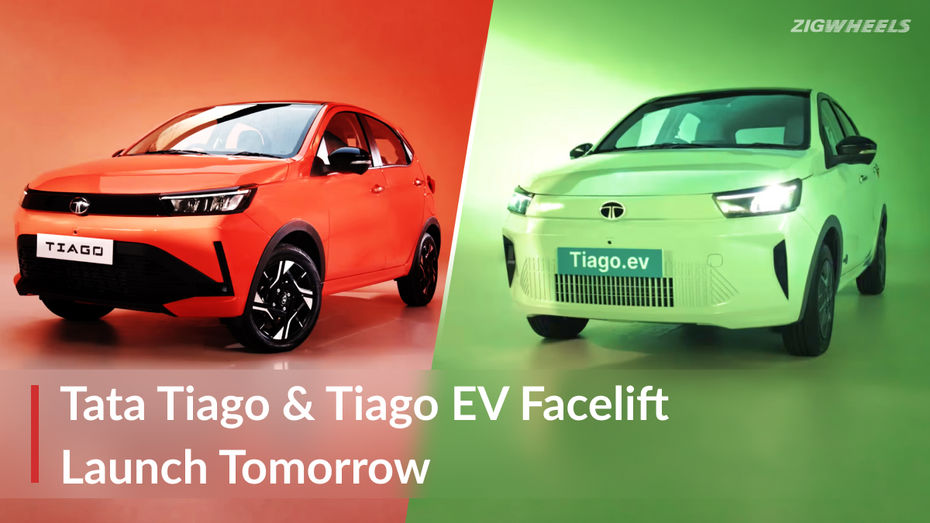
The 2026 Tiago ICE is expected to start from around Rs 4.5 lakh ex-showroom, with the 2026 Tiago EV expected from around Rs 8 lakh ex-showroom; on-road prices will be higher.
Both variants get a 10.25-inch free-floating touchscreen, a 360-degree camera and a wireless charging pad.
Powertrain options on the ICE are expected to remain unchanged: a 1.2-litre petrol with manual and AMT, plus a factory-fitted CNG kit available with both transmissions
While the EV might get a slightly bigger battery pack with more usable range.
Rivals for the ICE include the Hyundai Grand i10 Nios, Maruti Wagon R, and Maruti Swift
The Tiago EV competes in the budget EV space alongside the Citroen eC3 and MG Comet EV.
The “Tiago” nameplate made its debut in 2016 as the successor to the erstwhile Tata Bolt. Initially, the hatchback was set to be called the Tata Zica, a name derived from its “zippy” driving character. However, those plans were shelved following the outbreak of the Zika virus in Africa around the same time. Tata Motors then turned to their then brand ambassador, Lionel Messi, naming the hatchback after his son, and that’s how the Tiago was born.
Fast forward to 2022, Tata Motors decided to electrify its much-loved hatchback by introducing the Tiago EV. Positioned as the brand’s entry-level electric vehicle, it quickly carved a niche for itself as a practical and peppy city runabout.
Tomorrow marks a big day for Tata Motors, as both the Tiago and Tiago EV are set to receive their first proper facelift (after undergoing minor updates a few times) in years. And from what we know so far, the updates go far beyond just a token bumper redesign.
Here’s what to expect with the 2026 facelift of the Tiago and the Tiago EV:
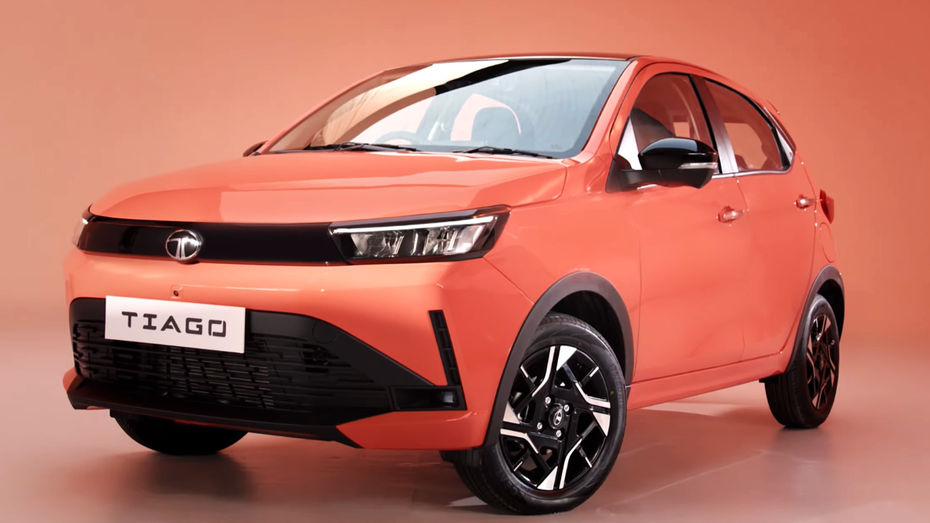
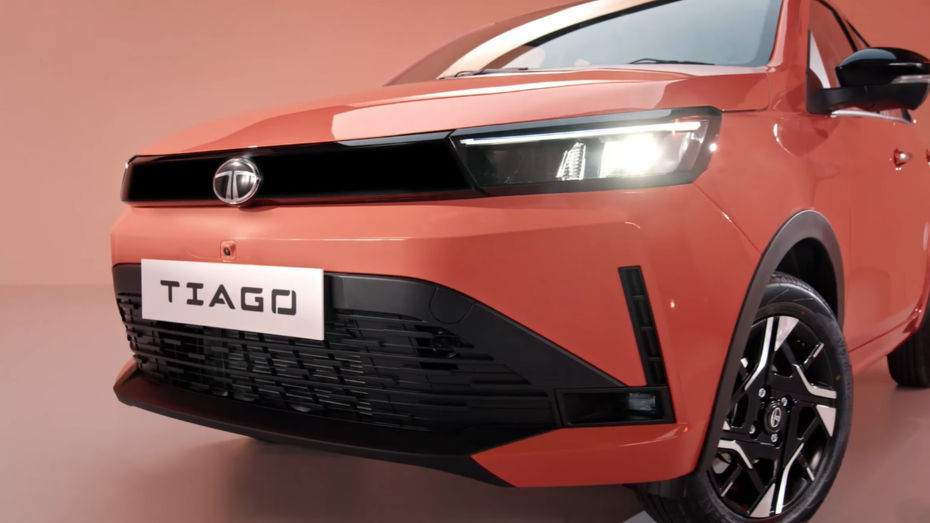
The petrol-CNG Tiago is the more conventional update of the two. Tata has reworked the face with new LED headlamps that get eyebrow-style DRLs, and a gloss black strip now links the two headlamp clusters across a larger grille. It is a familiar Tata playbook, taking cues from the recent Altroz and Punch updates.
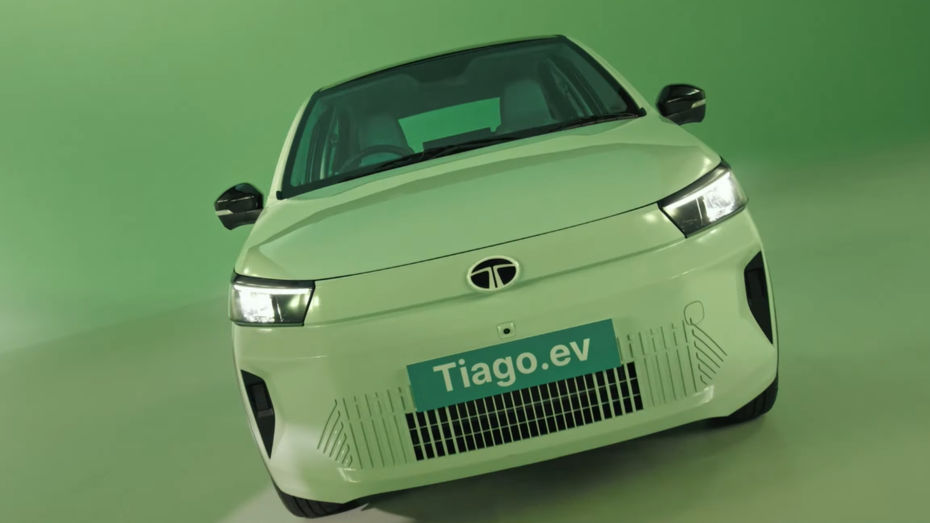
The Tiago EV, on the other hand, gets the bigger visual leap. The grille is now body-coloured and closed off, which is how every modern EV signals "no engine here," and it sits between noticeably slimmer LED headlamps.
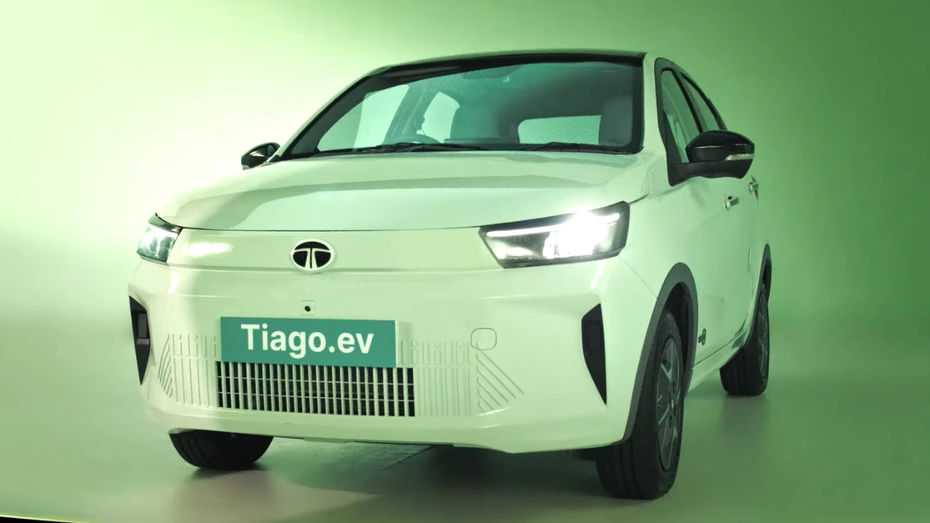
The bumpers have been redesigned at both ends, the tail lamps are now a connected LED unit, and the wheels switch to an aero-style design. It's a small change on paper, but it's the detail that finally makes the Tiago EV look purpose-built rather than a petrol Tiago with a charging port.
If kerbside identity matters to you, the ICE is the more confident redesign of the pair.
Step inside either Tiago and you will struggle to recognise the cabin you knew. Tata has binned the old layered dashboard for a flatter, cleaner architecture finished in a light grey and black palette, a far more grown-up look than the outgoing car's chirpy interior.
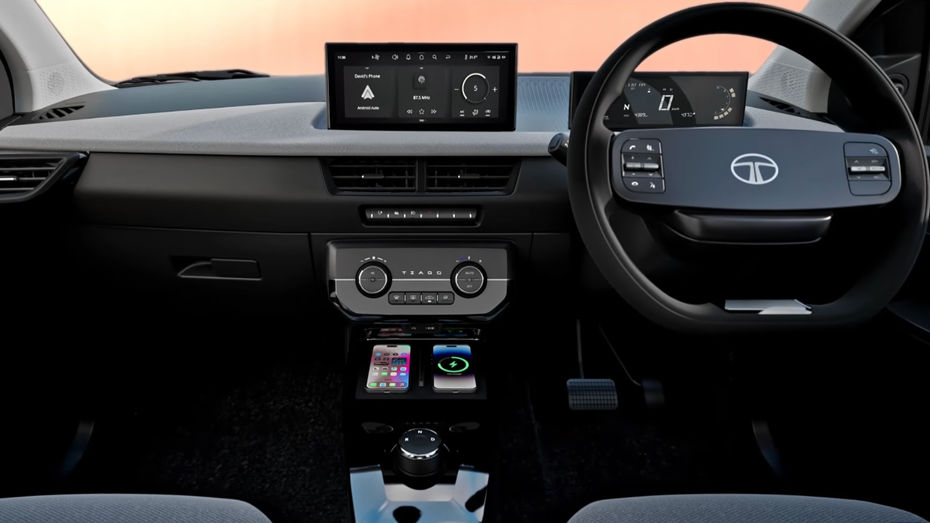
The centrepiece on the petrol-CNG Tiago is a 10.25-inch free-floating touchscreen, paired with a floating digital driver display.
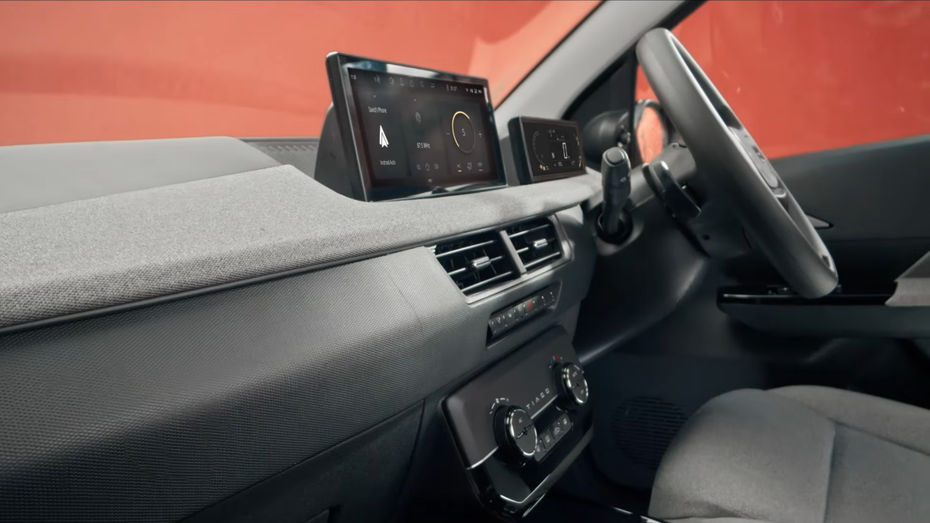
The Tiago EV gets a similar twin-screen treatment with dual free-standing displays, a two-spoke steering wheel carrying illuminated Tata.ev branding, albeit a little offset this time and dual-tone premium trim, touches you'd normally expect in a segment above.
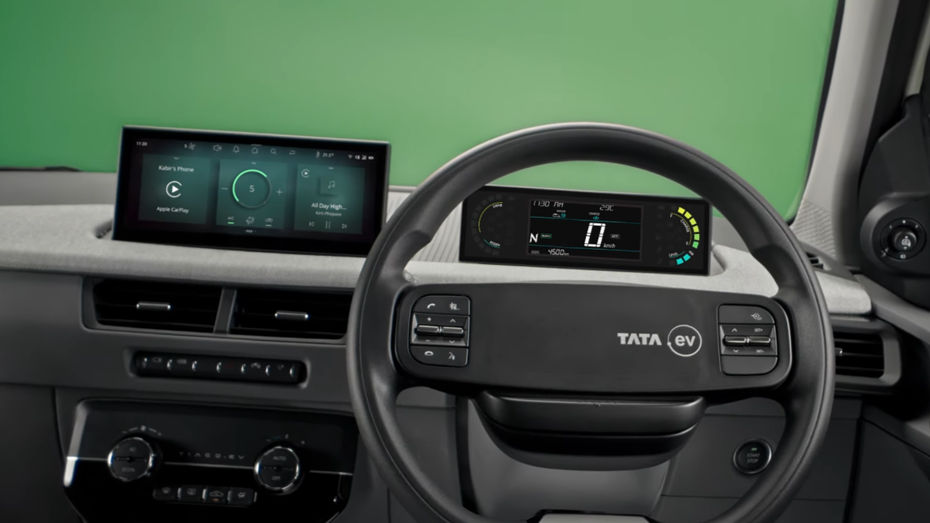
Feature additions are where this facelift actually justifies itself. Both cars pick up a 360-degree camera, rear AC vents, a wireless charging pad, and Type-C ports.
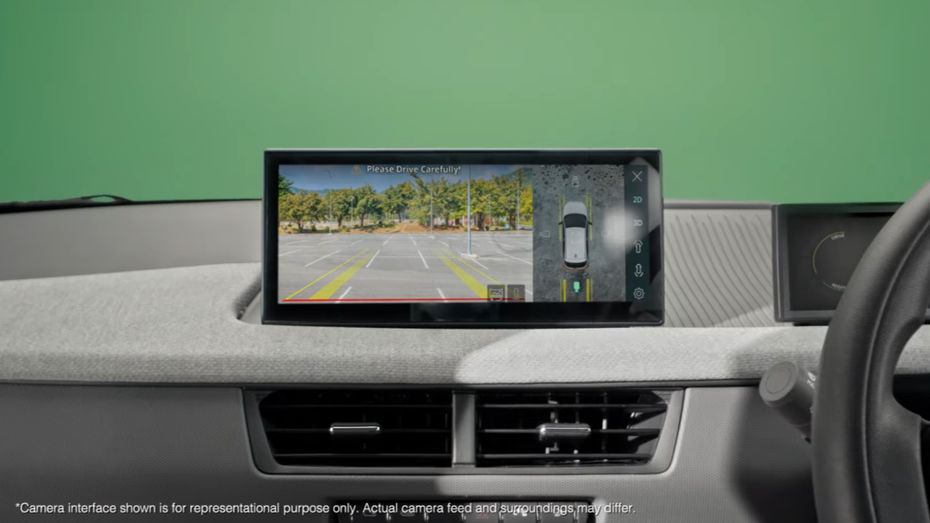
The takeaway: Tata will be pricing the Tiago like a hatchback but kitting it like something pricier, and that changes the entry-segment maths.
Here's where the refresh plays it safe: Tata isn't touching what's under the bonnet of the petrol Tiago. The 1.2-litre petrol and its CNG sibling carry over unchanged, and you still get to pick between a manual and an AMT.
That's a pragmatic call. The Tiago's three-cylinder petrol is a known quantity in this price bracket, and the twin-cylinder CNG setup (which lets you use both boot space and gas) is genuinely one of the segment's smarter engineering wins. Leaving it alone keeps the facelift focused on the cabin and tech upgrades, where the car needed catching up.
|
Engine |
1.2-litre naturally aspirated petrol |
1.2-litre naturally aspirated petrol + CNG |
|
Power |
86 PS |
86 PS/ 73.4 PS (CNG) |
|
Torque |
113 Nm |
113 Nm/ 95 Nm (CNG) |
|
Transmission |
5-speed MT/5-speed AMT |
5-speed MT/5-speed AMT |
The Tiago EV is currently offered with two battery pack options, while Tata hasn't indicated any change on that front for the facelift, but we expect that it might get a bigger battery pack with an extended range, making it more lucrative for the buyers. Nothing is officially confirmed, though.
|
Battery Pack |
19.2 kWh |
24 kWh |
|
Range |
223 kms |
293 kms |
|
No. of electric motor(s) |
1 |
1 |
|
Power |
61 PS |
75 PS |
|
Torque |
110 Nm |
114 Nm |
|
Charging speed |
58 minutes |
58 minutes |
The takeaway for you: if you were hoping for a hybrid badge or a punchier turbo, this isn't that update. The 2026 Tiago will be a styling-and-features refresh sitting on familiar mechanicals.
We expect the ICE Tiago facelift to start somewhere around the Rs 4.5 lakh, making it a great value proposition across the segment, where it locks horns with the likes of the Maruti Suzuki Swift, the Hyundai Grand i10 NIOS and the Maruti Suzuki Celerio.
Whereas, we expect the Tiago EV facelift to begin around the Rs 8 lakh mark, giving it a strong edge against the likes of the MG Comet EV and the Citroen eC3, offering more features, safety and even tech.
On paper, this is the most ambitious Tiago refresh yet, and the timing tells you exactly what Tata is doing. The hatchback segment has been gutted by SUVs, so the brief here isn't to chase volume; it's to make the Tiago feel premium enough that you don't feel short-changed for sticking with a small car.
The 10.25-inch floating touchscreen and the 360-degree camera are the giveaways. These are features you'd normally associate with a Nexon or a Punch, now trickling down to Tata's entry-level hatch. That's a meaningful shift in what a sub-compact buyer can expect for their money.
The EV's parallel makeover matters just as much. With closed grille, connected tail lamps and dual displays, the Tiago EV finally looks like a purpose-built electric car rather than a petrol Tiago with a battery.
What's still open is pricing, exact variant-wise feature distribution, and the system outputs on the EV, all of which we'll know tomorrow. If Tata holds the line on cost, the Tiago could quietly become the most feature-rich hatchback you can buy under Rs 10 lakh. Stay tuned to ZigWheels for more updates!


2026 Tata Tiago and Tiago EV Review: Great Product! Great Quality?
Top 5 Things We Loved About The 2026 Tata Tiago Facelift
2026 Tata Tiago Facelift Launched At Rs 4.69 Lakhs Alongside The...
2026 Tata Tiago Facelift Interior Revealed: Bigger Screens, Wireless...
2026 Tata Tiago ICE & EV Facelift Revealed: India’s Favourite...
Check Out The 8 Features That The 2025 Tata Altroz Facelift Gets Over...
2025 Tata Tiago vs Tigor: Which Of These Tata Cars Is The Better...
2025 Tata Tiago Vs Hyundai Grand i10 Nios: The Clash Of Updated...
2025 Tata Tiago, Tiago EV And Tigor Launched With Updated Features...
Tata Aeris
Tata Punch
Maruti Swift
Tata Altroz
Maruti Wagon R
India's largest automotive community
Tata Aeris
Tata Punch
Tata Sierra
Tata Nexon
Tata Punch EV
Maruti Suzuki Baleno
Maruti Suzuki Swift
Tata Tiago
Hyundai i20
Maruti Suzuki Wagon R
Mercedes-Benz Maybach S-Class Facelift
Rs. 3.00 Crore
Skoda Slavia Facelift
Rs. 11.99 Lakh
Honda Elevate Facelift
Rs. 11.91 Lakh
Volvo EX90
Rs. 1.20 Crore
Volvo ES90
Rs. 1.10 Crore
 Renault Triber Turbo Launched In India, Prices Start From Rs 7.84 Lakh
 5 Things We Love About The Mahindra Thar OG
 2026 Mahindra Thar OG Short Review: What We Liked & What Needs To Improve
 2026 Tata Aeris Launched At Rs 5.29 Lakh: Fresh Looks, More Features & A Familiar Engine
This Is Bentley’s First Electric SUV: New Torcal Gets 600 Km Range & 888 PS!
2026 Tata Aeris Launched At Rs 5.29 Lakh: Fresh Looks, More Features & A Familiar Engine
This Is Bentley’s First Electric SUV: New Torcal Gets 600 Km Range & 888 PS!