Tata Sierra EV Launch Tomorrow: Check Out These 7 Other EVs Launching...
- Jun 29, 2026
- Views : 2872



 Follow us


Avinya EVs will now be based on the Chery-JLR Freelander platform, not JLR's EMA.
The change aims for better cost-competitiveness and a faster launch timeline.
The first Avinya model, an SUV, is confirmed for a 2027 launch in India.
Manufacturing is set for Tata's new state-of-the-art plant in Panapakkam, Tamil Nadu.
Tata's premium EV ambitions just took a significant detour. The Avinya range, Tata's flagship play in the upscale electric space, will no longer ride on Jaguar Land Rover's Electrified Modular Architecture (EMA), the platform it was originally tied to.
Instead, Tata has pivoted to the Freelander platform co-developed by Chery and JLR through their Chinese joint venture. While the actual reason is something we are unaware of, a simple guess is that borrowing an existing, proven architecture trims development cost and gets Avinya to market faster than building around EMA would have.
Here's the big strategic pivot: Tata has dropped Jaguar Land Rover's Electrified Modular Architecture (EMA) for the Avinya range, opting instead for the Freelander platform that CJLR co-developed with China's Chery.
An official statement from Tata Motors stated, “Avinya is being developed as a global premium brand for a next-generation EV portfolio to be built on multiple, scalable platforms and architectures while being anchored in Tata Motors’ design, engineering and integration capabilities. Our collaboration with JLR and its partners will be an important pillar of our global premium EV journey as we expand the Avinya portfolio across segments and geographies. This integrated approach draws on best-in-class Tata Motors PV Group ecosystem expertise and partnerships for delivering the desired proposition for the luxury EV segment at scale.
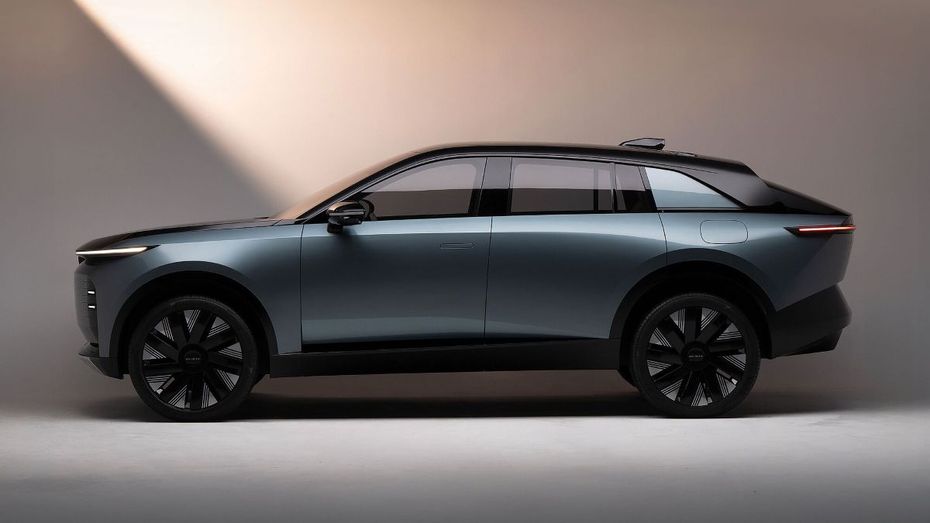
The first Avinya vehicle to be launched in India in 2027 will leverage the Freelander platform produced by CJLR and will be made at the recently opened, state-of-the-art TMPV - JLR manufacturing facility in Panapakkam, Tamil Nadu. It brings together holistic new age advancements and robust engineering foundations to deliver a compelling luxury EV experience for Avinya.
Avinya’s design and development will harness the global strength of the Tata Motors PV Group ecosystem with production in India, reinforcing our commitment to building competitive domestic capabilities alongside globally benchmarked vehicles.”
Why does that matter to you as a buyer? Two words: cost and timing. EMA was always a premium-grade architecture, and leaning on the Chery-JLR platform lets Tata sharpen pricing while getting the Avinya to showrooms quicker.
Here's where the Avinya story gets genuinely interesting. The Freelander platform, co-developed by Jaguar Land Rover and Chinese carmaker Chery, runs an 800-volt electrical architecture. That's the same high-voltage setup you'll find underpinning the recently-revealed Freelander 8.
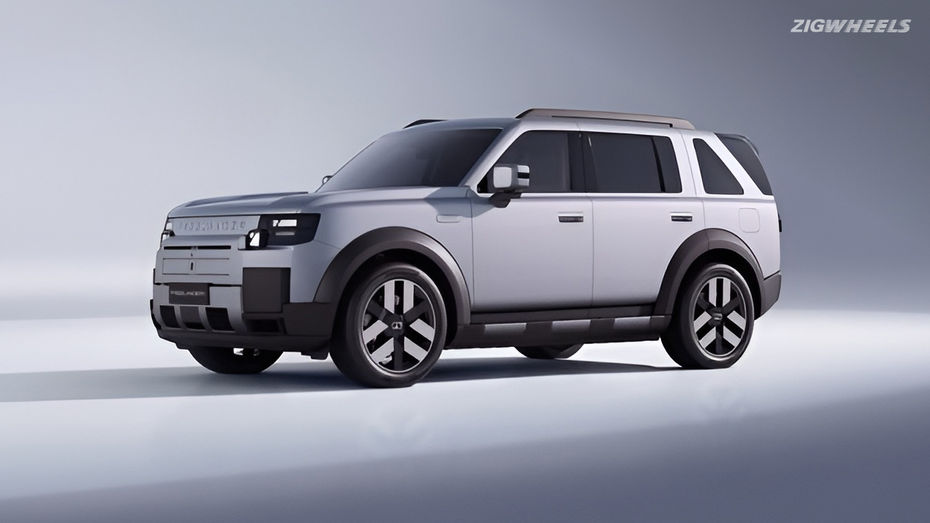
In practical terms, the 800-volt backbone supports DC fast charging up to 350 kW. If Tata pairs that with a charger capable of delivering it, you're looking at topping up a depleted battery in the time it takes to grab a coffee, rather than planning your day around a charging stop.
The platform's other party trick is flexibility. It's engineered to take pure electric, plug-in hybrid and range-extender powertrains. That last option, a petrol engine acting purely as an onboard generator to recharge the battery, is a useful hedge against India's still-patchy fast-charging network.
Whether Tata taps into all three powertrain formats for the Avinya range remains to be confirmed. But the underlying hardware clearly gives it room to manoeuvre, and that optionality is exactly why this switch makes sense.
Here is where Tata's EV story gets ambitious. The Avinya was always meant to be the brand's big leap upmarket, and the first Avinya, an SUV measuring over five metres, is slated for 2027 and will roll out of TMPV-JLR's new Panapakkam facility in Tamil Nadu. The Avinya X is expected to offer battery options in the 65–80 kWh range, though final figures are to be confirmed.
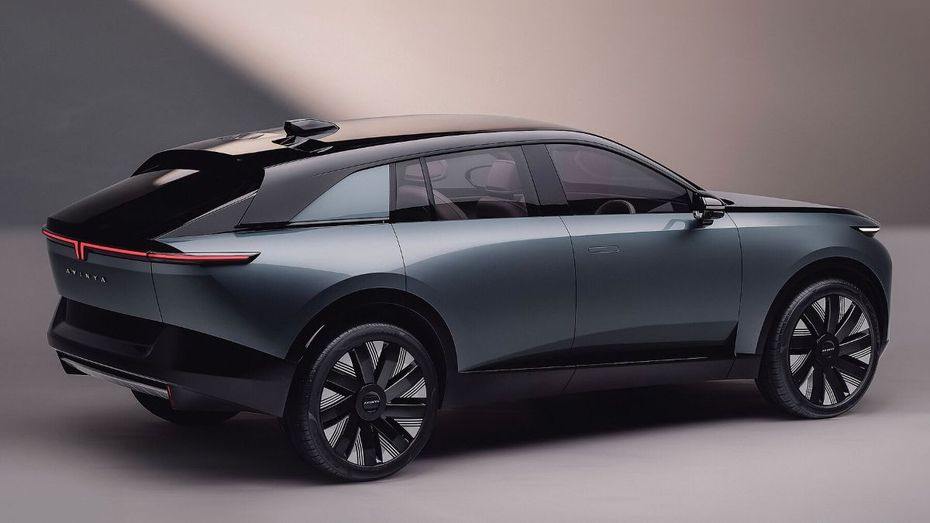
Crucially, Tata plans to retail Avinya through a separate network from its mainstream dealerships, with an online configurator under evaluation.
Tata is treating the Avinya as a clean break from its mainstream identity.
The tech you're buying into is genuinely current, too. An 800-volt architecture supporting 350 kW DC charging puts the Avinya in serious fast-charging territory, assuming India's infrastructure catches up to make use of it.
The 2027 timeline and a dedicated retail network, separate from your local Tata showroom, signal that Tata wants the Avinya treated as a distinct premium brand, not just a posher Nexon EV. Whether buyers see it that way is the real test.


Tata Sierra EV Launch Tomorrow: Check Out These 7 Other EVs Launching...
Tata Avinya’s Steering Wheel Won’t Be Like The One Found...
The Toyota Fortuner Legender Is All Set To Become A Much Better...
Check Out The Top 5 Safest SUVs In India
Top 10 Important Car News Highlights In India Leading Up To Holi!
2026 Audi Q3 Unveiled In India Finally! Looks Truly A Generation...
2026 Skoda Superb TDI Unveiled In India, Coming Next Year!
VinFast EVs We Wish Came To India: Tiny SUVs, Luxury Land Yachts And...
Want To Know Which New Cars Tata Motors Will Be Introducing In India...
Mahindra XEV 9e
Tata Harrier EV
VinFast VF7
BYD Sealion 7
VinFast Limo Green
India's largest automotive community
Tata Aeris
Tata Punch
Tata Sierra
Tata Nexon
Tata Tiago
Mahindra Thar OG
Maruti Suzuki Brezza
Tata Punch
Tata Sierra
Maruti Suzuki FRONX
Mercedes-Benz Maybach S-Class Facelift
Rs. 3.00 Crore
Skoda Slavia Facelift
Rs. 11.99 Lakh
Honda Elevate Facelift
Rs. 11.91 Lakh
Volvo EX90
Rs. 1.20 Crore
Volvo ES90
Rs. 1.10 Crore
 Porsche’s Cayenne Electric Is Finally In India! Prices Start At Rs 1.77 Crore
 Big, Boxy And A Plug-in Hybrid: Is This JSW Motor’s First SUV? Jetour T2 Spied In India!
 Renault Triber Turbo Launched In India, Prices Start From Rs 7.84 Lakh
 5 Things We Love About The Mahindra Thar OG
2026 Mahindra Thar OG Short Review: What We Liked & What Needs To Improve
5 Things We Love About The Mahindra Thar OG
2026 Mahindra Thar OG Short Review: What We Liked & What Needs To Improve