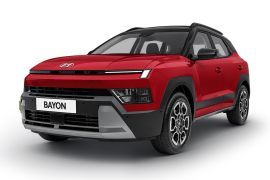

Hyundai Bayon Explored In Detail With 17 Images: Is It Good Value For...
- Oct 27, 2026
- Views : 2816


 Follow us

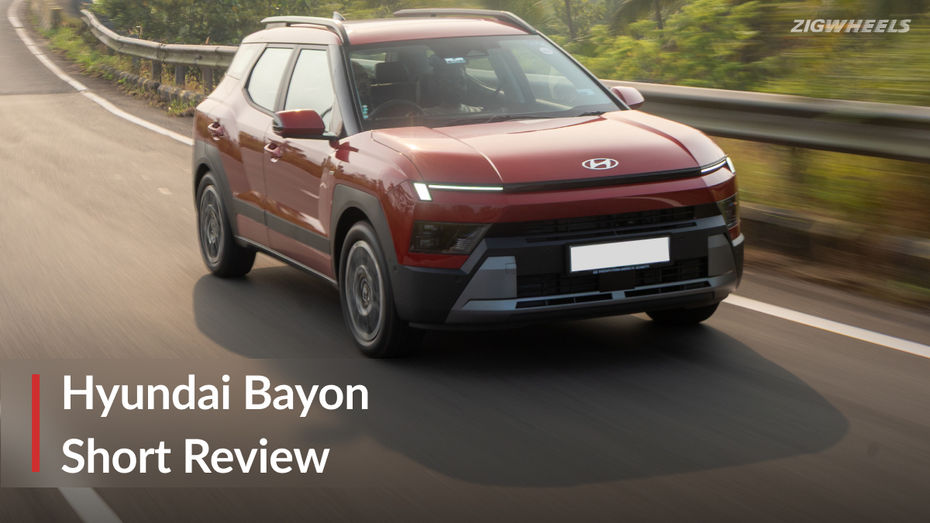
The Bayon left me with very strong questions — why does it even exist? Was there really a need for another SUV option between the Venue and the Creta? What does it do better or differently than two SUVs that’ve built a cult over a decade?
They want to take the Maruti Suzuki Victoris head-on. More options in the Rs 10-15 lakh space is what they needed, especially since the new Creta that comes next year becomes bigger and more expensive.
The formula for the Bayon is also deliberately simple, they add. There’s a single 1.5-litre petrol engine, available with a manual and a CVT. While CNG is confirmed (the under-boot, dual-cylinder kind) for January 2027, there’s no diesel, no hybrid and no electric on the cards either.
I got to experience the Bayon for over 200km in sweltering Goa. As I handed the keys back, I couldn’t help but think that the car felt vanilla. There’s nothing wrong with that, mind you.
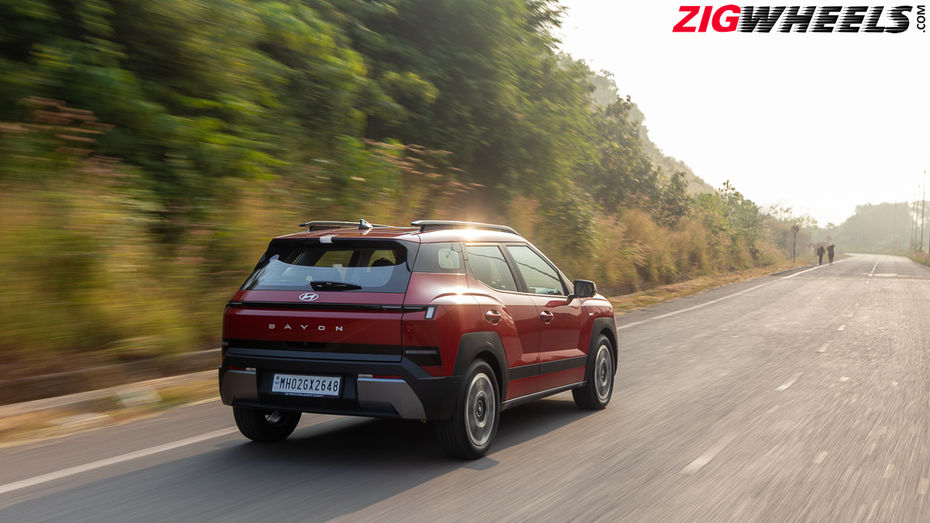
The design blends Hyundai’s existing lineup with what’s to come. It’s a ‘bridge’ design in that sense. You’ll see hints of the global Tucson in the lighting elements at the front and back, and also see traces of the Exter, Venue and Creta in the wheel arches and roofline.
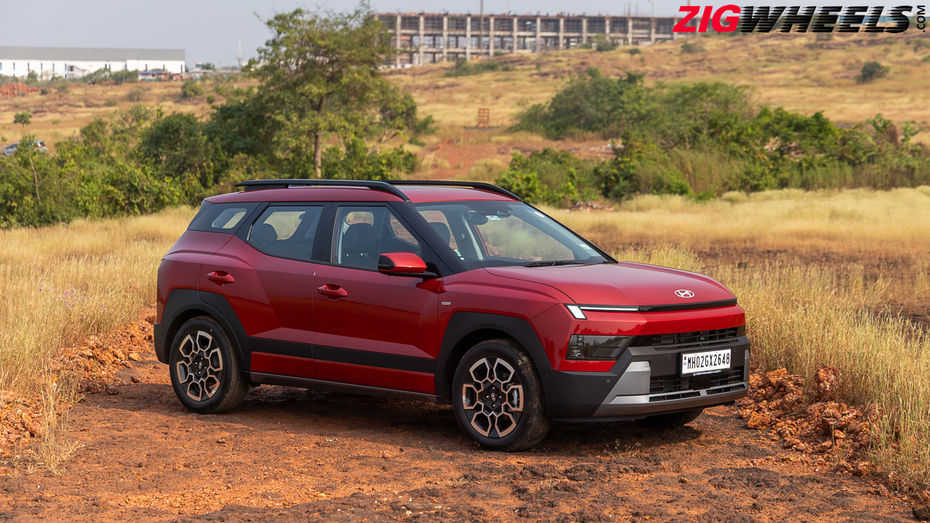
I like how the rear lamps have clear white lenses, and that the stop lamp on the spoiler looks very rally-car inspired. The floral design of the 17-inch alloys is inoffensive, if not particularly pretty.
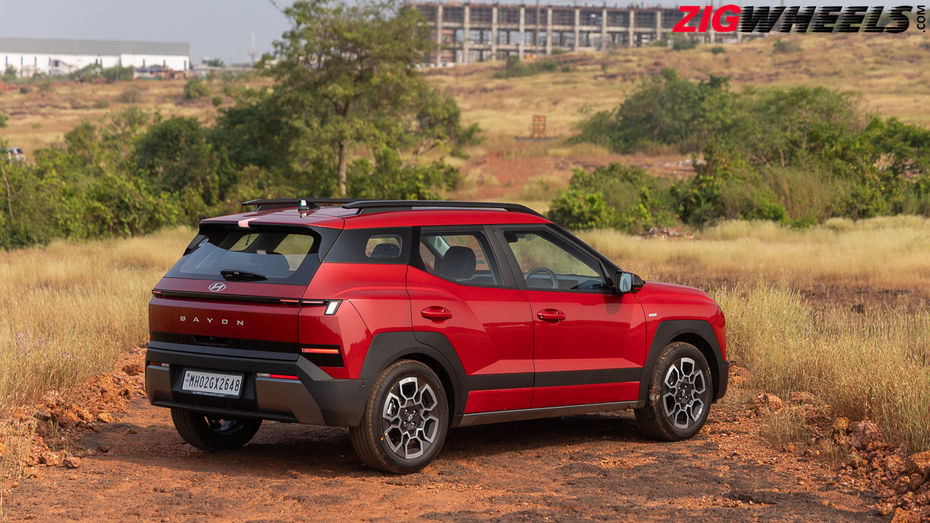
What the Bayon lacks, however, is height. It ends up looking like a crossover more than an outright SUV. A well-proportioned, handsome crossover, no less. To add, I’d say two things — the car is larger in person than it looks in the brochure, and that the design grows on you rather quickly.
Hat tip: pick the Bayon in lighter and brighter shades such as the bronze and the red to really make it pop!
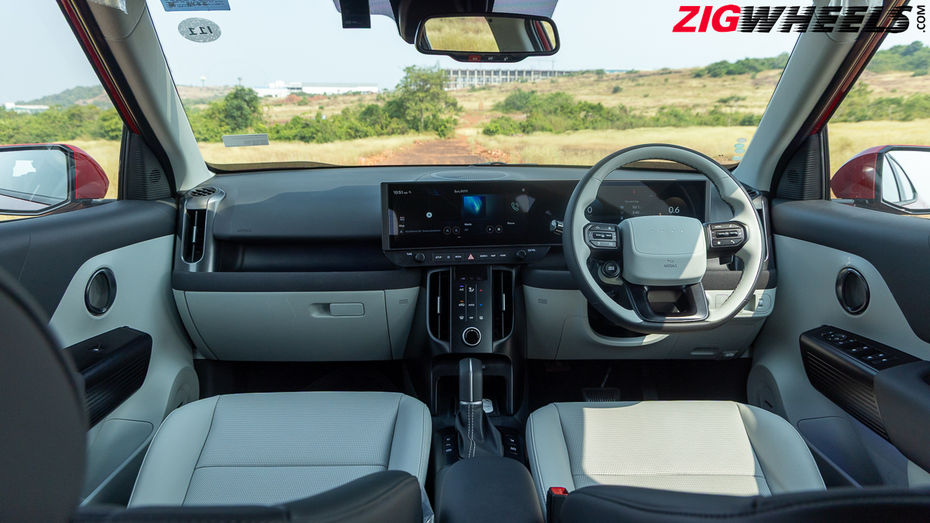
Step in, and there’s familiar Hyundai-ness that greets you. Fit and finish is spot on, and the quality of materials, while not overtly premium, is pleasant and thoughtful. There are interesting touches, such as the fabric underlining the dashboard and the soft padding on the front door pad. There are two colour themes, an ivory-black and a full-black. I’d lean in favour of the dual-tone version, since it adds a airier feel to the cabin.
The Bayon prioritises sensibility. Ingress-egress is effortless, and there’s ample storage space both front and back. Front seats are accommodating, even for oversized adults. Lack of a dead pedal aside, the Bayon is ergonomically sorted and thoroughly functional.
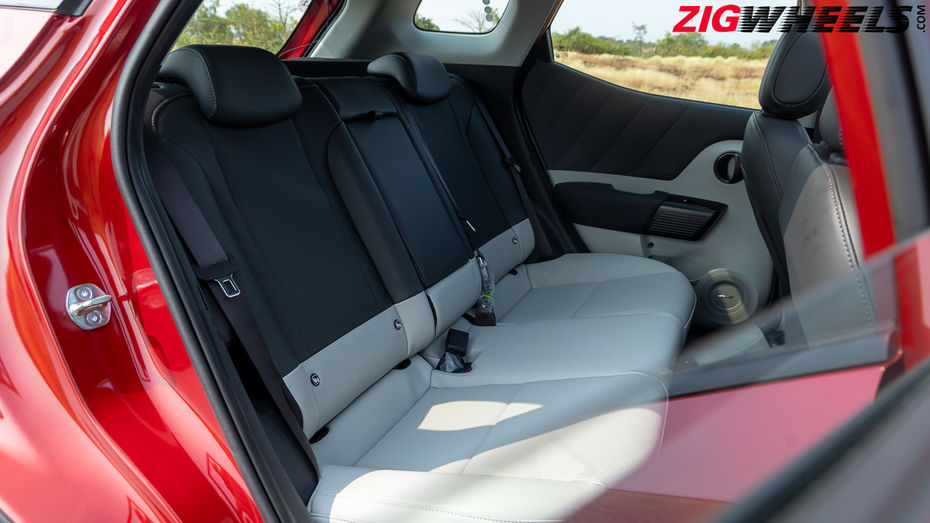
Rear seat space is adequate, not amazing. A 6-footer like me sits comfortably behind my own driving position. Footroom and under-thigh space are above average, but headroom is tight for those above 6 feet, or who wear turbans. Because of the window line and the raked C-pillar, the view out is slightly hampered too. There’s a 2-step recline for the rear seat, which feels largely inconsequential.
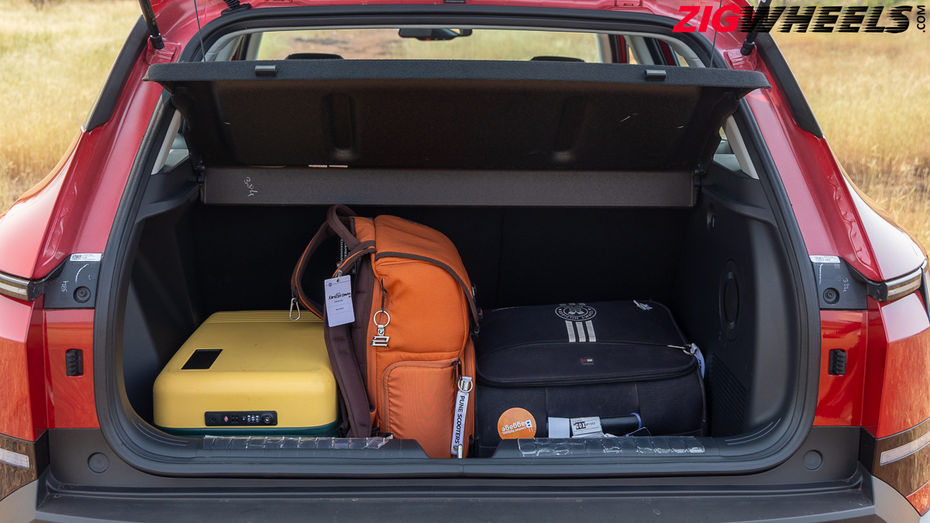
Boot space, at 505 litres, is more than enough for 4 cabin-sized trolley bags and some more. There’s a 60:40 split should you need to carry more luggage.
There’s a 1.5-litre petrol engine — smooth, reliable, efficient and functional. It’s not fun by any means, but it’s relaxing and easygoing in a very likeable way. For relaxed drives around town, whether to drop the kids to school or a run to the mall, the performance is plenty. Weekend outings are sorted too, with enough power for a steady cruise and 80-100 kmph. Performance past that tapers off rather quickly, and overtakes certainly require planning.
There are two gearbox options: a slick 6-speed manual and a CVT. The manual is quite engaging to use, with a crisp short action, a nice weight to the gear knob and a satisfying click when the gear slots in. The clutch is light enough not to tire you out in bumper-to-bumper traffic and easy to modulate, too. The gearbox almost makes you wish the Bayon gave you more power to play with.
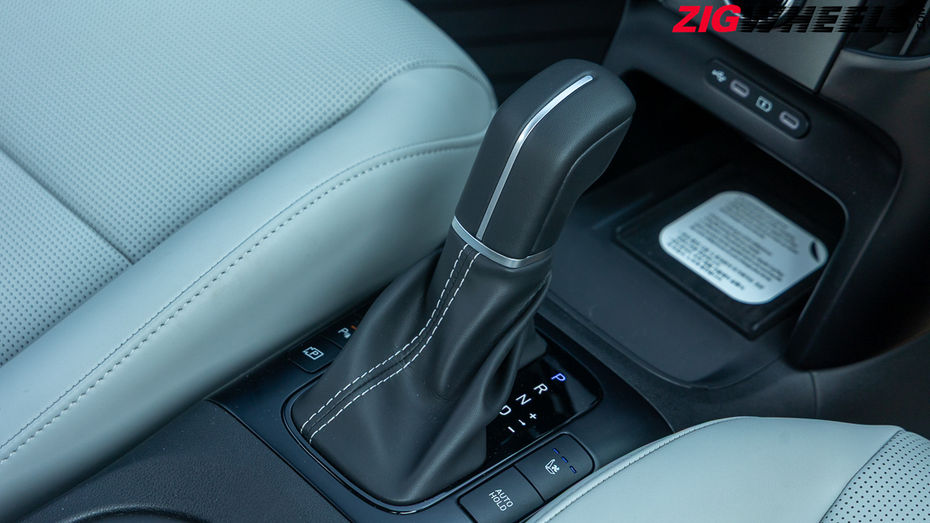
For an even more relaxed experience, pick the CVT. It’s smooth and effortless to operate, and makes it super convenient in bumper-to-bumper jams. With the automatic, you get drive modes: Eco, Normal, Sport — which tailor the response from the drivetrain. There’s an additional ‘Dash’ mode that kicks in when you floor the car, designed to give you maximum possible power. Driven flat out, the CVT attempts to mimic a traditional automatic gearbox, dropping the revs on every ‘upshift’ and giving you some sensory feedback. This is calibrated well, and it feels quite natural too.
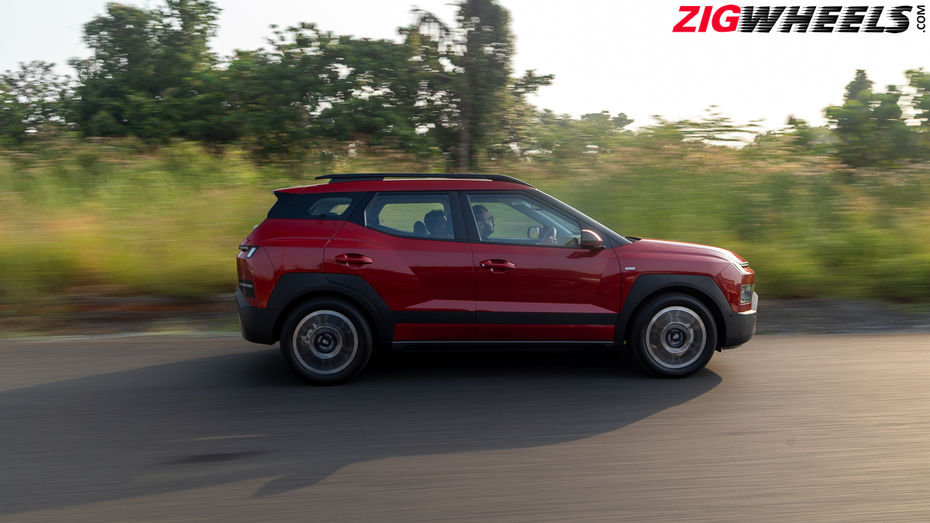
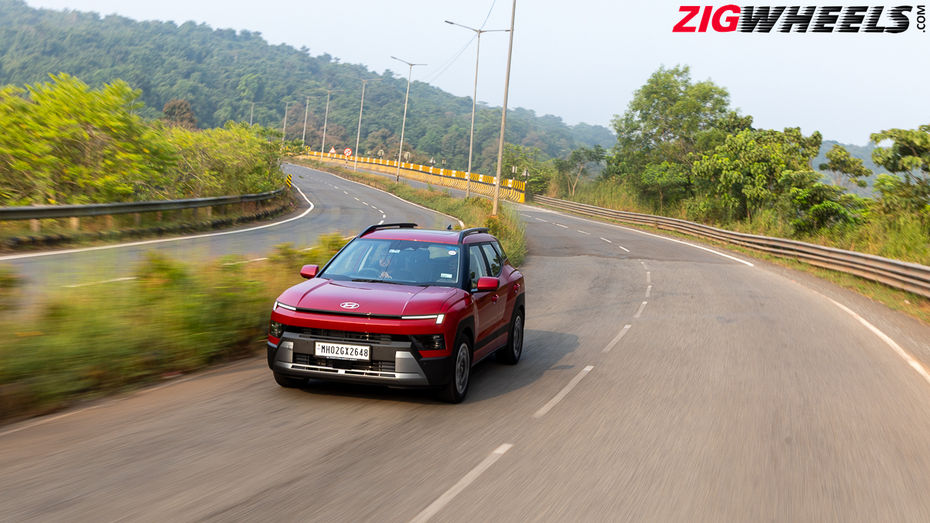
From a ride and handling standpoint, it becomes obvious that the Bayon is tuned for comfort. The overall package is neutral, with great cushioning on imperfect surfaces, expansion joints and bumps. At higher speeds, body control will be satisfactory. The rear feels a little light and floaty, but never unnerving. The steering is feather-light, making light work of parking in tight spaces and U-turns. Don’t expect it to reward you when you’re pushing hard through the bends.
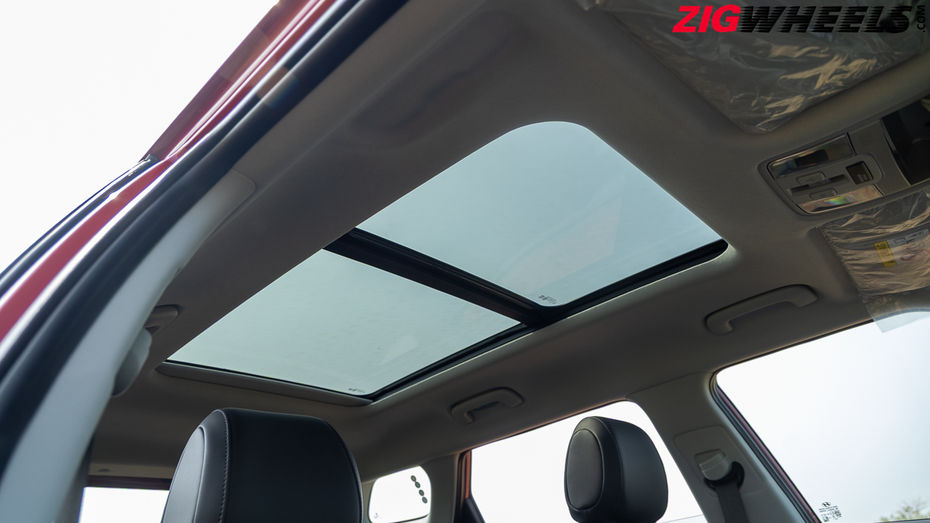
I find myself confused, staring at the feature list of the Bayon. It has practically everything you want. Yet, nothing really stands out as the highlight. Twin 12.3” displays, an 8-speaker Bose audio system, wireless charging, 360° camera, panoramic sunroof, 8-way powered driver’s seat — all staples in this segment now. A few more functional features, such as a rear central headrest, rear sunblinds and a powered co-driver’s seat, would’ve been great to have.
The big talking point is, of course, GenAI, powered by Perplexity AI and SoundHound. It’s the equivalent of having a voice conversation with any AI assistant on your phone. In the car, you can get help on the fly, such as planning routes, finding fuel bunks/restaurants etc. A small issue is that the AI overrides everything on the screen and then causes the system to default to the home screen. You’ll need to reopen Apple CarPlay/Android Auto if you were using that.
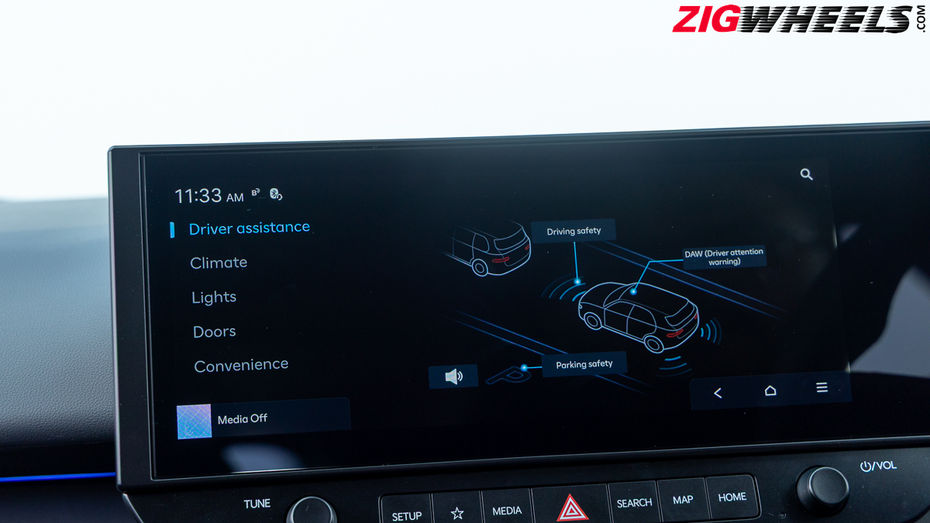
Safety kit is loaded too, with six airbags, ABS with EBD, traction control and ISOFIX child seat mounts. You’ve got Level 2 ADAS in the top trim with the staples of emergency braking, lane keep, blind spot monitoring and adaptive cruise control. Hyundai’s ADAS calibration has always been easy to trust, and it remains so with the Bayon. I just wish for more polish in the calibration of low-speed emergency braking. On more than one occasion, the vehicle decided to jam the brakes hard for no apparent reason.
The reason for its existence is rather pragmatic. You see, the new Creta debuts in a few months from now, and it becomes bigger and more expensive then. Hyundai would rather have you pick an option from their showroom than their rivals. There’s nothing that screams and shouts in the Bayon’s package, and the pricing - especially at the top end - is difficult to justify currently.
It does become a lucrative option for those considering a top-spec small SUV; you could get a well-kitted Bayon for the same price with the advantage of size and space. On the whole, the Bayon remains a package that’s neutral enough that I can recommend it without hesitation.


Hyundai Bayon Explored In Detail With 17 Images: Is It Good Value For...
Hyundai Bayon Launched At Rs 10 Lakh! A Cup Of Vanilla Ice Cream, Yet...
All-New Hyundai Bayon Compact SUV Revealed! Sportier Compact SUV To...
Hyundai Bayon Upcoming SUV Confirmed: To Rival Even Its Bigger...
Kia Seltos
Honda Elevate
Maruti Suzuki Grand Vitara
Tata Sierra
Maruti Suzuki Victoris
India's largest automotive community
Hyundai Creta
Hyundai Venue
Hyundai Verna
Hyundai i20
Hyundai Exter
Hyundai Bayon
Tata Sierra
Mahindra Thar OG
Tata Punch
Maruti Suzuki Brezza
Mahindra Thar E
Rs. 25.00 Lakh
JSW Chery iCar V23
Rs. 20.00 Lakh
JSW Jaecoo J5 EV
Rs. 20.00 Lakh
 2026 Mercedes-Benz GLC Electric Launched In India At Rs 78.5 Lakh, Gets A Massive Screen And Over 700 Km Of Claimed Range
 Aston Martin Cars Get Rs 4 Crore Cheaper! Has India-UK FTA Blessed Us Well Enough?
 2026 Toyota Glanza Facelift Explored In 13 Real-Life Images! What’s New With The Premium Hatchback?
 Range Rover SV Sawai Collection Launched At Rs 4.90 Crore! Comes In Three Themes!
Top 5 Things We Loved About The Renault Duster Hybrid