 2026 Mahindra Thar OG Launched At Rs 10.32 Lakh: Here's What's New
Tata Harrier EV Review: Tata’s Best Foot Forward!
- Published July 20, 2025
- Views : 4991
- 9 min read
-

-

-
 Follow us
The Harrier EV isn’t just Tata’s best EV effort yet, it’s their best car on sale. That doesn’t mean it’s for everyone though.
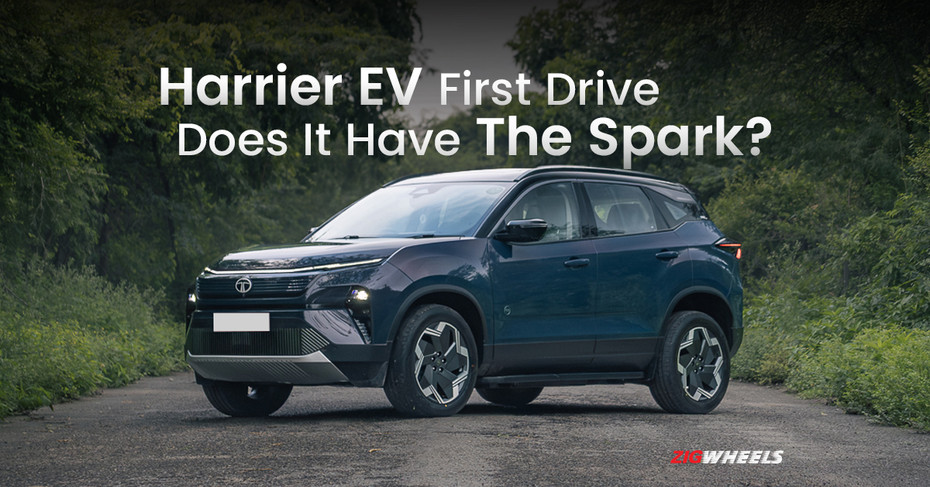
The Tata Harrier EV has had more of a build up around its arrival than most movies do. Tata’s biggest electric car has proven to be quite a hot topic on the internet but we finally had the chance to test it in the real-world and see how the Harrier nameplate changes with electrification.
Looks
When it comes to electric car design, there are two polar opposite styling ideologies. One says electric cars should be designed in a manner so different, they announce to the world they’re electric even before you slap on the green number plate. This is the philosophy Mahindra has taken for their new age electric cars like the BE6 and XEV9e.
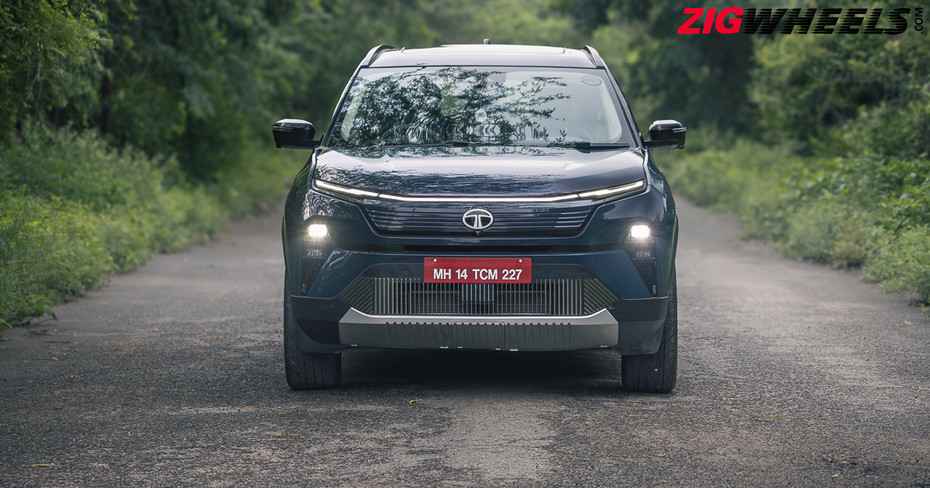
The other philosophy is what Tata has followed so far. Take an existing car and make minor functional tweaks for electrification while still keeping the identity similar. I think Tata has taken the right call doing this with the Harrier in particular. The styling package of this SUV is a strong selling-point to begin with and didn’t really need any fiddling with.
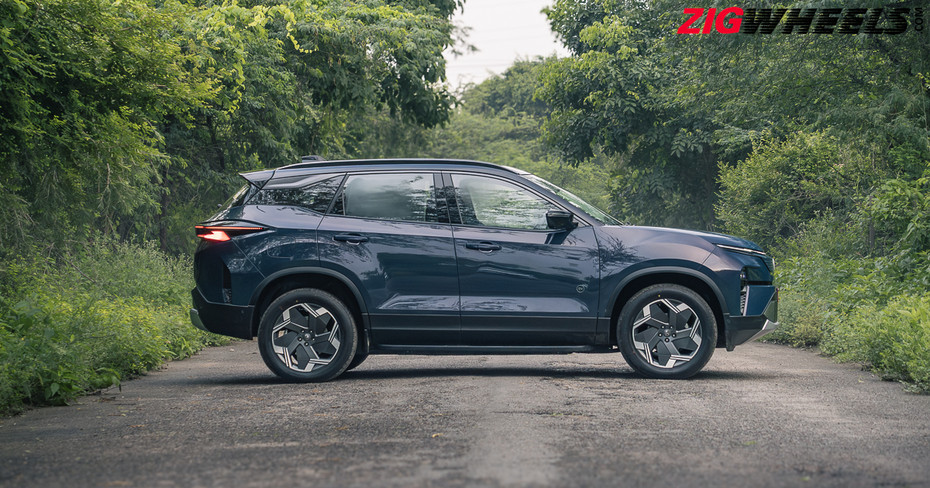
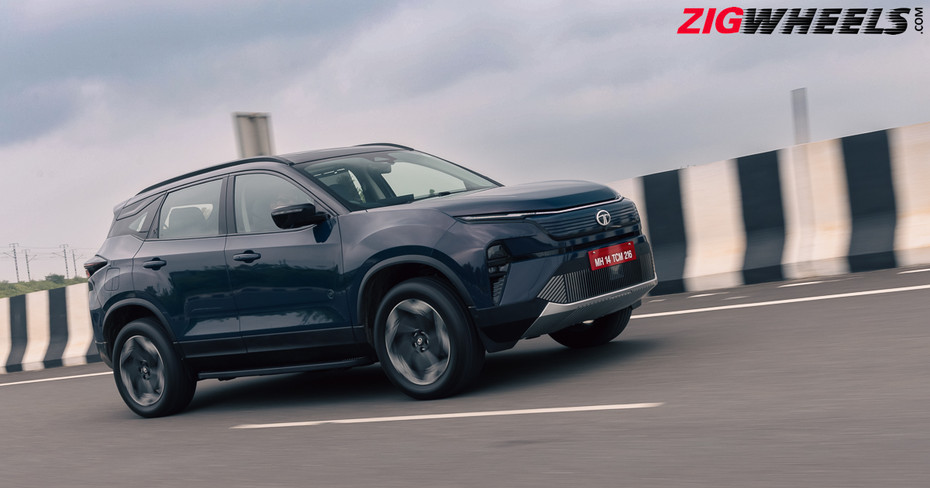
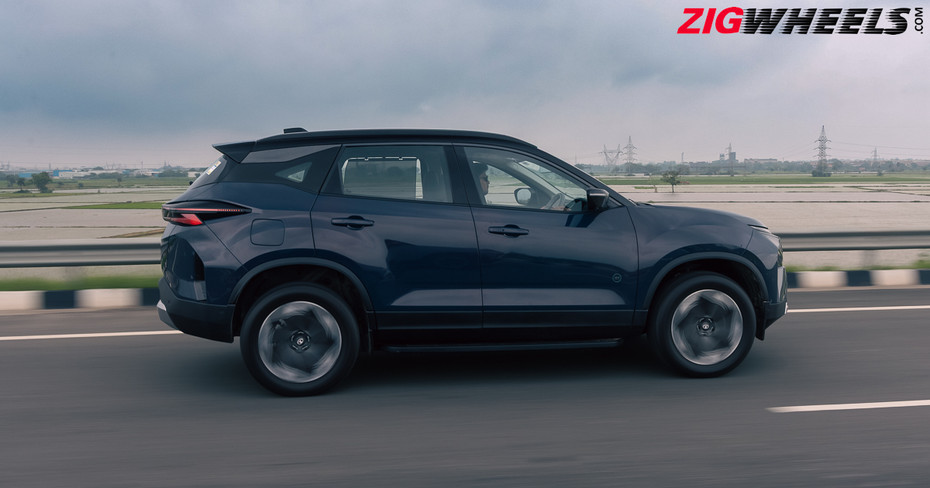
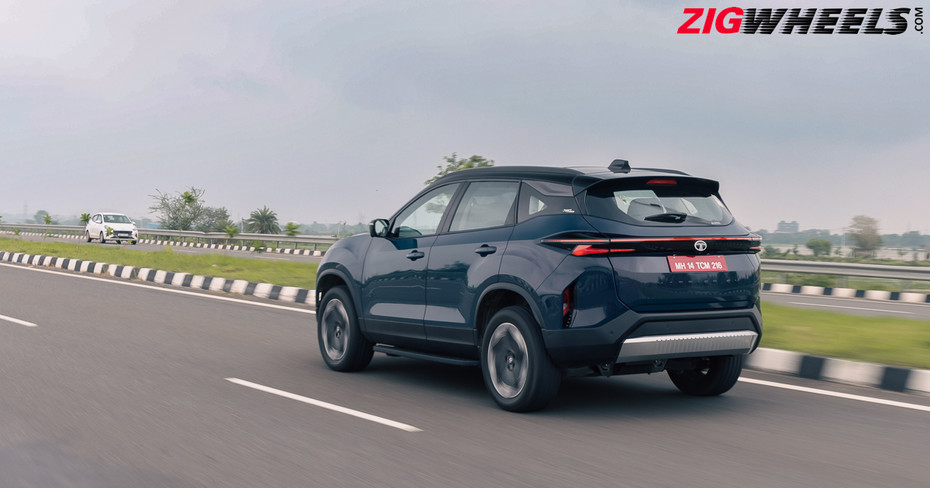
At the top, you’ll spot the connected LED DRLs with the outer halves doubling-up as the indicators. Move to the fascia and you see LED projector headlights included as standard and the Harrier EV also offers LED front fog lights. At the side profile, the 19-inch aero-styled alloy wheels make it apparent that this is an electric car, but that aside it looks the same as the standard Harrier. It must be said, this Nainital Nocturn paint job looks especially unique from this angle.
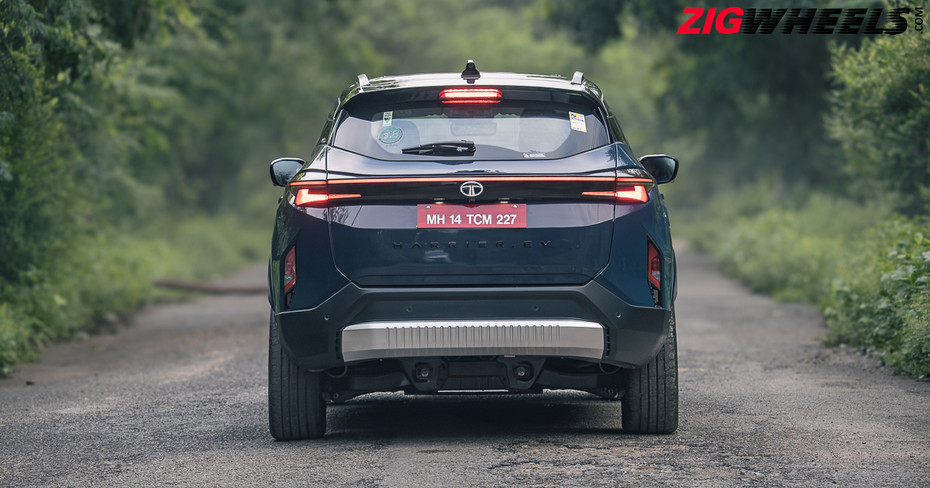
The rear end looks distinctive with the Harrier’s almost coupe-like outline. The Harrier EV’s colour options stand as a contrast to the bright green number plate this car will wear. No bright, red or yellow, and the most distinctive options are the darkest. Get this Nainital Nocturn Blue (which has magenta flakes in the paint) or the Stealth Edition to stand out the most.
Interior
The similar, but not the same theme continues with the interior as well. Each variant gets a colour theme of its own. Black and brown in the base ‘Adventure’, all black in the ‘Fearless’ variant and the combination of grey, black and white in the ‘Empowered’.
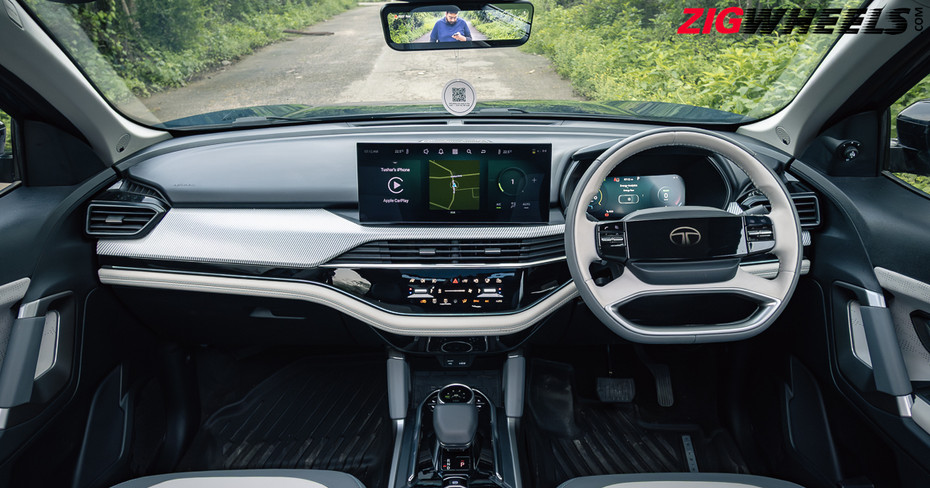
Fitment quality itself is no different than the Harrier and there are some premium finishing touches like the leatherette-padding you see on the door pads as well as the dashboard. The driving position is commanding as ever and the sheer amount of bonnet in front of you makes you enjoy the feeling of being at the helm of a big SUV.
Space
This is one aspect where there is a very apparent drop in comparison to the Harrier diesel. On the plus side, there is more than enough cabin space for a 6 foot tall driver to sit behind his/her own driving position. Headroom is also reasonable for people of the same height in both seat rows.
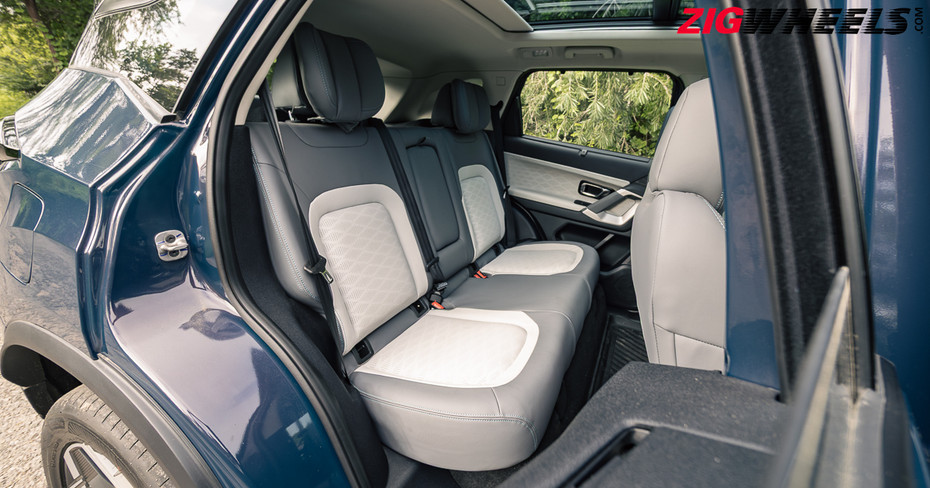
However, if you are over 6 feet tall or prefer sitting in a driving position that's close to the steering, your left knee can easily graze or get pushed right into the centre console. This makes the driving position difficult to live with for exceptionally tall drivers, which isn’t the case with the Harrier diesel. You also sit in a slightly more knees-up position here so the switch to EV hasn’t come without compromise.
Boot
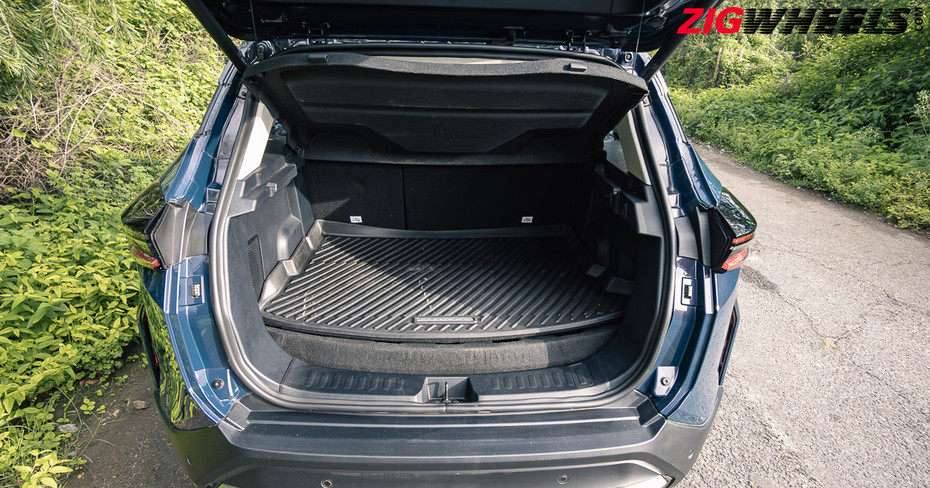
Another change with the switch to EV, is the placement of the spare tyre (space saver) under the boot floor (diesel carries it behind the rear-axle). While the boot space is rated at 502-litres, it’s counted all the way till the roof. With the parcel tray in place, you can get a full-sized suitcase plus one soft bag in at most. You have more storage space in the frunk. The RWD models have a 67-litre/35kg capacity, whereas the all-wheel drive models get a 35-litre/17kg capacity.
Practicality remains strong as ever, though, with plenty of space for 1-litre bottles and knickknacks in each door pocket, cupholders for front and rear occupants and a big glovebox. Rear occupants also get 65W USB type-C chargers (x2) while there is a 45W USB type-C fast charger upfront, along with a USB type A-port and a 12V accessory socket. There are USB ports underneath the central armrest as well.
Features
It’s not just about features but also how much comes as standard. 6 airbags, tilt and telescopic steering adjustment, 18-inch alloy wheels, auto climate control with pillar mounted rear AC vents, a 10.25 inch touchscreen, a digital cluster of the same size, 6-speakers and a whole lot more come right from the base variant.
Higher variants add:
-
Panoramic sunroof
-
Dual-zone climate control
-
Wireless phone charging
-
Boss-button for better backseat comfort
-
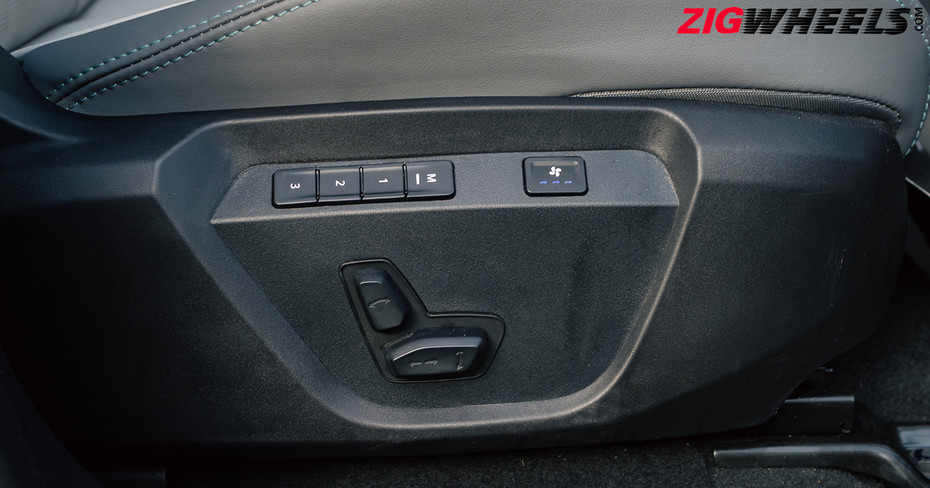
Powered and ventilated front seats with driver memory
-
Ambient lighting
-
Powered tailgate
-
Sequential turn-indicators
-
Front and rear fog lamps
-
Driver-knee airbag
And all the stuff you probably watched the reels of - auto parking, remote parking, summon mode, reverse-assist and the like.
The IRVM itself doubles up as the display for the roof-mounted rear view camera. This is separate from the reversing camera. It displays a high-resolution feed of your rear view, in case the IRVM itself isn’t offering enough visibility, say, if you have rear passengers blocking your line of sight or the boot is loaded up all the way to the roof. It also doubles up as a dashcam (front and rear-view).
The execution could have been better because the combination of the camera feed plus the reflection from the IRVM itself, sometimes causes glare and double-vision, negating the benefit of this feature i.e. you see the camera feed showing you a car behind you and the reflection of that same car in the IRVM at the same time
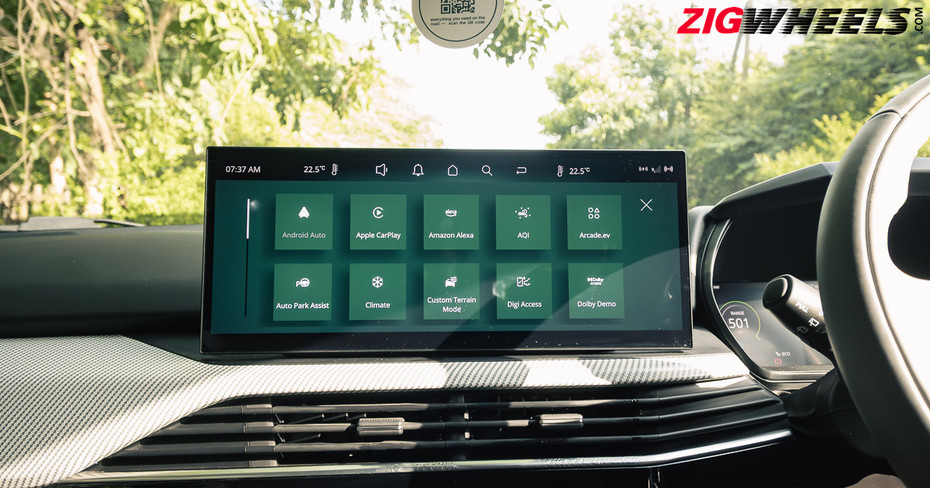
The 14.5-inch touchscreen, though, is executed brilliantly. Great resolution aside, the menu options are easy to navigate through, and the touchscreen is very responsive. Android Auto and Apple CarPlay are supported wirelessly and you also get the Arcade.EV feature which you can use to watch YouTube videos or stream other content. The screen also comes paired with a 10-speaker JBL music system, coupled with Dolby Atmos, delivering an immersive and thorough surround-sound experience. Even the digital instrument cluster has been designed thoughtfully giving you easy access to key data like trip information, the tyre pressure monitor, current media playing and can also show you Apple Maps or Google Maps feed here, depending on what you’ve paired to the system with. All in all the Harrier EV is absolutely loaded to the brim!
Drive
|
Battery and Charging Specifications |
||
|
Capacity |
65kWh |
75kWh |
|
Claimed Range |
538km |
627km (RWD) | 622km (QWD) |
|
DC Fast Charging (20-80%) |
~25 minutes @ 100kW |
~ 25 minutes @ 120kW |
|
7.2kW AC Fast Charging (10-100%) |
9.3 hours |
10.7 hours |
|
Specifications |
RWD |
QWD |
|
Power |
238PS |
158PS (Front) | 238PS (Rear) |
|
Torque |
315Nm |
504Nm |
The electric Harrier is offered with two battery packs, both employing the LFP architecture. Power and torque output stay the same for the rear-wheel drive versions, with a lot more gusto available if you switch to all-wheel drive (quad-wheel drive in Tata speak or QWD). While the rated range figures are impressive, in real world conditions, we expect about 420km of range with the smaller pack and between 450 to 500km of range with the bigger pack.
The battery also comes with an unlimited kilometre/15-year warranty on the HV battery (what Tata calls the “lifetime” warranty) for the first owner. For a second owner, it’s 10 years from first registration or 2,00,000km. There’s an 8 year or 1,60,000km warranty on the motor.
While the on paper output figures are certainly impressive, Tata has decidedly focused on usability and convenience over outright excitement, even with the all-wheel drive version. Power delivery is smooth, responsive and immediate in any given driving conditions, and you’ll never really feel the need to step out of Eco mode, even though there are City and Sport modes available, along with a Boost mode exclusive to the all-wheel drive.
There are multiple regenerative braking modes available as well that are controlled from the paddle-shifters, including maximum regen that is close to a single-pedal mode, but doesn’t bring the car to an absolute stop when you let off the accelerator completely.
Ride
A big part of what makes the Harrier EV‘s experience sophisticated is the right quality. Even with big, 19-inch alloy wheels and a large battery pack weighing the car down, the suspension offers brilliant bump absorption, and high speed stability. This ensures a comfortable experience even over changing road conditions. Noise insulation also proves to be quite strong, and the car certainly feels more sophisticated to use than the Harrier diesel.
Safety
Tata slammed this one into a deformable barrier too for a full 5/5 star crash safety rating from Bharat NCAP. Safety features include up to 7 airbags. ABS with EBD, ISOFIX child seat mounts, ESP, 360-degree camera, front and parking sensors, along with ADAS. The advanced driver-assistance systems package includes adaptive cruise control with stop-n-go, lane departure warning, lane-keep assist, a blind view monitor, blind spot warning, rear cross-traffic, auto-high beam assist and more.
While Indian driving conditions still make it tricky for all of these systems to be relied on completely, Tata has tuned them quite well for our traffic peculiarities. These features are especially worth investing in if you expect to do extensive highway driving.
Verdict
If Tata could’ve left the Harrier’s space and practicality formula absolutely untouched, it would’ve been just perfect. As it stands, the Harrier EV does make some notable compromises vs its diesel-counterpart but for most (not all) potential suitors, the alterations aren’t deal breakers. The performance is quick, the range is good for real-world sensibility, the ride is comfortable and the features package enters into a new dimension altogether. So if you are looking to go electric, you can consider going Harrier as well.
Tata Harrier EV Video Review
Add Your Comments


Tata Harrier EV Alternatives
-
 Maruti e Vitara
Rs. 16.19 LakhCompare with Harrier EV
Maruti e Vitara
Rs. 16.19 LakhCompare with Harrier EV -
Mahindra BE 6
Rs. 19.45 LakhCompare with Harrier EV
-
Mahindra XEV 9e
Rs. 21.90 LakhCompare with Harrier EV
-
MG Windsor EV
Rs. 14.70 LakhCompare with Harrier EV
-
Tata Nexon EV
Rs. 12.49 LakhCompare with Harrier EV
See what our community has to say! NEW
India's largest automotive community
Explore Now

Tata Cars in India
-
Tata Punch
Rs. 5.75 Lakh
-
Tata Sierra
Rs. 11.49 Lakh
-
Tata Nexon
Rs. 7.40 Lakh
-
Tata Tiago
Rs. 4.77 Lakh
-
Tata Punch EV
Rs. 9.79 Lakh
Best SUV Cars
-
Maruti Suzuki Brezza
Rs. 7.40 Lakh1462 cc | 21.1 kmpl | 102 bhp
-
Tata Punch
Rs. 5.75 Lakh1199 cc | 72 bhp
-
Maruti Suzuki FRONX
Rs. 6.85 Lakh1197 cc | 21.8 kmpl | 88.5 bhp
-
Tata Sierra
Rs. 11.49 Lakh1497 cc | 116 bhp
-
Tata Nexon
Rs. 7.40 Lakh1199 cc | 17.4 kmpl | 99 bhp
- Latest
- Popular
-
2026 Mahindra Thar OG Launched At Rs 10.32 Lakh: Here's What's New
-
 Tata Launches Legend Series And Dark Edition For Sierra: Gets More Luxury And Stealth!
-
 MG Hector Tomahawk EV Short Review: So Comfortable!
-
 5 Things We Love About The MG Hector Tomahawk EV
-
EXCLUSIVE: Tata Tigor To Be Replaced By Tata Aeris
Top Car Brands
- Home ›
- Tata Cars ›
- Harrier EV ›
- Expert Reviews ›
- Tata Harrier EV Review: Tata’s Best Foot Forward!
- Colours
- Range
- Images
- News
- Dealers
- Offers
- Services
- Electric Charging Station
- Brochures
×
×