Nissan Launched The Tekton SUV - Its Latest Compact SUV Contender...
- Jul 9, 2026
- Views : 9119



 Follow us

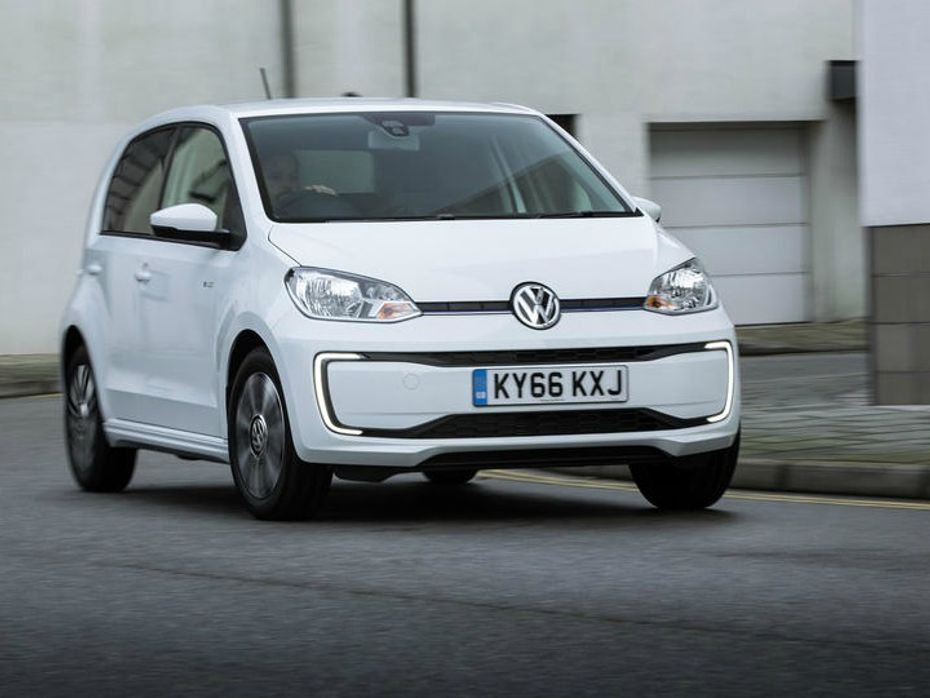
The up!’s electrical variant was the first pure electric vehicle (EV) to come out of the German automaker’s stable back in 2013. The charming little hatchback has now received an update which was showcased at the 2017 Frankfurt Motor Show.
The e-up! features an electric motor that produces 82PS of power and 210Nm of peak torque. A single-speed transmission transfers the power to the rear wheels. In terms of performance, it can go from standstill to 100kmph in 12.4 seconds and has a top speed of 130kmph. Its 18.7 kWh battery pack offers a driving range of 160km, which isn’t too bad but does make it primarily a city car.
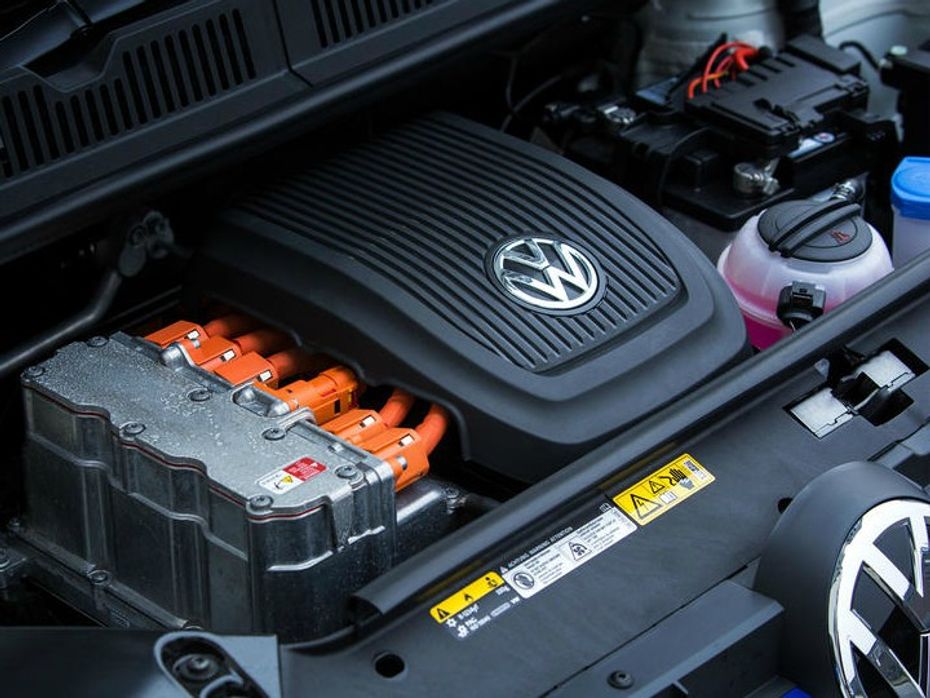
The EV offers a decent ground clearance of 135mm and a reasonably sized 250-litre boot. Like its other siblings in the up! range, the e-up! too received some changes to its design in 2016. Visually, there are no major differences between the standard model and the electric variant.
Just like the standard version, the EV too was lengthened to 3600mm last year. It also got a larger grille opening, fresh front and rear bumpers, sharper headlamps and tail lights, and re-engineered ORVMs with turn signals. Three new colours were also added to the range.
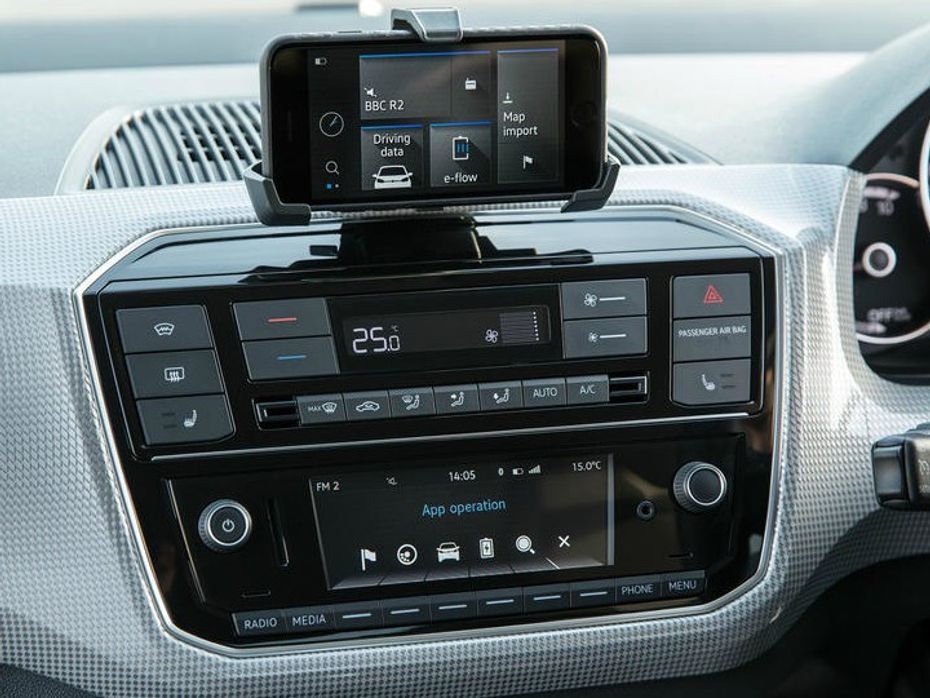
It also got additional features that are not available in the standard model like Climatronic climate control system and Citybrake Emergency Braking function. The update also gave the e-up! owner the ability to control the lights at his/her home from the car, a rain sensor and a composition phone radio and maps. The centre console now features a sharper design too.
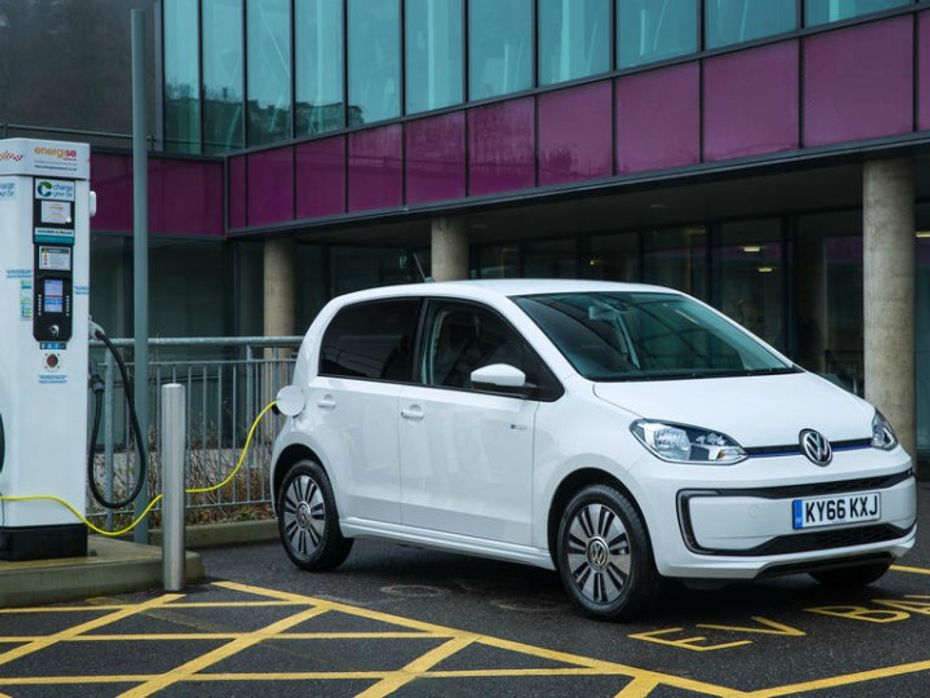
We believe the e-up! is the perfect choice of pure electric vehicles from Volkswagen’s range to be introduced in our country. The e-up! could prove to be a boon for people living in cities that struggle to cope with traffic with its small size and easy-to-manoeuvre nature. In addition to this, the e-up! will also be an economical and smart choice given how cheap electricity as a fuel will be (estimated to cost around a rupee for every kilometer). One should note that it takes nearly 12 hours to charge the car completely on a standard charger of 3.7kW but if you are commuting in the city alone, there will rarely be days when you run out of complete battery to have to charge it from point 0.
Yes, it will cost significantly more than the Jazzs and Balenos of the world. But if priced competitively and supported with government subsidies, it has the potential to make it big in the country as an alternative to hatchbacks from luxury brands.
Recommended Read:
- A Volkswagen Ride That Will Drive You Into The Future
- Volkswagen’s new Roadmap to Electrification

Nissan Launched The Tekton SUV - Its Latest Compact SUV Contender...
MG's First Plug-in Hybrid SUV Arrives July 16? Here’s...
Sierra Finally Gets An Electric Powertrain! Tata Sierra EV Launched...
2026 Renault Kwid Launched At Rs 4.52 Lakh! Entry-level Hatch Gets...
Mini Countryman C Launched In India At Rs 47.50 Lakh: Know Everything...
Tata Sierra EV Launch Tomorrow: Check Out These 7 Other EVs Launching...
Top 5 Honda Cars That Every Indian Loved
Current And Upcoming Plug-In Hybrid Cars In India: Jetour T2; BYD...
2026 Citroen eC3 X Launched With Updated Styling, New Features And...
India's largest automotive community
Nissan Tekton
₹ 10.49 Lakh
Skoda Kodiaq RS
₹ 66.99 Lakh
Tata Sierra EV
₹ 18.79 Lakh
BMW X6
₹ 1.78 Crore
Mini Countryman C
₹ 47.50 Lakh
 Tata Sierra EV Empowered Variant Explained In Detail; Most Value-for-money Trim?
 2026 Tata Sierra EV Short Review: What We Liked & What Needs To Improve
 Top 5 Interesting Features In The New Tata Sierra EV That You Should Know About
 Volkswagen Tayron Lower-spec Life Variant Launched, Priced At Rs 41.99 Lakh
2026 Nissan Tekton To Make Its Global Debut Tomorrow! Here’s What To Expect…
Volkswagen Tayron Lower-spec Life Variant Launched, Priced At Rs 41.99 Lakh
2026 Nissan Tekton To Make Its Global Debut Tomorrow! Here’s What To Expect…