Nissan Launched The Tekton SUV - Its Latest Compact SUV Contender...
- Jul 9, 2026
- Views : 9119



 Follow us

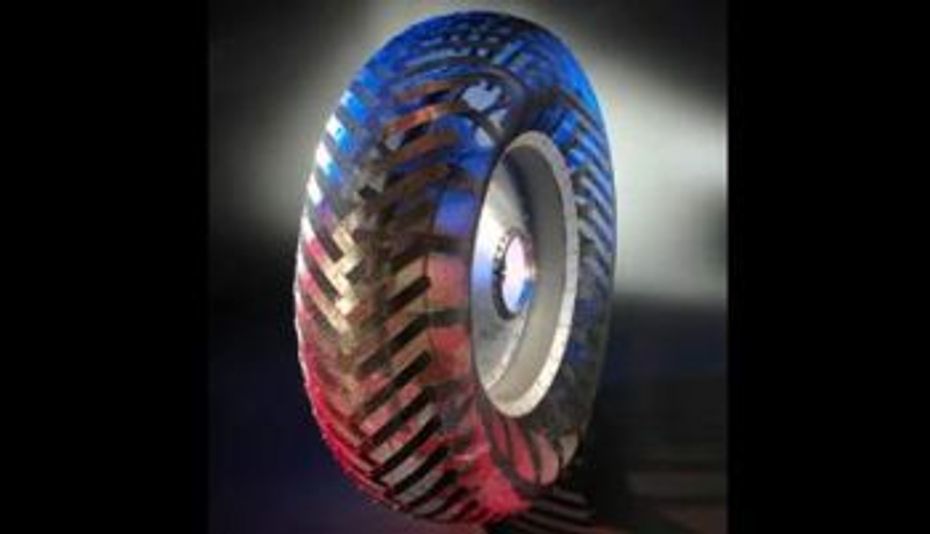
Right from the time when the NASA scientists thought about exploring the lunar surface with the help of vehicles, one of the biggest difficulties they faced was the terrain. Due to lack of any physical evidence of the moon's surface, the NASA researchers were forced to rely upon findings from previous studies and they came to the conclusion that the conventional rubber-pneumatic tyres would not have the same utility on the moon's surface. Thus work began on developing non-pneumatic tyres for the Lunar Roving Vehicle (LRV) and the task was handed over to the Goodyear Tyre & Rubber Company.
The first prototype wheel developed for the LRV was built out of zinc coated steel strands woven together and tied to an aluminum rim and discs together comprising the hub. The rigidity of the hub was increased by applying a 65cm diameter bump stop frame and for improving traction, almost fifty percent of the contact patch was covered with titanium chevrons. All this was done way back in 1971.
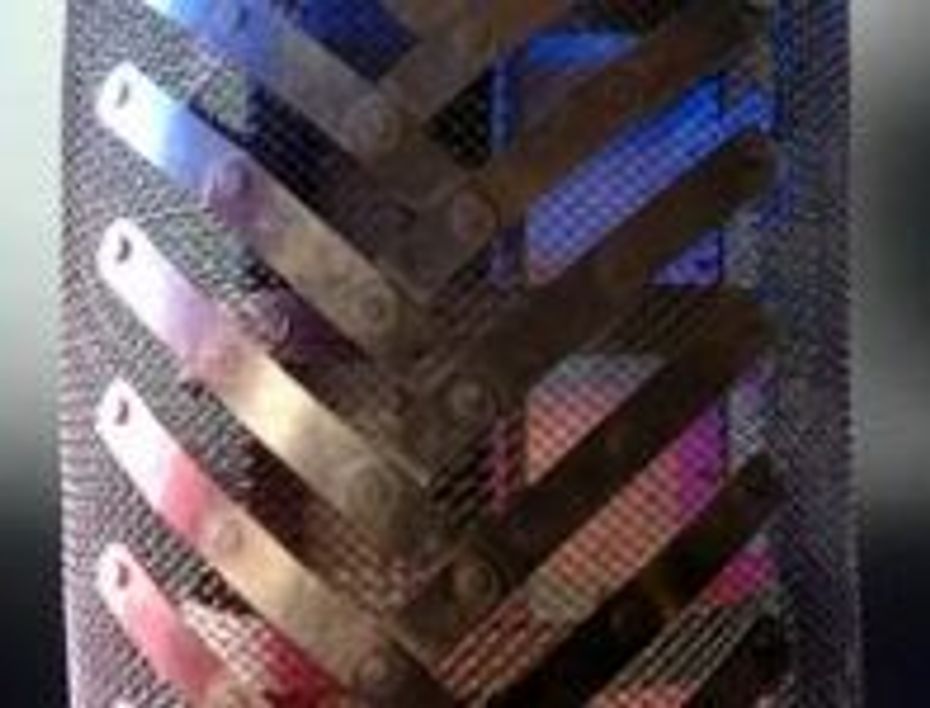
Thirty-seven years later once again Goodyear has managed to build twelve replicas of the first non-pneumatic tyre but with modern-day technology and better materials. The idea was to construct tyres for LRVs to be used by NASA for its future exploration projects on the moon and eventually on Mars. However, lack of information on manufacturing process of the earlier wire-mesh tyres made it difficult for the blokes at Goodyear's Akron Technical Centre to reinvent the moon tyre. The team then headed out to the National Air and Space Museum where one of the moon tyres was on display. They also got in touch with two retired members of the Apollo Lunar Roving Vehicle team, who each had been handed over a moon tyre as a souvenir for their contribution to the project.
Partly funded by NASA's Innovative Partnership Program (IPP), NASA's Principal Investigator, Vivake Asnani adds,"With Goodyear, we are developing airless, rubberless tyre technology to use on the moon and potentially Earth. We couldn't build tyres without them and they wouldn't deviate so drastically from the traditional design if we weren't sharing the risk."
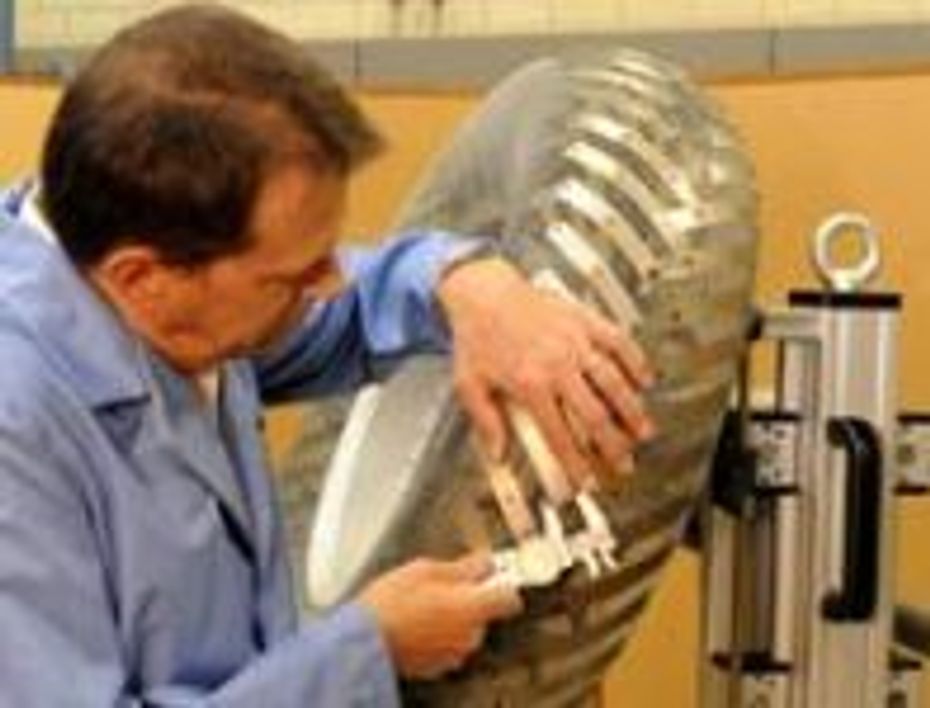
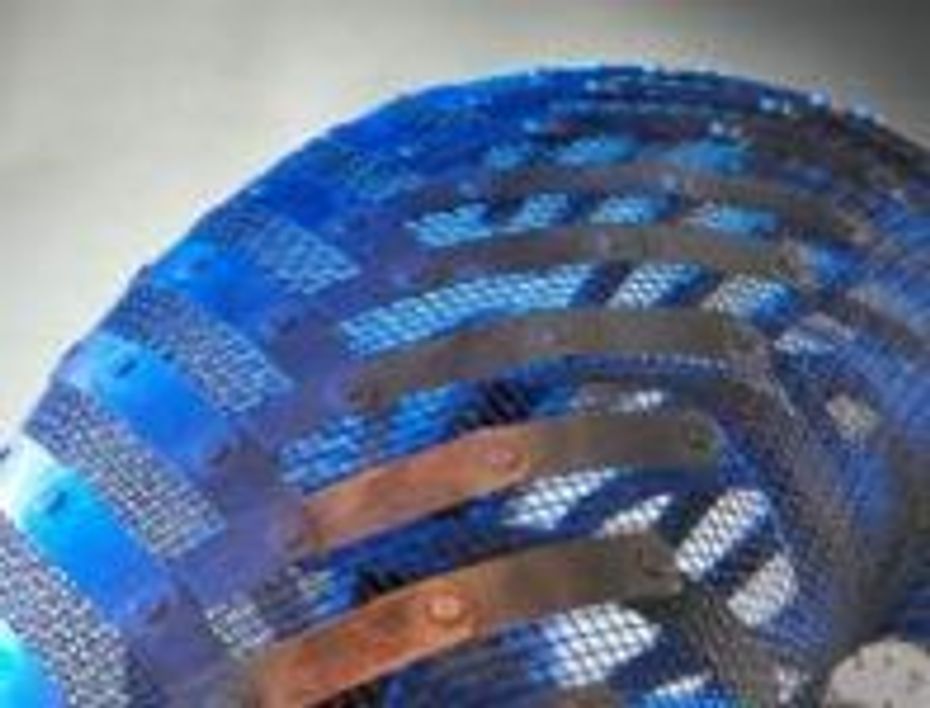
The new non-pneumatic tyre is made up of four basic elements - mesh, tread, inner-frame and hub. The thin mesh is woven out of piano wire while the tread is built from of a series of metal strips, which protect the wire-mesh under impact and also increase traction with additional contact patch over loose surfaces and soft soil. The basic skeleton of the tyre is built as a solid metal structure that prevents the mesh from de-forming over rocky terrain or during impact. Frame and mesh are firmly held in place by the hub which is connected to the vehicle body.
Goodyear Project Leader Rick Laske said,"Before the wire mesh could be woven, 3,000 feet of wire had to be custom-crimped and cut into 800 pieces."The team designed a handloom that could weave the crimped wires into a rectangle measuring 100 inches long and 25 inches wide. The ends of the rectangular sheet of woven mesh were then interlaced by hand giving it a cylindrical form that would change its height with change in its diameter. Finally, the mesh cylinder was fixed onto a circular jig to give it the shape of a tyre. In order to further strengthen the wire-mesh of the tyre, the entire assembly was baked in an industrial oven.
The final twelve replicas are being evaluated for their performance and stiffness."The measurements indicate that the original and replicate wire-mesh moon tyres have nearly identical mechanical properties," said Asnani,"The test data will enable NASA and industry to determine possible applications for the wire mesh tyre."The revolutionary tyre can also find use in commercial applications on earth.
Goodyear's Executive Vice-President and Chief Technical Officer, Joe Gingo commented,"The mission performance goals for these tyres will push known tyre technology well beyond its comfort zone and I am confident we have the capabilities to do that."The final twelve tyres will be demonstrated on the new NASA Chariot roving vehicle at the Johnson Space Center in Texas by the end of 2009. Given that ISRO has already launched India's first unmanned robotic probe 'Chandrayaan-1' into the orbit of the moon, maybe sometime soon an Indian LRV could use this Goodyear tech as well.

Nissan Launched The Tekton SUV - Its Latest Compact SUV Contender...
MG's First Plug-in Hybrid SUV Arrives July 16? Here’s...
Sierra Finally Gets An Electric Powertrain! Tata Sierra EV Launched...
2026 Renault Kwid Launched At Rs 4.52 Lakh! Entry-level Hatch Gets...
Mini Countryman C Launched In India At Rs 47.50 Lakh: Know Everything...
Tata Sierra EV Launch Tomorrow: Check Out These 7 Other EVs Launching...
Top 5 Honda Cars That Every Indian Loved
Current And Upcoming Plug-In Hybrid Cars In India: Jetour T2; BYD...
2026 Citroen eC3 X Launched With Updated Styling, New Features And...
India's largest automotive community
Nissan Tekton
₹ 10.49 Lakh
Skoda Kodiaq RS
₹ 66.99 Lakh
Tata Sierra EV
₹ 18.79 Lakh
BMW X6
₹ 1.78 Crore
Mini Countryman C
₹ 47.50 Lakh
 Tata Sierra EV Empowered Variant Explained In Detail; Most Value-for-money Trim?
 2026 Tata Sierra EV Short Review: What We Liked & What Needs To Improve
 Top 5 Interesting Features In The New Tata Sierra EV That You Should Know About
 Volkswagen Tayron Lower-spec Life Variant Launched, Priced At Rs 41.99 Lakh
2026 Nissan Tekton To Make Its Global Debut Tomorrow! Here’s What To Expect…
Volkswagen Tayron Lower-spec Life Variant Launched, Priced At Rs 41.99 Lakh
2026 Nissan Tekton To Make Its Global Debut Tomorrow! Here’s What To Expect…