Mahindra Thar Roxx vs Scorpio N: Why Character Still Wins
- Aug 10, 2026
- Views : 11881



 Follow us

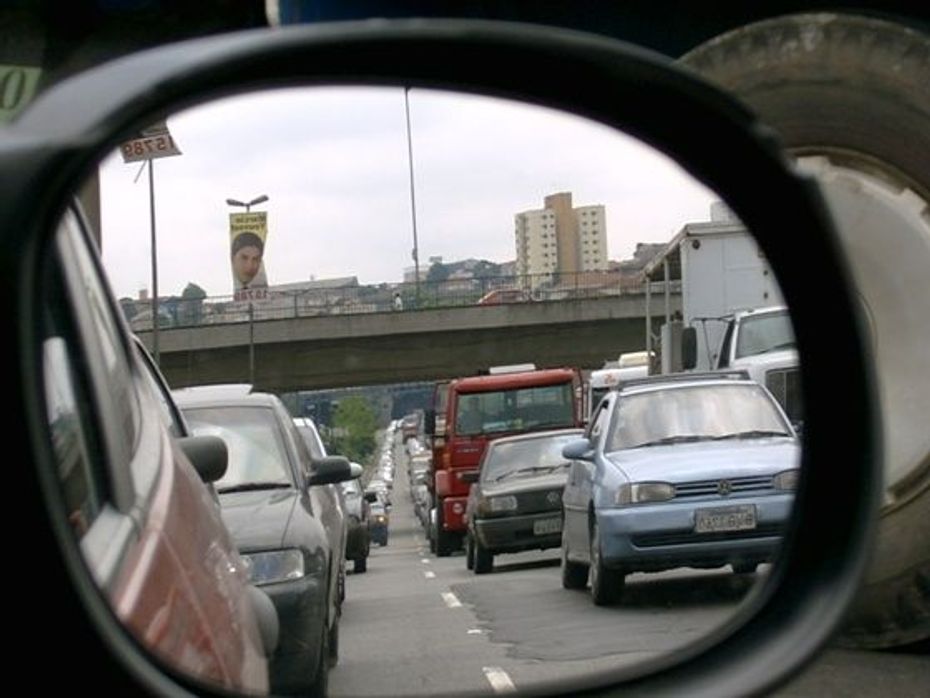
Is driving really the quickest way to get around the capital? New research shows that for 20 percent of their running time - 12 minutes every hour - Delhi's cars are no faster than pedestrians. An ongoing pilot study by the research group UrbanEmissions.info has found that a fifth of a car's traffic time is spent idling or crawling at less than 4 km/h due to heavy congestion on roads and too many signals.
"A car running at less than 4km/h is only as fast as, or slower than, a person walking. We are trying to understand how often cars run at such speeds. We found that cars crawl at 4km/h for almost 24 minutes in two hours of driving. The wastage of fuel is immense," said Sarath Guttikunda, co-director of UrbanEmissions.info.
For the study, IIT students equipped with global positioning system (GPS) devices drive across the NCR at different hours to collect speed data. So far, they have logged 120 hours on the road travelling to Noida, Greater Noida, Gurgaon, Dwarka and across South Delhi. The plan is to collect data for around 1,000 hours of motoring. "We use an algorithm in the geographic information system (GIS) to merge data and map it," Guttikunda said.
The study was begun to understand how the city drives - its acceleration and deceleration pattern. "This would also give us an idea of real-time emissions and our exposure to pollution. We would get a clear picture at the end of six months when we complete the study."
While pollution is the greater concern, understanding how driving conditions affect motoring costs is of immediate interest. In an imaginary scenario with one million cars plying on Delhi's roads for two hours, 200,000 litres of fuel (petrol/diesel) would be wasted, as per the study. "Since 24 minutes of idling wastes around 0.20 litres of petrol or diesel per car, fuel worth Rs 1 crore would be wasted when one million cars are running," Guttikunda said. For the simulation, the price of fuel is taken as Rs 50 per litre (a rough average for petrol and diesel).
Environment expert Anumita Roychowdhury said, "Delhi is seeing frequent increases in emissions. These findings reinforce the studies that have been done at various traffic intersections where vehicles move very slowly". Roychowdhury, executive director for research and advocacy at the Centre For Science and Environment (CSE), added: "If our city gets so congested, it's (the pollution) going to be unsustainable and is going to aggravate public health problems. There are increased emissions, and fuel consumption is very high if the car is run at such a slow pace so often. This has been substantiated by many other scientific studies."
Anumita and Guttikunda said making public transport and para transit (autos/mini buses) more efficient and better connected could ease congestion.

Mahindra Thar Roxx vs Scorpio N: Why Character Still Wins
Mahindra Scorpio Lifestyler Unveiled: Mahindra Returns to Lifestyle...
2026 Skoda Slavia Facelift Unveiled, Now Comes With Rear Massage...
2026 Mahindra Scorpio N Facelift Launched With Minor Styling Upgrades...
2026 Tata Nexon Camo Edition Launched: Does It Get Sweeter For The...
5 Things We Love About The Kia Syros EV
2026 Maruti Baleno Facelift Launch Confirmed! Check Out The Expected...
2026 Nissan Tekton Short Review: What We Liked & What Needs To Improve
Volkswagen To Bring A Sportier Kylaq With Sporty Sub-4-Metre SUV
India's largest automotive community
MG Hector Tomahawk PHEV
₹ 25.69 Lakh
MG Hector Tomahawk EV
₹ 19.49 Lakh
BMW X1 LWB
₹ 49.90 Lakh
Mahindra Scorpio N
₹ 13.69 Lakh
Toyota Hilux
₹ 31.99 Lakh
 Tata Motors Passenger Vehicles Rebrands as TATA.CARS: Carries 'Nothing's Too Far' As Brand Promise
 MG Hector Tomahawk PHEV With 1100 Km Range LAUNCHED At Rs 25.69 Lakh
 MG Hector Tomahawk EV Launched At Rs 19.49 Lakh! With Claimed Range of 517 Kms
 2026 Audi Q3 Unveiled In India Finally! Looks Truly A Generation Ahead!
BMW Unveils The i5 LWB For The First Time In India
2026 Audi Q3 Unveiled In India Finally! Looks Truly A Generation Ahead!
BMW Unveils The i5 LWB For The First Time In India