Royal Enfield Himalayan 750 Showcased In Brazil
- Aug 14, 2026
- Views : 8134



 Follow us

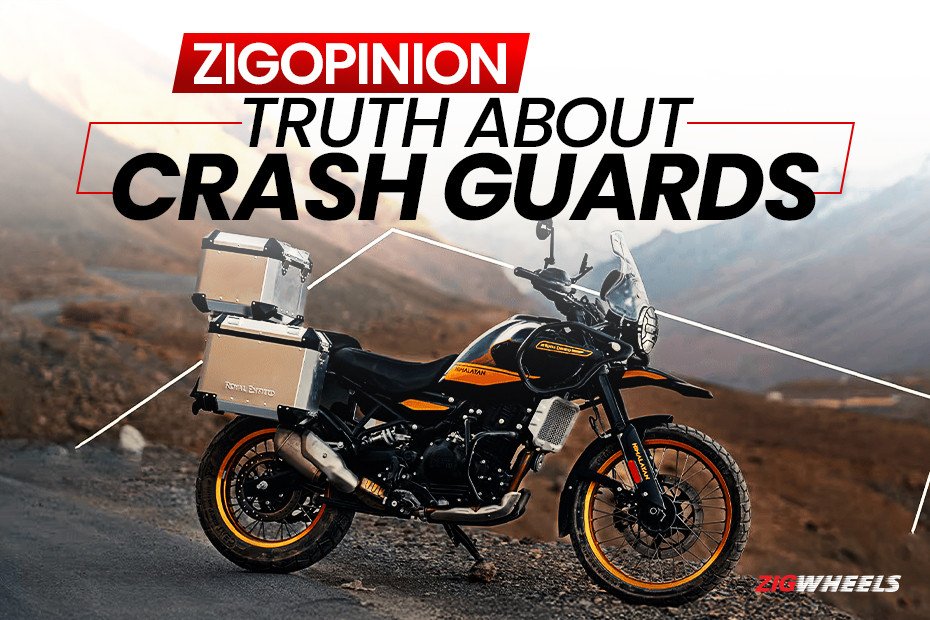
Motorcycle crash guards have been a hot topic ever since the ADV-related incidents popped up last year. Social media and pop culture would have you believe crash guards will protect your motorcycle in crashes and spills, but that’s only one part of it. Motorcycle manufacturers have put out official statements about installing aftermarket crash guards – most straight up just condemning it. Which begs the question – do you really need crash guards for your motorcycle?
In theory, crash guards should do as they are called – protect your bike. And yes they do help in minor spills and crashes but that’s about it. But a badly designed crash guard (this includes those marketed as indestructible) will do your bike more harm than good. On that note, I won’t be talking about the brands that you should be looking for. If you really must have a crash guard, the short answer to the question is you should be good with those that your bike’s manufacturer sells/has approved/certified.
I say this because no aftermarket crash guard manufacturer will and can do as much RnD as a motorcycle manufacturer. They simply don’t have the budgets and resources for it. And if there’s any brand that does, I urge you to compare their crash guard prices with your bike’s spare part prices – parts that would be damaged if they are unprotected in a crash.
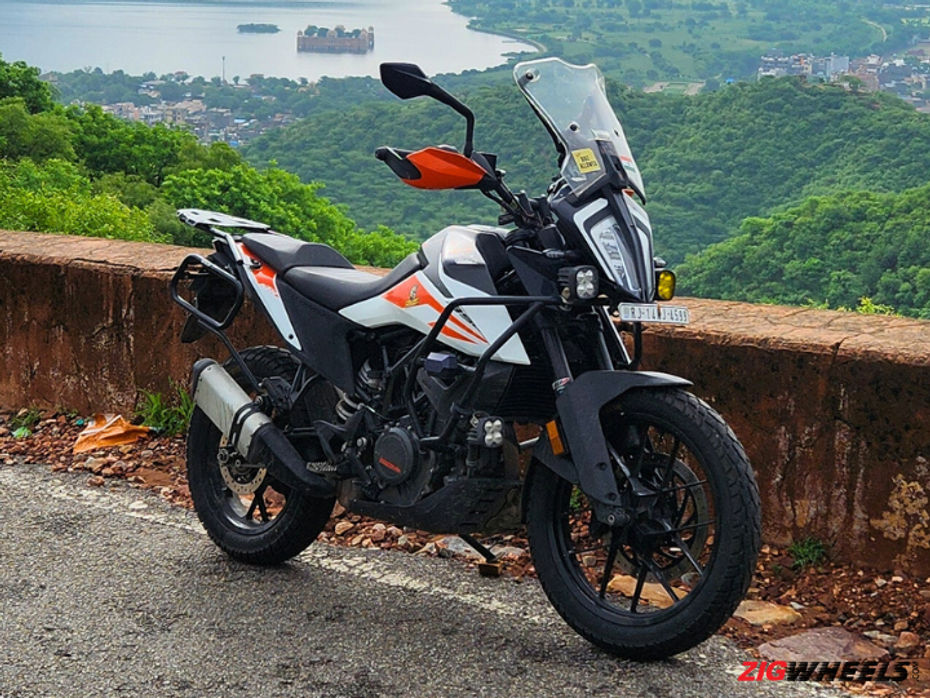
There's a lot more to designing a crash guard than welding a bunch of high-strength metal pipes together and packaging them with some high-tensile bolts. Au contraire, the bolts are the crucial pieces. They need to be the exact same spec as the manufacturer as specified – dimensions, torsional rigidity, and other technicalities. Anything on either side of the specifics is a recipe for disaster. They also need to be torqued in exactly. And I haven’t seen any one of the aftermarket installers have bolt torque sheets for each bike, let alone a torque wrench. But I digress. One of the key design elements in any crash guard should be failure points built into it, much in the same way cars have crumple zones to protect the occupants in case of a crash..
Also worth noting is the fact that many bikes don’t have specific mounting provisions for crash guard. That means you are left with mounting them on points that connect cycle parts to the chassis. Points that have very specific bolt specs and torques. And I don’t think you should be fiddling with such bolts, let alone change to a non-certified bolt and use the wrong torque.
An OEM designed crash guard will come with bolts that have been designed and tested to replace the existing bolts, with the extra load they will need to secure. Also, these guards are recommended to be installed by an official dealer or service center personnel – technicians who have been specifically trained to install them correctly.
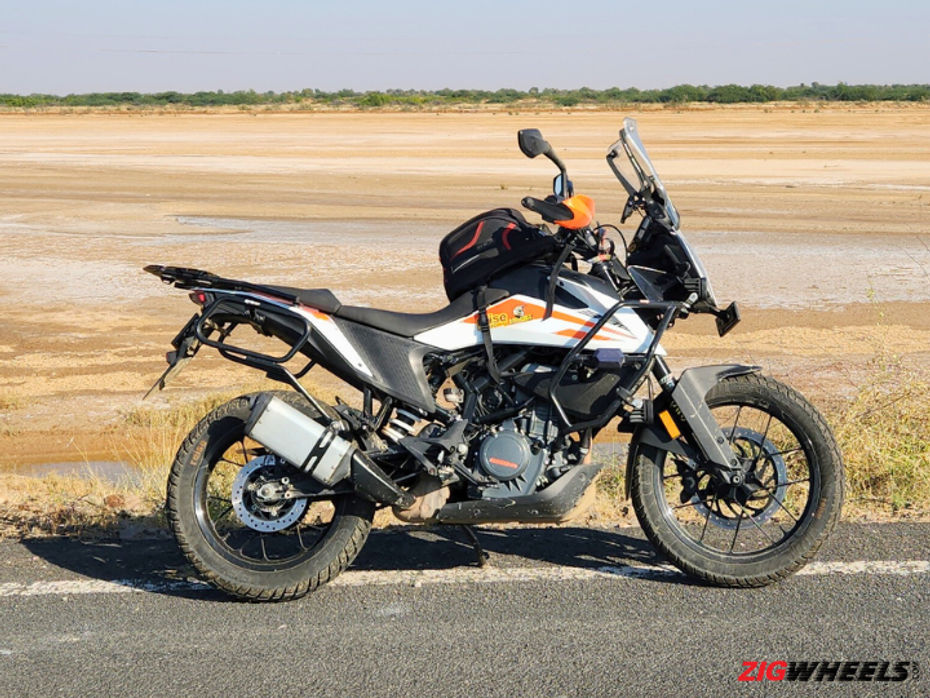
Look at a crash guard like a helmet. A helmet is supposed to absorb the force of the impact and deflect it from your head. If it just transfers the force to your head, what good is the helmet? On the same lines, a crash guard is supposed to absorb the impact and stop the force from being transferred to the bike. Since almost all crash guards are mounted on to the chassis, this becomes paramount. This is where the failure points come into play. A failure point ensures that the crash guard breaks or bends there with the force of the impact. Thereby preventing the impact force from transferring to the chassis. Without the said failure points in a chassis-mounted crash guard, your bike might look undamaged after a crash. Though in reality, the chassis would have borne the brunt of the crash. And in most cases, unnecessarily, and in a few, catastrophically.
Another parallel to draw here is the brake/clutch levers. If you have noticed a bike that has been dropped, even gently, the levers bend or break. That means they have prevented the impact force from traveling further ahead to other components. Most levers have clearly visible failure points – small indents near the outer end of the levers. This is also true for footpegs and foot levers. In the same breath, I must also mention that all the body parts surrounding the engine and the chassis provide some form of protection to them by absorbing/deflecting the impact force. These include your body panels, handlebar, mirrors, levers, et al. Even the fuel tank or the plastic panels around it. And if you think about it, all of these parts are cheaper than a really well-designed crash guard. Especially for almost Indian-made bikes under 500cc. And for entry-level bikes, all these parts combined should be cheaper.
For those with higher-capacity imported bikes, especially with those protruding-head boxer engines, do you really think the manufacturer wouldn’t have done enough crash testing? Especially since they can include the “extra” crash testing costs into the price of the bike. Even then, the price of good guards for these bikes are exponentially higher than smaller-capacity bikes. That makes the guard vs spare parts cost comparison valid for these bikes as well.
Motorcycle crash cages are completely different and not at all meant for street riding. These are primarily meant for stunt bikes. These bikes are ridden at relatively slower speeds and the most crashes that happen in stunt events are at even lower speeds. And in some cases, these cages provide extra standing points for riders to perform the stunts.
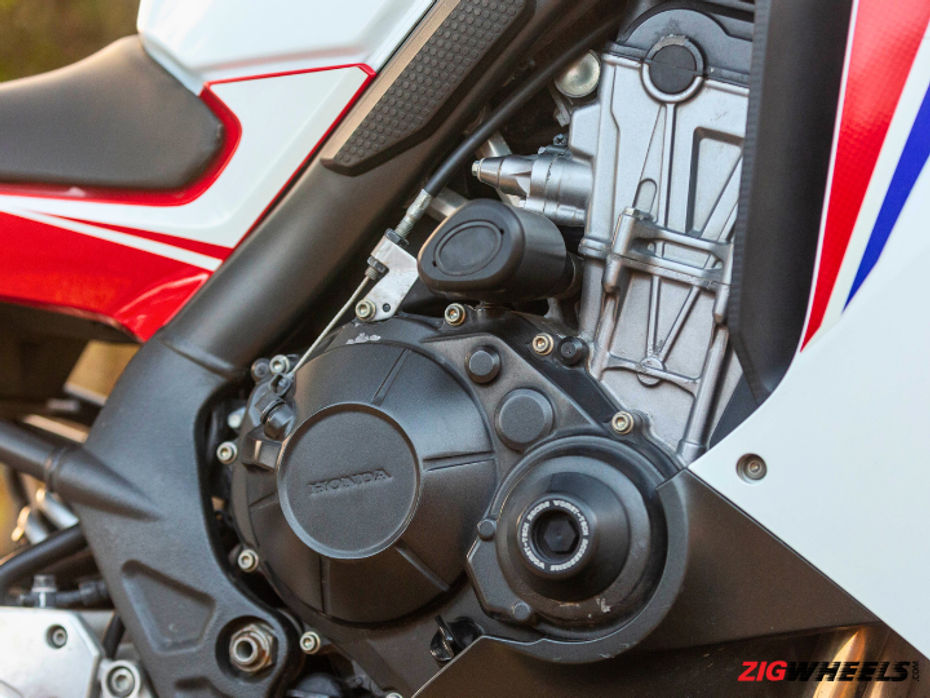
For track and faired sportbikes, you have the frame sliders. On a track you either have a low side and slide, or have a high side and flip a bike. You can only protect the bike in case of a slide; a bad high-side could very well just put it out of scope for any repairs. The frame sliders allow the bike to slide, and they wear down to protect the protruding parts from the damage. This allows the rider to pick up the bike and ride again. In a heavy impact crash, these will transfer the force to the chassis but they have some form of failure point built into them as well. On public roads, these sliders have almost no use since you don’t have run-off areas for the bike to slide into. On the street, you are most likely to slide into a footpath or a median, or another vehicle.
Now, you might be thinking about really bad accidents where your bike’s engine and chassis would get damaged. Here, my fellow enthusiasts, let me assure you. If you were to get into such a horrific crash (which I pray and hope you don’t), you would have a lot more to worry about than your bike.
Considering all that, I would advise you to think long and hard before you spend your money on a crash guard. That said, it’s ‘your’ money and ‘your’ bike, and I would like to believe you understand what’s best for yourself. If you allow me to advise more, spend the money and time attending a good riding school and become a better rider.


Royal Enfield Himalayan 750 Showcased In Brazil
Royal Enfield Motoverse 2026 Dates Announced: Himalayan 750,...
Upcoming Royal Enfield Himalayan 440 Spotted Again
BREAKING: Royal Enfield Himalayan 440 Launch Date Announced
Royal Enfield Himalayan 440: Top 5 Highlights
BREAKING: Royal Enfield Himalayan 440 Launched; The OG Is Back!
Royal Enfield Classic 350 Gorkha Edition: Top Highlights
BREAKING: 2026 Royal Enfield Continental GT 650 Launched: Minor...
BREAKING: Royal Enfield Himalayan 750: India Launch & Specifications
Honda Unveils All-New CB500 In India, CB350 Range Gets Fresh Colours
India's largest automotive community
Honda QC3
₹ 1.35 Lakh
Honda CB500
₹ 2.75 Lakh
BGauss C12 MaxR
₹ 1.60 Lakh
Royal Enfield Himalayan 440
₹ 2.30 Lakh
Simple Wave
₹ 1.10 Lakh
Mahindra Thar 3-door Facelift
Rs. 10.50 Lakh
Skoda Superb 2026
Rs. 50.00 Lakh
Skoda Slavia Facelift
Rs. 11.99 Lakh
Tata Aeris
Rs. 6.00 Lakh
Honda Elevate Facelift
Rs. 11.91 Lakh