2026 Maruti Suzuki Baleno Facelift Launched At Rs 6.1 Lakh Onwards
- Sep 5, 2026
- Views : 3190


 Follow us

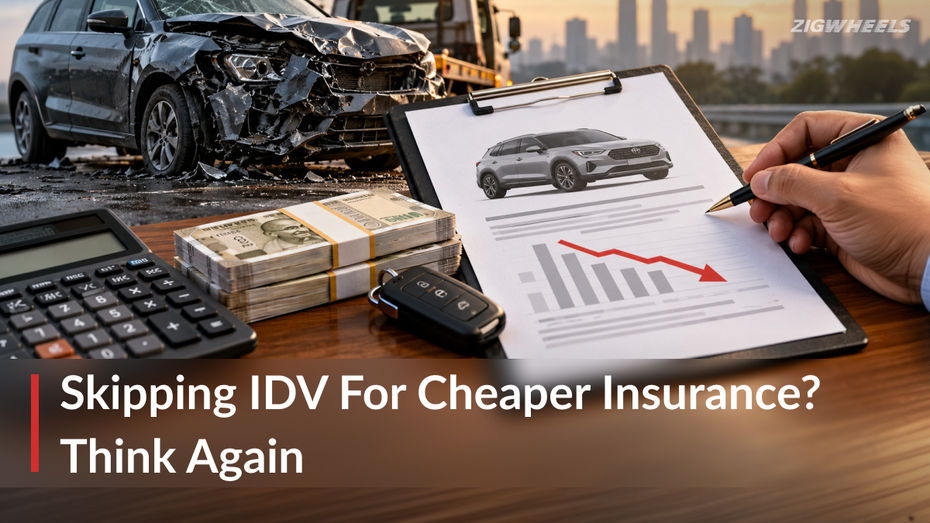
One flooded basement, one highway pile-up, one electrical fire. That is all it takes for a car you have loved for years to turn into a claim file. And in that moment, the single number that decides whether you walk away with a new set of keys or a hole in your savings is one most owners never look at during renewal: the car's insured value.
In India, that number is called the Insured Declared Value, or IDV. It quietly sets the ceiling on what your insurer pays for severe damage and shapes whether your car gets fixed, written off, or replaced. Here is how it works, and why getting it right matters far more than saving a few hundred rupees on premium.
Here's the bit nobody reads at renewal. Your car's insured value, or IDV, is the maximum your insurer will ever pay if the car is stolen or written off. Not the showroom price you haggled over. Not what the used-car guy offers you. It's a formula-driven number that sits somewhere in between, and it shrinks every single year.
IDV is the manufacturer's listed selling price minus age-based depreciation under IRDAI norms. Aftermarket goodies count only if you declare them separately, and once the policy is issued, the number is locked in for the full term—no second chances mid-year.
Watch how quickly the depreciation schedule eats into a car with a Rs 10 lakh ex-showroom price:
|
Age of the car |
Depreciation applied to IDV |
IDV on a Rs 10 lakh car |
|
Up to 6 months |
5 percent |
Rs 9.5 lakh |
|
6 months to 1 year |
15 percent |
Rs 8.5 lakh |
|
1 to 2 years |
20 percent |
Rs 8 lakh |
|
2 to 3 years |
30 percent |
Rs 7 lakh |
|
3 to 4 years |
40 percent |
Rs 6 lakh |
|
4 to 5 years |
50 percent |
Rs 5 lakh |
|
Above 5 years |
Mutually agreed by insurer and owner |
Based on condition and market value |
Source: depreciation rates as per IRDAI norms
So why lose sleep over it? Because IDV wears two hats. It determines the premium you pay today and the biggest cheque you can ever receive tomorrow. Most owners obsess over the first and completely forget the second, a mistake you usually discover only once, standing next to a crumpled car.
Once the tow truck drives off with your car, the claim follows a fairly predictable script. You inform the insurer, a licensed surveyor arrives with a clipboard, and they assess the damage part by part. That inspection ends in one of two verdicts, and they could not be further apart.
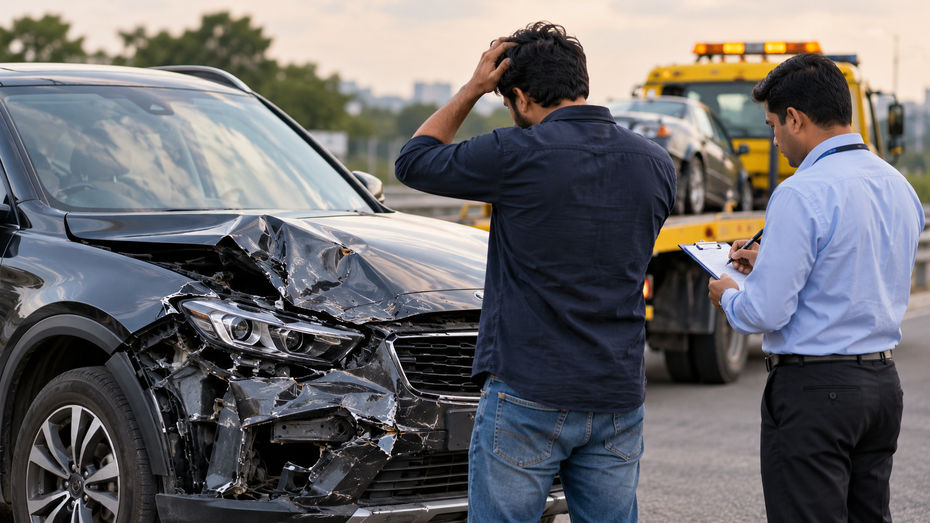
It's repairable (partial loss): The car heads to the workshop, parts are fixed or swapped, and the insurer pays the bill minus parts depreciation, the compulsory deductible and anything excluded. You eventually get your car back.
It's not worth fixing (constructive total loss): The car is written off. No repairs, just a lump-sum payout, and you're back to car shopping.
A write-off also comes with homework. According to Section 55 of the Motor Vehicles Act, 1988, the owner of a car damaged beyond use must inform the registering RTO within 14 days so the registration can be cancelled.
Here's the twist most owners miss: your car's verdict, and how much money follows it, both trace straight back to that one IDV figure on your policy.
In a total loss, IDV stops being a line in the policy schedule and becomes the actual cheque. Under the policy, a car is a constructive total loss when repair costs exceed 75 per cent of the IDV, and the claim settles at that agreed IDV minus the deductible. Depreciation isn't applied again, but it has already done its damage by shrinking the IDV in the first place.
So IDV pulls double duty. It sets the tripwire for a write-off and caps the payout. A car insured for Rs 6 lakh is written off once repairs hit Rs 4.5 lakh, and the owner walks away with at most Rs 6 lakh, no matter what the same car costs on-road at the dealership that week.
That gap is exactly why the Return to Invoice (RTI) add-on exists. According to RTI, it pays up to the car's invoice value, plus first-time registration charges and road tax, if the car is stolen or written off. Here's how the two stack up:
|
What you get in a total loss |
Standard policy |
Policy with Return to Invoice add-on |
|
Basis of payout |
Insured Declared Value (IDV) |
Original invoice value of the car |
|
Road tax and registration |
Not covered |
Reimbursed |
|
Impact of age-based depreciation |
Fully reflected in payout |
Gap between IDV and invoice is bridged |
|
Best suited to |
Older cars |
New cars, typically in their first few years |
Bottom line: the IDV you click 'confirm' on at renewal is the IDV you'll be paid against on the worst day of your car's life. Choose like it matters, because it does.
Yes, and usually by far more than you saved. Dialling down the IDV at renewal feels like a clever little hack because the premium quote drops instantly. The bill for that hack only arrives when the car is stolen or totalled.
It out with a three-year-old Maruti Suzuki Swift VXi bought for Rs 7 lakh, whose IDV after 30percent depreciation comes to Rs 4.9 lakh:
|
IDV chosen |
Indicative premium |
Maximum payout in total loss or theft |
|
Rs 4,00,000 (lowered to save premium) |
Rs 8,500 |
Rs 4,00,000 |
|
Rs 4,90,000 (in line with market value) |
Rs 10,500 |
Rs 4,90,000 |
|
Rs 5,50,000 (set higher) |
Rs 12,000 |
Rs 5,50,000 |
Now do the maths on that first row. Save Rs 2,000 on premium, lose Rs 90,000 of payout. That's a terrible trade by any measure. If the Swift is written off, the owner has to dig Rs 90,000 out of savings just to get back into a similar car. With a car loan running, a reduced payout might not even cover the EMIs, leaving you paying for a car that no longer exists.
Going the other way isn't a free pass either. IDV well above realistic market value raises the premium without matching benefit and can trigger disputes at claim time. The sweet spot is boring but correct: an IDV that mirrors what your car is genuinely worth.
Accurate valuation is what turns a write-off from a financial gut-punch into a manageable reset. When the IDV truly reflects your car, the payout lands close to what it takes to put a comparable car back in your driveway. A handful of details make all the difference.
Declare every accessory; non-factory fitted accessories count toward IDV only if you declare them separately. The insurer can’t see the touchscreen, alloy set, or CNG kit unit on the policy.
Use the flexibility you're given. Insurers let you set IDV within an approved band at purchase or renewal. Picking the realistic upper end instead of the bargain-basement floor keeps your payout honest.
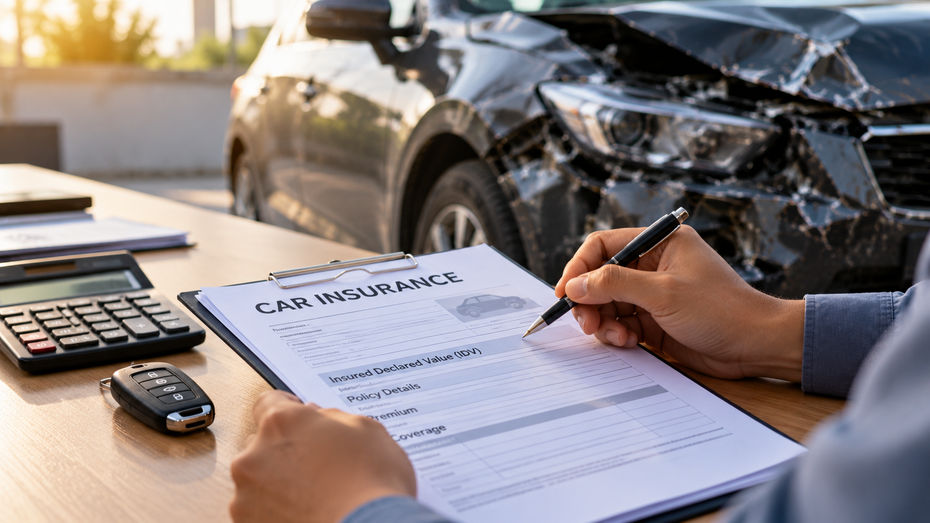
Re-check when your car changes brackets. Moving from year two to year three bumps IDV depreciation from 20 percent to 30 percent, so that renewal deserves a proper look, not a lazy auto-renew.
Match add-ons to your car's age. Return to Invoice guards new cars against the IDV gap, while zero depreciation protects repair bills on partial damage.
This is where picking the right Car Insurance policy helps. A comprehensive plan that lets you customise IDV, add accessories, and stack covers such as Return to Invoice and zero depreciation puts you in control of what you'll actually recover; for instance, it lets owners set their IDV within the permitted range online and offers cashless repairs at 10,000+ network garages, so a partial-damage claim doesn't drain your bank account while the car is being fixed.
Here's something few owners realise: the total-loss trigger is a percentage of IDV, so two owners of the same car can walk away from the same crash with completely different outcomes. The repair bill doesn't change. Only the IDV does.
Picture a car with a surveyor's repair estimate of Rs 4 lakh:
|
IDV on the policy |
Repair cost as percent of IDV |
Likely outcome |
What the owner ends up with |
|
Rs 5 lakh |
80 percent |
Constructive total loss (above 75 percent) |
Up to Rs 5 lakh, minus deductible; the car is surrendered |
|
Rs 6 lakh |
About 67 percent |
Repaired under the policy |
The same car back, repaired, minus parts depreciation and deductible |
Calculation based on the 75 percent of IDV total-loss threshold .
Neither outcome is automatically better. If you love your well-kept car, or own something that's tricky to replace, you'd probably rather have it fixed. If you're nursing an older car with a tired drivetrain, a clean payout might feel like a blessing. The point is that a realistic IDV keeps that call tied to your car's real condition, instead of an artificially low number shoving a perfectly repairable car into the scrapyard.
And there's no undo button. Once a car is declared a total loss, its registration is cancelled, and it's off to the salvage yard. Better to get the number right before the accident than argue about it after.
Depreciation hits your claim twice, and owners often mix the two up. The first is yearly depreciation that shrinks your IDV and caps total-loss payouts. The second is depreciation on individual parts, which nibbles away at what the insurer pays for repairs. Major damage that stops just short of a write-off gets hit by the second one, and that's where it really stings.
According to IRDAI rates published by, here's what gets knocked off parts during a claim:
|
Part type |
Depreciation deducted from claim |
|
Rubber, nylon and plastic parts |
50 percent |
|
Fibreglass components |
30 percent |
|
Glass |
Nil |
|
Paint |
50 percent on material cost of painting |
|
Metal parts, car up to 6 months old |
Nil |
|
Metal parts, 2 to 3 years old |
15 percent |
|
Metal parts, 4 to 5 years old |
35 percent |
|
Metal parts, 5 to 10 years old |
40 percent |
Now look at a modern car. Bumpers, cladding, grilles, and headlamp housings are mostly plastic so that a big frontal hit can trigger a 50 percent deduction on a large chunk of the bill. Insurance gives the example of a Rs 20,000 repair where Rs 6,000 vanishes to depreciation, leaving a Rs 14,000 payout without cover versus the full Rs 20,000 with a zero depreciation add-on. Scale that up to a major-damage bill running into lakhs, and the shortfall becomes serious money.
The takeaway: IDV decides how much you get when the car is gone; zero depreciation decides how much you keep when it's fixed. A properly protected owner needs both pulling in the same direction.
Electric cars play by slightly different rules because a big chunk of their value sits in one component you can't see or easily fix: the battery pack. The battery is the most expensive part of an EV, and its value directly drives the premium. Motor repairs and other EV-specific hardware can also cost more than equivalent work on a petrol or diesel car.
That shakes up the IDV maths in three big ways:
Total loss can arrive sooner. If a flooded underpass or a nasty underbody hit damages the pack, the repair estimate alone can quickly reach the 75 percent of IDV threshold, especially on a car that's a few years old. An EV can be written off after damage that would only mean a long workshop stay for a petrol car.
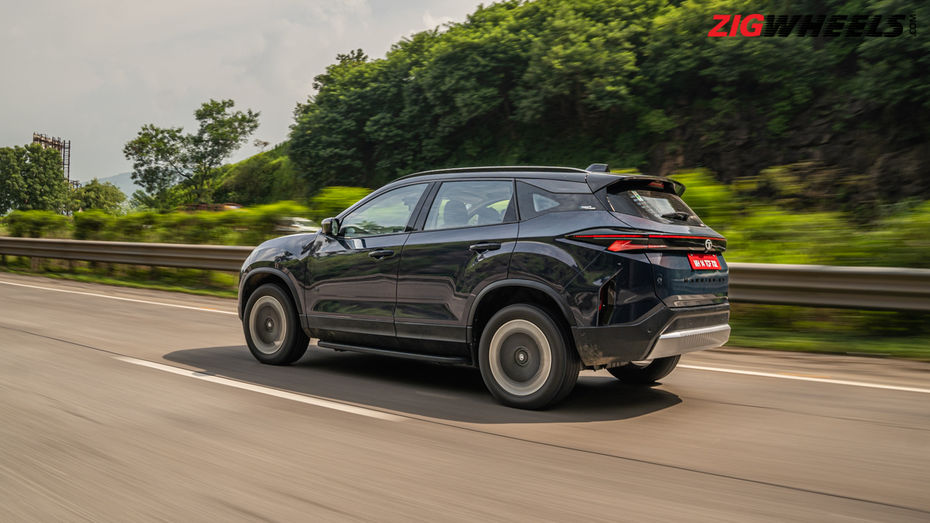
An undervalued IDV hurts more. With so much value packed into the battery and power electronics, a low IDV leaves an even wider hole between your payout and the cost of a replacement.
Standard cover can miss EV bits. Standard policies usually don't cover home charging units and cables, and they cover battery damage only when caused by an insured event, not gradual wear.
|
Factor |
Petrol or diesel car |
Electric car |
|
Single most expensive component |
Engine and gearbox |
Battery pack, the costliest part of an EV |
|
Typical major-damage risk |
Engine hydrolock in floods, body damage |
Battery and electrical damage from water ingress or underbody impact |
|
Chance of a repair bill crossing 75 percent of IDV |
Lower, spread across many parts |
Higher, concentrated in the battery |
|
Extra cover worth considering |
Engine protection, zero depreciation |
EV-specific add-on for battery and charger, zero depreciation, Return to Invoice |
Which is why EV owners should treat Electric Car Insurance as its own animal, not a copy-paste of a petrol-car policy. An EV-specific plan lets you set an IDV that reflects the battery's share of the car's value and adds protection standard cover leaves out. The EV Shield add-on covers loss or damage to the battery, charging cable, charger, and the charging point's electrical panel, plus battery-related roadside assistance, so one bad monsoon evening doesn't turn into a crippling battery bill.
Five minutes with your policy schedule before you hit 'renew' can decide how the worst-case scenario plays out. Here's your pre-renewal checklist:
The IDV figure itself - Compare it with what similar cars of your model, variant and year are actually selling for. If the IDV is well below that, nudge it up within the band your insurer allows.
Declared accessories and fitments - Make sure aftermarket additions such as a CNG kit, music system or alloy wheels are listed, or they will not count in a total-loss payout.
Your car's depreciation bracket - Check whether the car has just moved into a new age slab, since IDV and parts depreciation both step up at those points.
Return to Invoice eligibility - For a car in its early years, check whether RTI is available and worth adding to close the gap between IDV and the on-road price.
Zero depreciation and its claim limit - Confirm it is active and note how many claims per year it covers, since insurers point out that standard depreciation applies once that limit is used up.
Outstanding loan versus IDV - If the car is financed, make sure the IDV is not lower than what you still owe the lender.
EV-specific protection - For electric cars, confirm whether the battery, charger and charging cable are covered, and add an EV-focused add-on if they are not.
Policy type - A third-party-only policy pays nothing for your own car, so major damage cover needs a comprehensive or standalone own-damage plan.
We'll be honest: IDV is the most underrated number in Indian car ownership. We'll happily spend a weekend debating two variants over a Rs 20,000 difference, then accept whatever IDV the renewal page throws at us without a second glance. That's backwards.
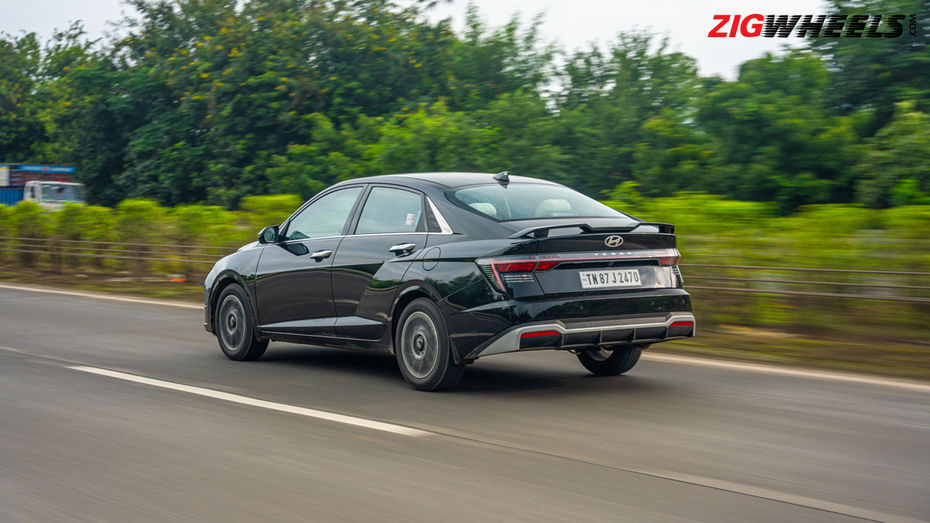
Our take is simple. If your car is under three years old, pair a realistic IDV with Return to Invoice and zero depreciation, because the gap between IDV and on-road price is widest right then. If your car is older, resist the urge to slash IDV for a cheaper quote; the couple of thousand rupees you save is pocket change next to the payout you give up. And if you drive an EV, don't assume a regular policy covers your battery. Check and add EV-specific protection if it doesn't.
Insurance is the one purchase you hope never to use. But when you do need it, the IDV you picked months earlier decides whether that bad day ends with a fresh start or a financial headache. Set it right once a year. Your future self, standing beside a crumpled bonnet, will thank you.


2026 Maruti Suzuki Baleno Facelift Launched At Rs 6.1 Lakh Onwards
Top 5 Things We Loved About The 2026 Maruti Baleno Facelift
Maruti Finally Launches AMT for Dzire, Baleno, Swift S-CNG! Now Worry...
The Complete Used Car Inspection Guide: Check Out The Most Essential...
Big, Boxy And A Plug-in Hybrid: Is This JSW Motor’s First SUV?...
EXCLUSIVE: Tata Tigor To Be Replaced By Tata Aeris
2026 Tata Aeris Launched At Rs 5.29 Lakh: Fresh Looks, More Features...
All-New Hyundai Bayon Compact SUV Revealed! Sportier Compact SUV To...
India’s List Of Luxury Carmakers To Expand Soon And It’s...
2026 Mahindra Thar OG Launched At Rs 10.32 Lakh: Here's...
India's largest automotive community
Hyundai Bayon
₹ 10.00 Lakh
Tesla Roadster
₹ 50.06 Lakh
Audi Q3
₹ 51.99 Lakh
Toyota Glanza
₹ 6.99 Lakh
Volvo EX90
₹ 1.26 Crore
Mercedes-Benz GLC Electric
Rs. 80.00 Lakh
Mahindra Thar E
Rs. 25.00 Lakh
JSW Chery iCar V23
Rs. 20.00 Lakh
JSW Jaecoo J5 EV
Rs. 20.00 Lakh
 Renault Duster Hybrid Short Review: What’s Good & What Isn’t
 Hyundai Bayon Explored In Detail With 17 Images: Is It Good Value For Money?
 Hyundai Bayon Launched At Rs 10 Lakh! A Cup Of Vanilla Ice Cream, Yet With Choco Chips And Sprinkles
 Jeep Announces Pickup Truck For India: Is The Gladiator Coming Soon?
2026 Mercedes-AMG GT Electric SUV Unveiled: Powerful Performance Now In An Electrifying Package!