
Volkswagen Taigun Vs Skoda Kushaq: Same Underpinnings, Different...
- Apr 26, 2026
- Views : 1413



 Follow us

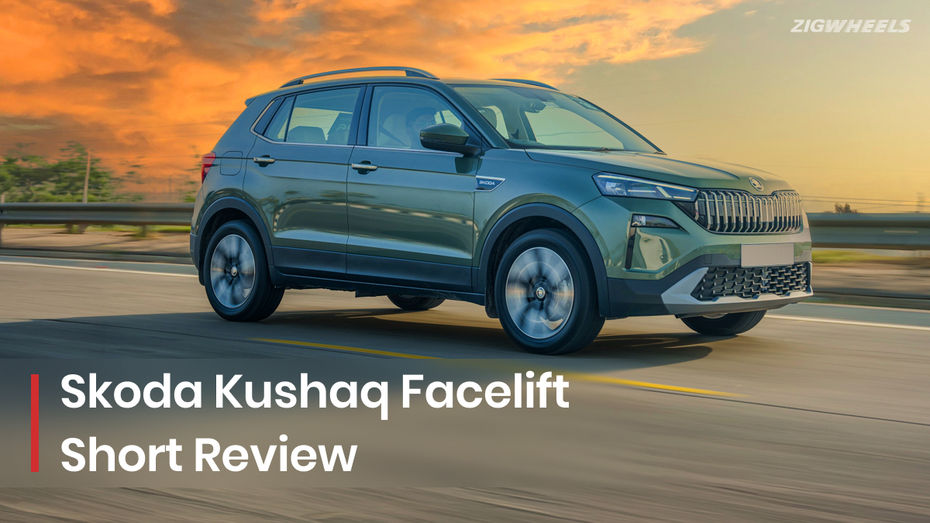
Skoda’s first made-for-India-made-in-India SUV developed a reputation for enjoyable driving dynamics coupled with sensibility for family use. The improvements include some segment firsts but with a segment evolving at its current pace, the changes do still seem to speak to the same niche buyers as before.
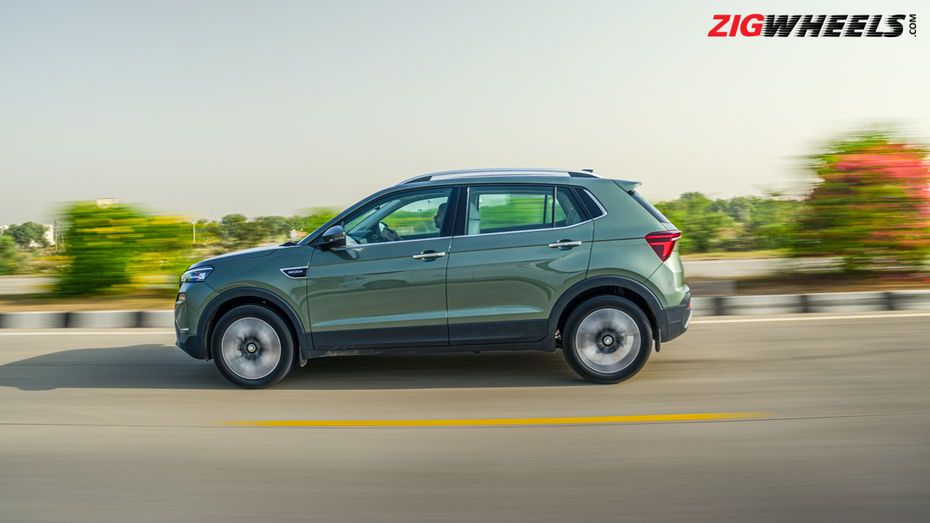
For a car with the Kushaq’s understated European appeal, a facelift could’ve turned things polarising. Thankfully, the design alterations make it more remarkable while avoiding any shoutyness. The new headlights with a fresh DRL signature, tweaked grille with illuminated elements a la Kodiaq, modernise the look while the rear light bar is executed thoughtfully too.
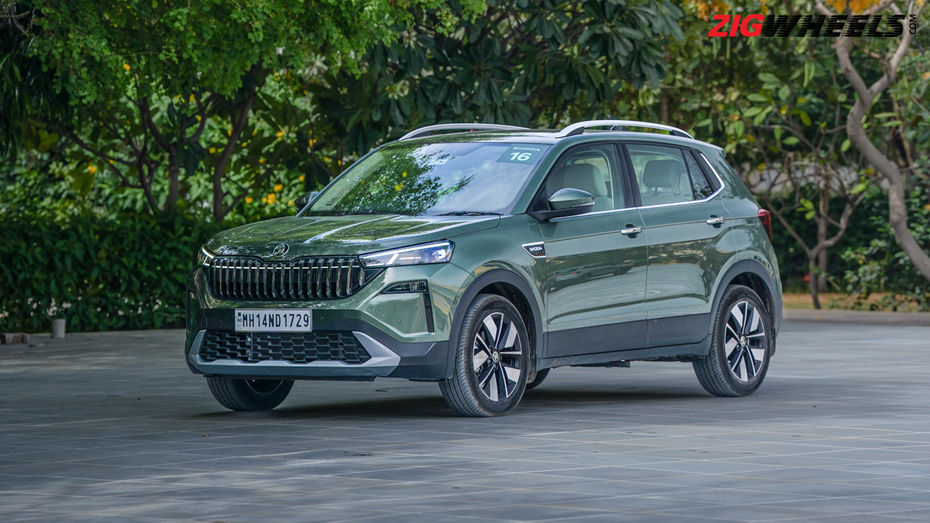
Nope, no connected LEDs, just a unique signature including the brand name illuminated in the rear. The side profile looks largely the same, save for the updated design for the 17-inch alloy wheels. Get the Monte Carlo and you ride on the same wheels that this sporty persona of the Kushaq got before, along with the red-painted brake calipers for the racier look.
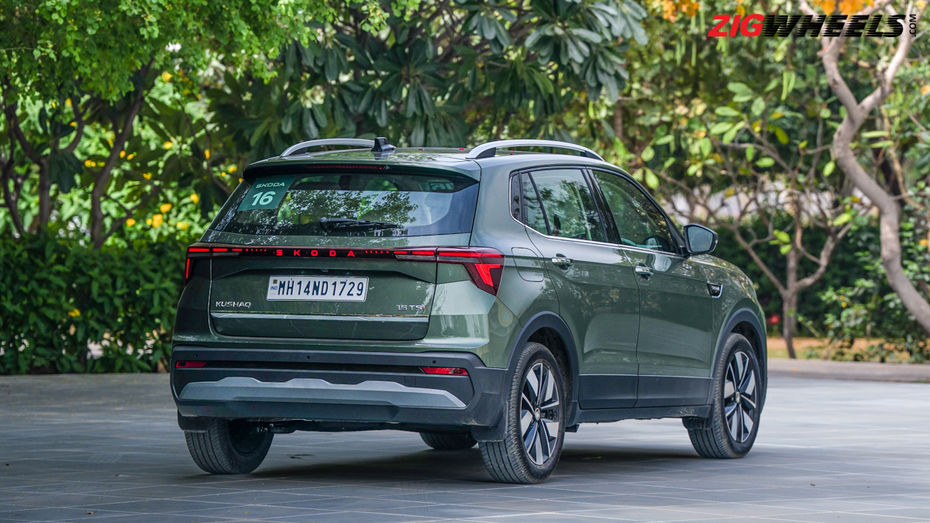
However, with these alterations, the Kushaq doesn’t step past the issue of size perception. It still looks a size smaller than the competition owing to the squared off stance and difference in overall length.
Like before, the Skoda Kushaq works very well as a 4-seater with a good amount of legroom, knee room and headroom for backseat owners. A six-footer can sit behind himself with space to spare. Users over 6ft tall will also like the front seat’s travel-range that lets them stretch out.
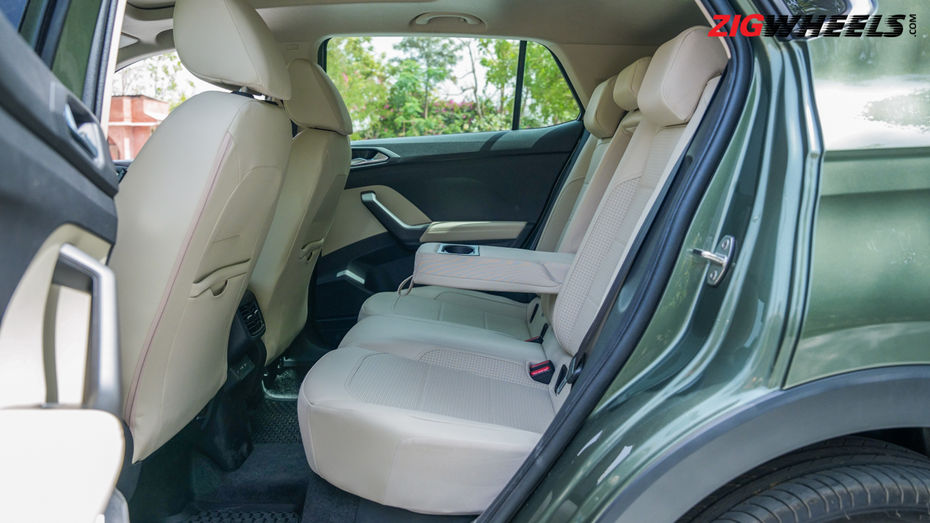
However, the powered driver’s seat mechanism does limit how low the seat can go. So tall users (especially those who wear headgear) will want more headroom in the front seat if they get the Prestige or Monte Carlo (only variants to get electric seat adjustment). It’s also still a cabin that isn’t especially wide, so you do sit a bit intimately with the person next to you compared to say, a Seltos or Sierra.
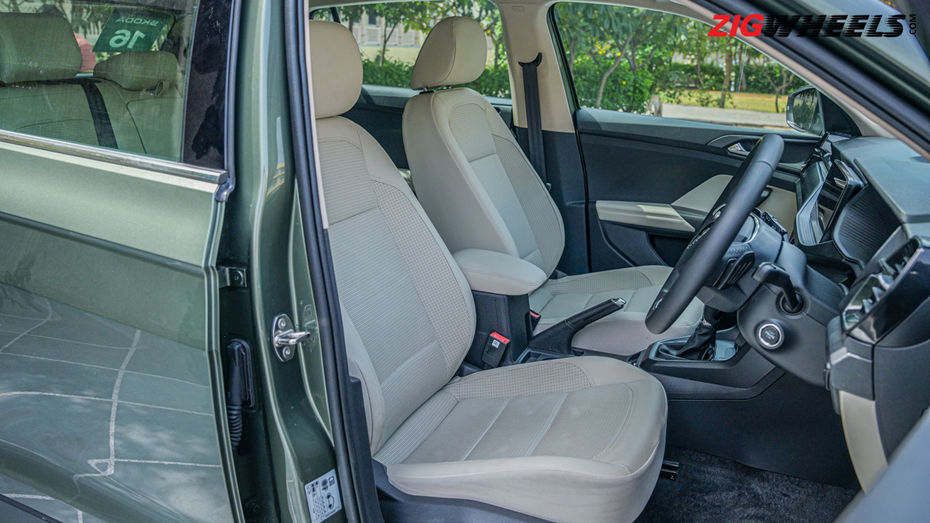
Get the Prestige variant and you also get new beige seats that liven up the cabin though the other variants get a black and greige interior or all black with maroon (titling slightly towards burgundy) contrast panels and stitching.
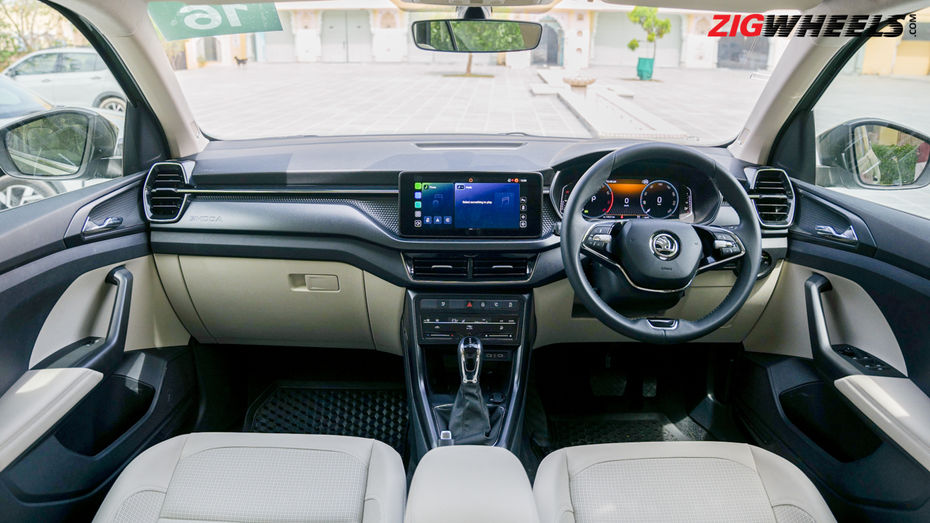
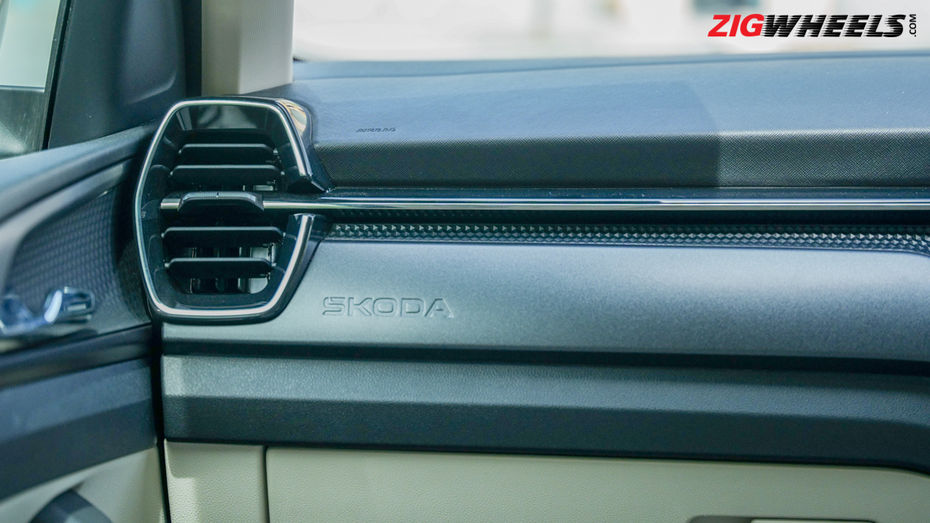
Quality doesn’t see an uptick. While the first lot of Kushaqs did have some fitment flaws, Skoda made corrections and improvements leading up to the launch of the facelift, which continues with the fixes. Is it well-built and premium? Yes, but there are one too many textures and finishes on the dashboard in my opinion, and the plastic finish in itself is just par for the course.
The tech upgrades aren’t plenty but significant nonetheless. The Kushaq gets segment first rear massaged seats in the Prestige and Monte Carlo variants. While they don’t get massage-modes or even a light to tell you if they’re engaged, they are effective even for those of a hefty build.
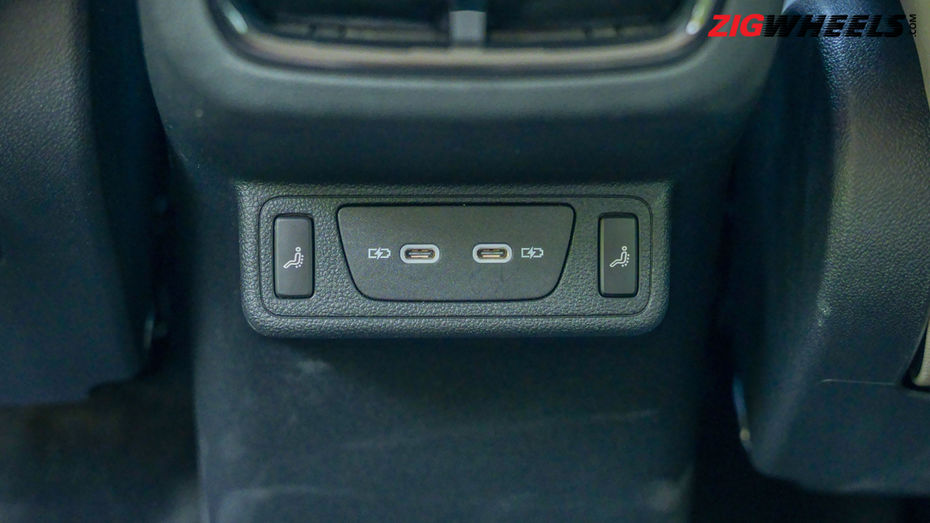
Feature additions aside, what stands out is how much equipment you get in the entry-level variants.
8 Notable Standard Features:
|
Single-pane Sunroof |
Rain-sensing wipers, rear wiper & defogger |
|
Automatic climate control with rear AC vents |
7-inch Touchscreen (wired Apple CarPlay/Android Auto) |
|
Height-adjustable driver seat |
16-inch alloy wheels |
|
6-speaker sound system |
Auto headlamps |
The Kushaq’s infotainment package includes a 10.1-inch touchscreen infotainment system with wireless Android Auto & Apple CarPlay. The system offers good touch response and speed but the user interface is a touch cluttered and needs some time to get the hang of.
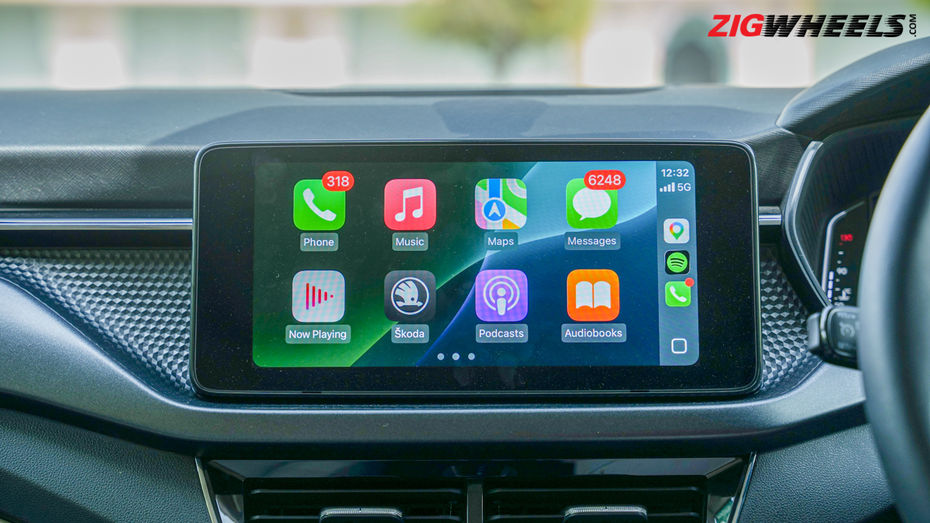
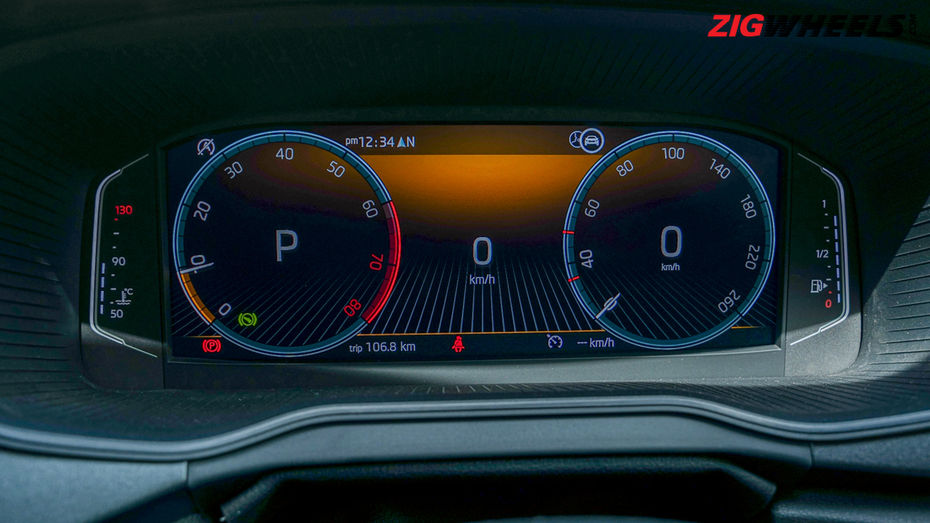
It now includes an AI-assistant powered by Google Cloud as well. The 10.25-inch digital instrument cluster (virtual cockpit) also gives you multiple drive views including a classic analogue display. It doesn’t relay your phone maps feed here (like the Nexon, Sierra, Duster, XUV7XO, among others) but you do get turn-by-turn navigation inputs.
Other Features
|
Powered Front Seats |
Ventilated Front Seats |
|
Dual-Colour Ambient Lighting |
Panoramic Sunroof |
|
Cooled Glovebox |
Auto-Dimming IRVM |
|
Wireless Phone Charger |
Cruise Control |
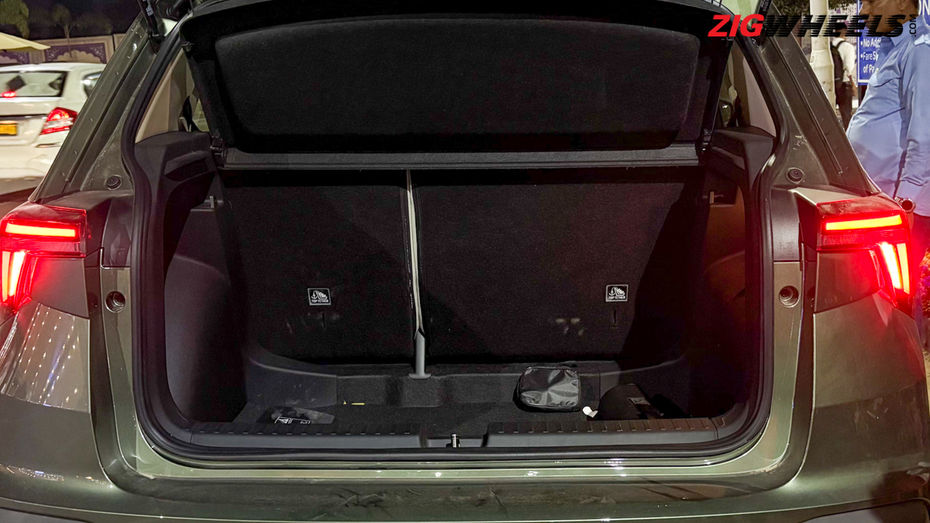
Measuring 385-491 litres (to the parcel tray-to the roof), the Kushaq’s boot is as practical as before. It may not look very large on first impressions, but scores big on usability thanks to its depth. A full suitcase set fits in here with space to spare, and it’s easily among the most practical boots in the segment following the Tata Sierra and new Renault Duster.
The Kushaq continues with the same engine options as before but replaces the 6-speed automatic of the 1-litre engine with a new AISIN-developed 8-speed automatic transmission. The change brings with it two incremental improvements - more smoothness off the line and a marginal increase in fuel-efficiency (~4 percent in test cycles). Gear changes with the new transmission are slightly smoother but the gearbox still matches the behaviour of the Kushaq i.e. it’s mischief-ready when you want it to be.
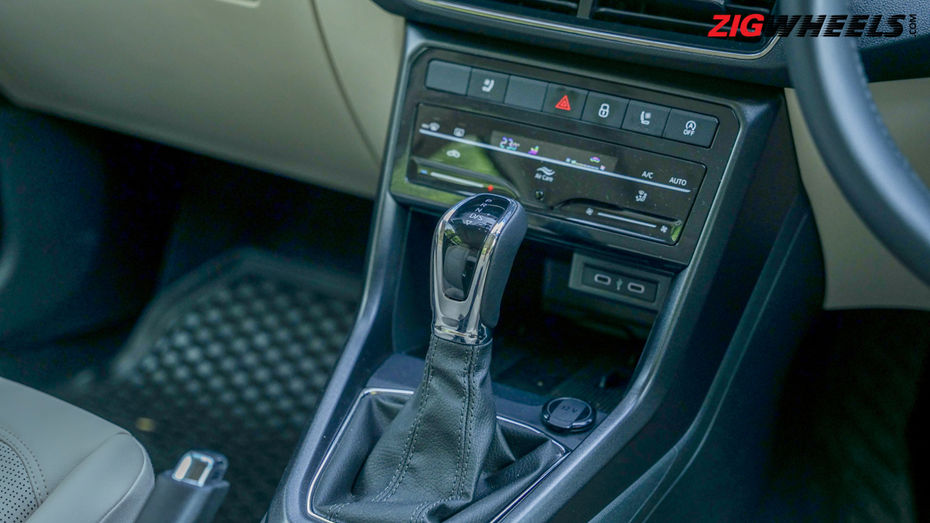
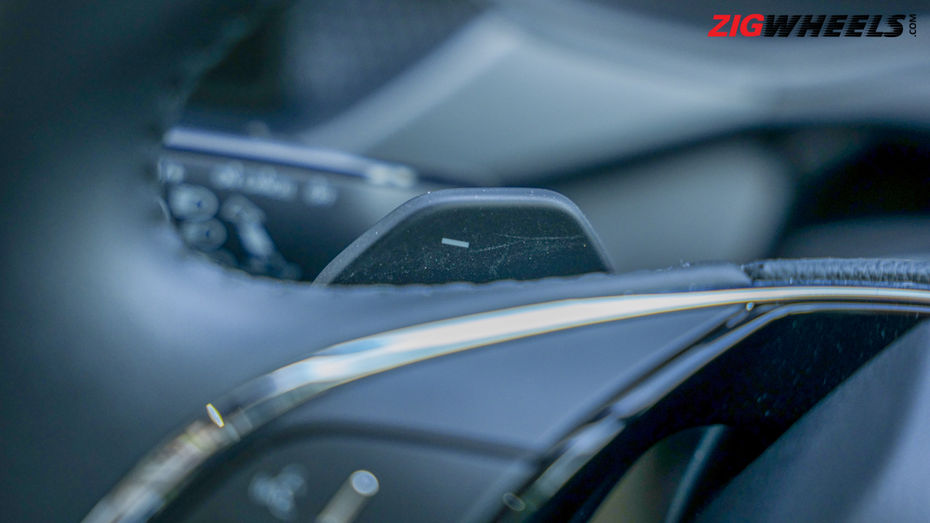
Paddle-shifters are still part of the package and manual mode allows for more aggressive shifts than most DCTs in the segment do! It’s an appreciable jekyll and hyde nature that gives you good everyday usability balanced with engagement on command.
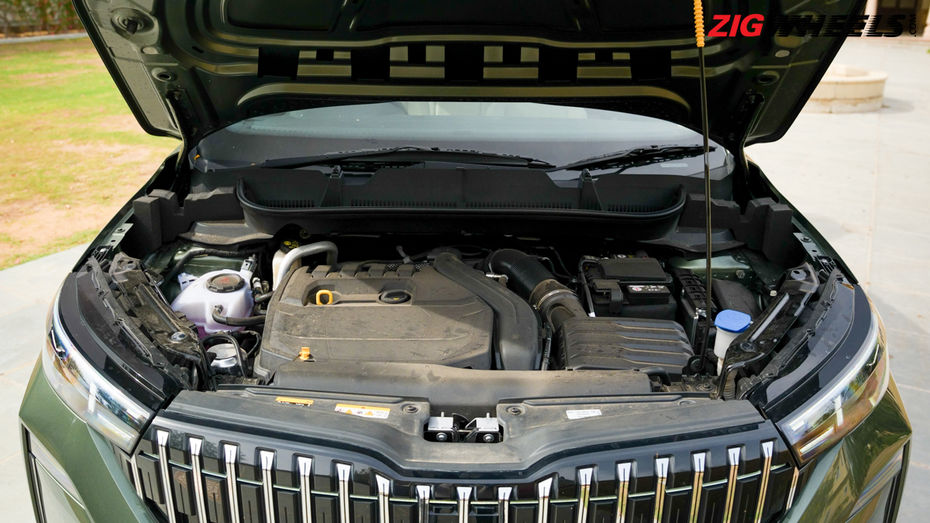
Otherwise, the drive experience stays familiar. The car still sits at around 2100-2200rpm at 100kmph in top gear (same as the 1 TSI 6-speed and 1.5 TSI DCT) and offers strong performance even if you don’t move up to the 1.5TSI.
However, should you choose the upgrade of the bigger engine, here’s where you see the benefits:
Smoother and more responsive gear changes.
Better refinement owing to the 4-cylinder configuration, especially at idle.
Stronger mid-range and top-end punch - the 1.5TSI is a notably wilder animal when pushed hard and swaps the 1-TSI’s impressive performance for something jaw-dropping.
|
Technical Specifications |
1-Litre, 3 Cylinder Turbo Petrol |
1.3-Litre 4 Cylinder Turbo Petrol |
|
Power |
115 PS |
150 PS |
|
Torque |
178 Nm |
250 Nm |
|
Transmission |
6-speed MT/8-speed AT |
7-speed DSG |
|
Drive |
Front-Wheel Drive |
Front-Wheel Drive |
Ride quality remains balanced as before. There is a touch of firmness felt at low speeds that cars like the Creta, Grand Vitara and Seltos cushion better, but it’s not to the point of being uncomfortable, nor will you find yourself slowing down to a crawl over bad roads. The benefit is sharp high speed manners. Even over horrendously leveled concrete roads, the Kushaq feels stable and corrects imperfections quickly, making it a good tool for long distance driving.
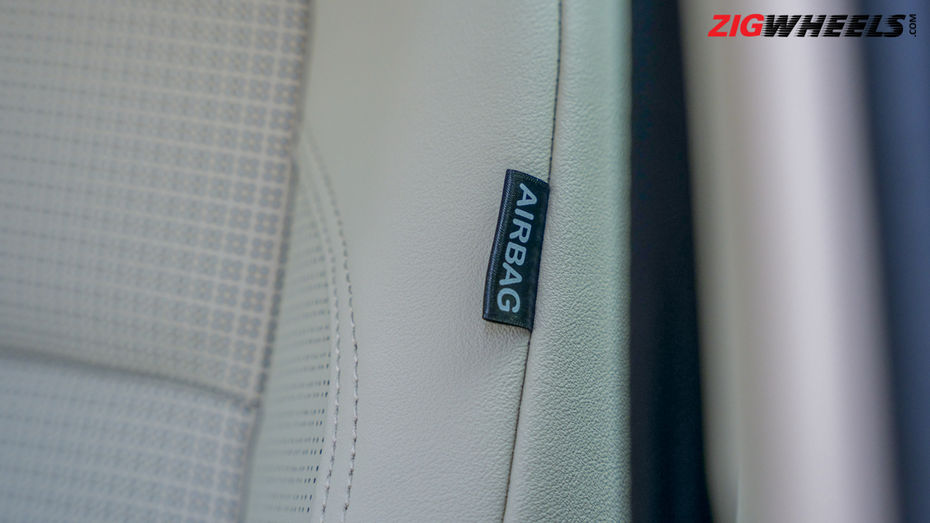
Standard safety features include 6 airbags, ABS with EBD, traction control, electronic stability control (ESC) and rear parking sensors among many others. Higher variants add front parking sensors, and a rear camera as well.
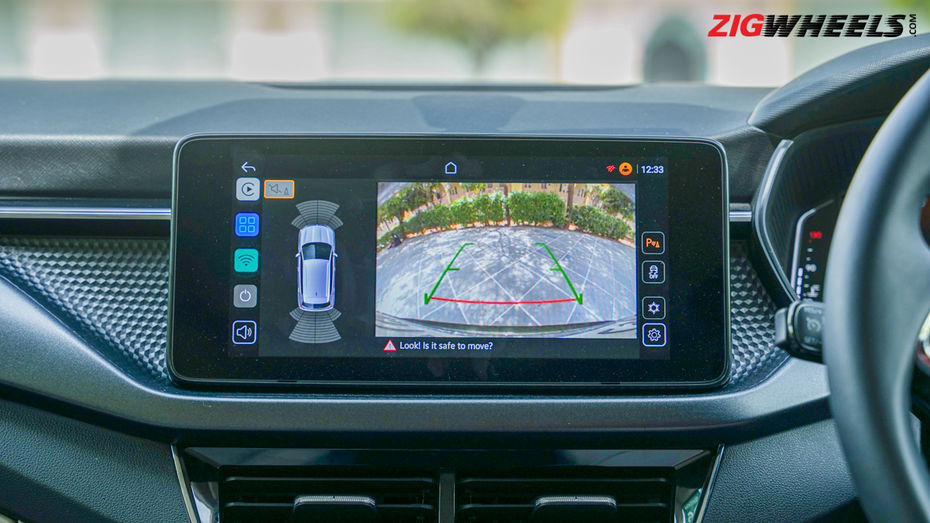
Unfortunately, a 360-degree camera is missing and worse still, the rear camera quality is simply too poor for a car that can cost over Rs 22 lakh on-road.
Skoda also doesn’t offer any advanced driver assistance systems (ADAS). Lane-keep-assist and blind-spot monitoring would have been good add-ons for a car with the Kushaq’s enjoyable highway manners.
If you were the slightly niche buyer who was looking to buy the Skoda Kushaq in the first place and were on the fence about it, the car now gives you more reasons to just jump the fence and bring one home.
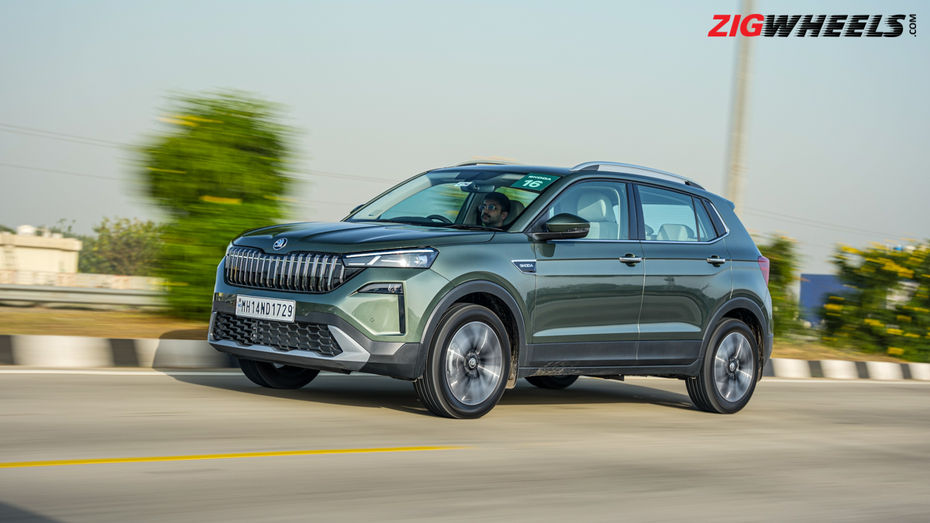
It remains one of those designs that's quite timeless and will age well. Simultaneously it’s doing a better job of turning heads too. It's also one of the better driving, riding, and handling packages in the segment and backs it up with two engine and transmission options that are plenty enthusiast-friendly while also being adequately easy to use on a daily basis.
The cabin space is good as ever, at least for four people, and while the boot space may not look like it, it's actually one of the more practical options in the entire segment. Its strong safety package also makes it an easy sell to the family. Essentially, it’s the Skoda Kushaq, just better.
What are your thoughts on the new Kushaq? Let us know in the comments below!


Volkswagen Taigun Vs Skoda Kushaq: Same Underpinnings, Different...
2026 Skoda Kushaq Variant-wise Powertrain Options Explained: Get The...
Top 5 Things We Love About The 2026 Skoda Kushaq Facelift
Skoda Kushaq Facelift Launched In India At Rs 10.69 Lakh; Enthusiast...
Skoda Commences Production Of Kushaq Facelift; Price Reveal Soon?
2026 Skoda Kushaq Colours Explained: Which Shade Should Be Your Pick?
2026 Skoda Kushaq Facelift Powertrain Options EXPLAINED; Two...
Is The 2026 Skoda Kushaq Facelift Safe Enough? It Misses Out On This...
Volkswagen Taigun
Skoda Kylaq
Maruti Brezza
Hyundai Creta
Mahindra XUV 3XO
India's largest automotive community
Skoda Kylaq
Skoda Slavia
Skoda Kodiaq
Skoda Octavia RS
Skoda Kodiaq RS
Mahindra Thar OG
Maruti Suzuki Brezza
Tata Punch
Tata Sierra
Maruti Suzuki FRONX
Mercedes-Benz Maybach S-Class Facelift
Rs. 3.00 Crore
Skoda Slavia Facelift
Rs. 11.99 Lakh
Honda Elevate Facelift
Rs. 11.91 Lakh
Volvo EX90
Rs. 1.20 Crore
Volvo ES90
Rs. 1.10 Crore
 Renault Triber Turbo Launched In India, Prices Start From Rs 7.84 Lakh
 5 Things We Love About The Mahindra Thar OG
 2026 Mahindra Thar OG Short Review: What We Liked & What Needs To Improve
 2026 Tata Aeris Launched At Rs 5.29 Lakh: Fresh Looks, More Features & A Familiar Engine
This Is Bentley’s First Electric SUV: New Torcal Gets 600 Km Range & 888 PS!
2026 Tata Aeris Launched At Rs 5.29 Lakh: Fresh Looks, More Features & A Familiar Engine
This Is Bentley’s First Electric SUV: New Torcal Gets 600 Km Range & 888 PS!