
2026 Toyota Hilux : Improved Ride, Better Interior Too!
- Aug 2, 2026
- Views : 8403



 Follow us

The surety of being parked at 17, 18 or 19,000 feet in the frigid mountains and knowing that your car will start in half a crank. It’s not a surety most people actually need, and therefore there are only a few cars that actually give it.
The Toyota Hilux sits high up on that list. It’s an if-you-know-you-know kind of car, which is why you need to be clear that even in this new, more modern generation, the Hilux is not necessarily going to find a big new audience.
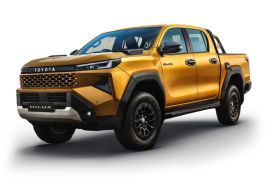
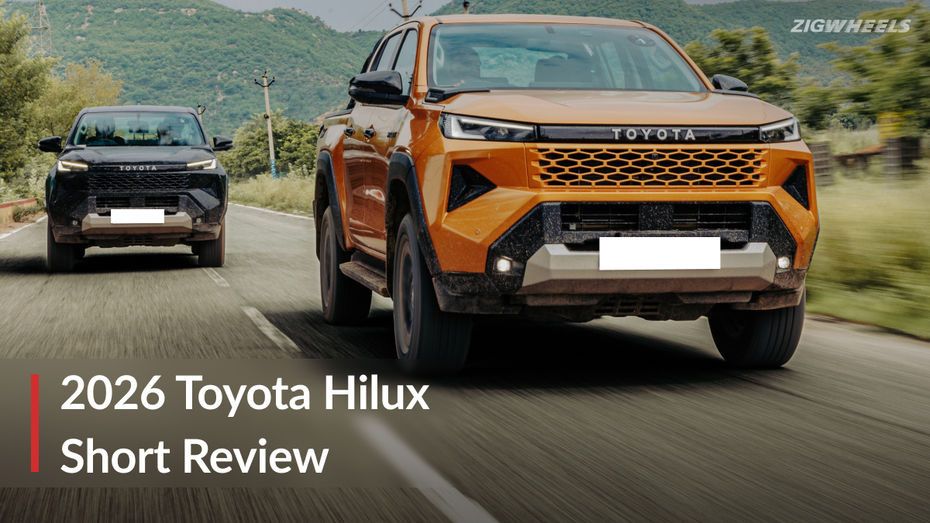
More modern, more imposing but a little less raw - that’d describe the Hilux’s look. The front end features a more prominent grille and slimmer LED headlights with DRLs. The LED front fog lights look comically small on a face that embodies Cyber Sumo as a design philosophy.
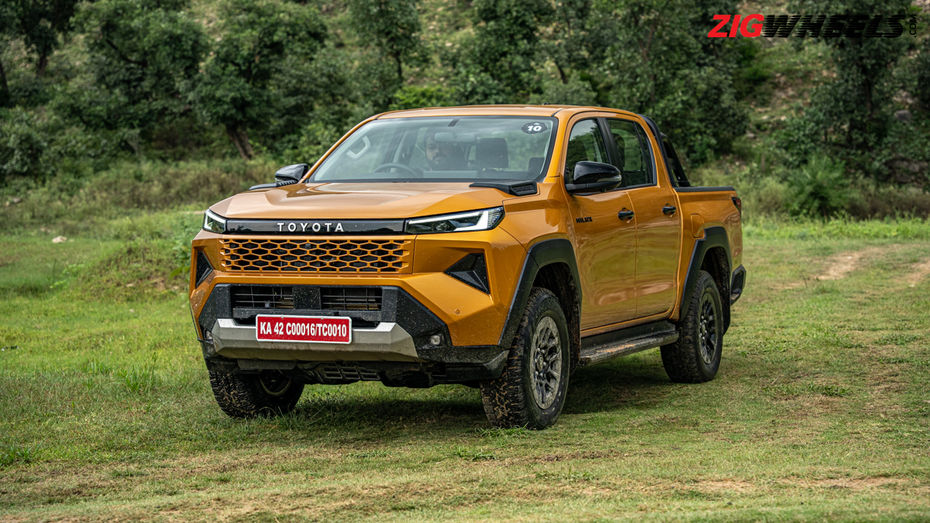
The side profile flexes the 5.3-metre length and reminds you that a big parking space is a must. It only gets 17-inch black alloys that look thoroughly rugged and make the 265/65 tyres look ever fatter.
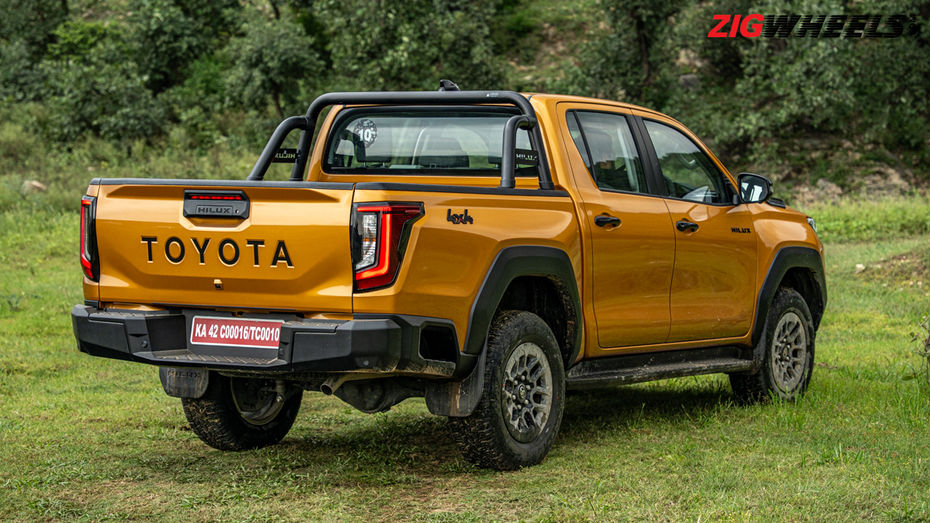
The rear end gets LED tail lights but otherwise maintains a more traditional style tone than the front. Drop the manually-lockable tailgate, and it slowly lowers to reveal the loading bed. You can access the bed with the help of footsteps integrated to the side now too - your neighbourhood cat will love these little pockets.
The interior quality feels different than before, though not necessarily better. Essentially, you’re getting substantial, thick and tough plastics with some soft-feel elements to make perceived quality better. It’s not an especially rich experience, but it fits the purpose of a work truck accurately.
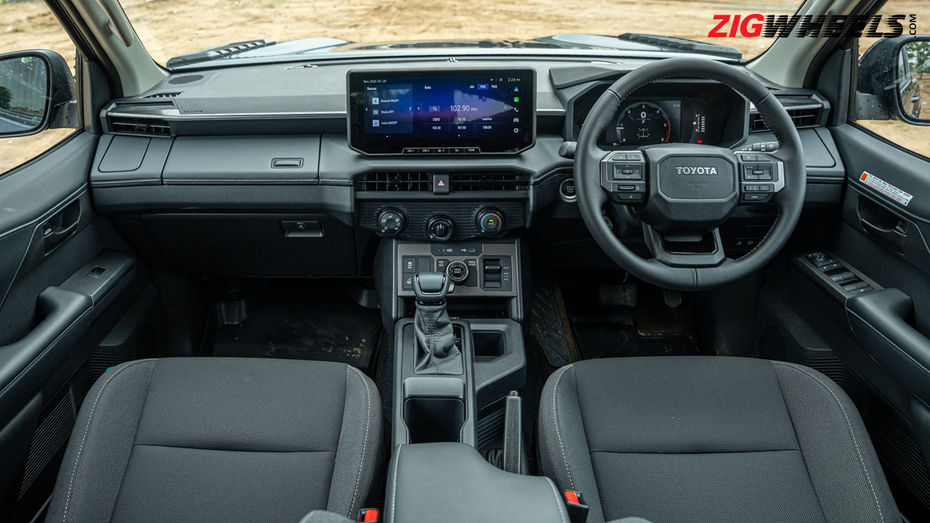
The bigger difference, though, is in the dashboard design itself because it looks larger and gets big buttons and knobs all around, which will be easy to operate even with gloves on. Contrary to popular trends that move everything to a touchscreen, here, unsurprisingly, form follows function.
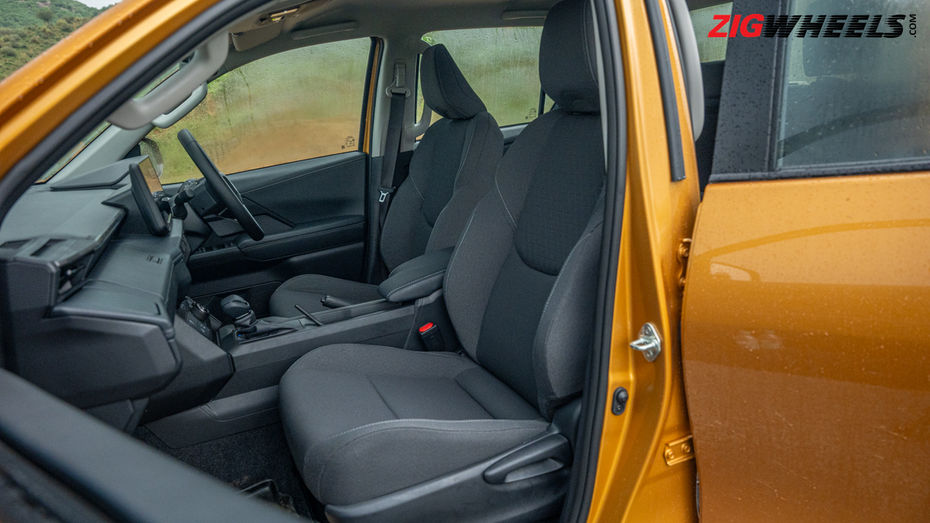
The other big upgrade is in cabin space. Both front seats feel more comfortable for taller occupants than before. The dashboard design means even someone who is 6.5ft tall won’t have their knees fouling with anything, and the floor box is roomier as well. This means you can sit with your legs stretched out. It feels like a car that was built for Americans, including the big seats.
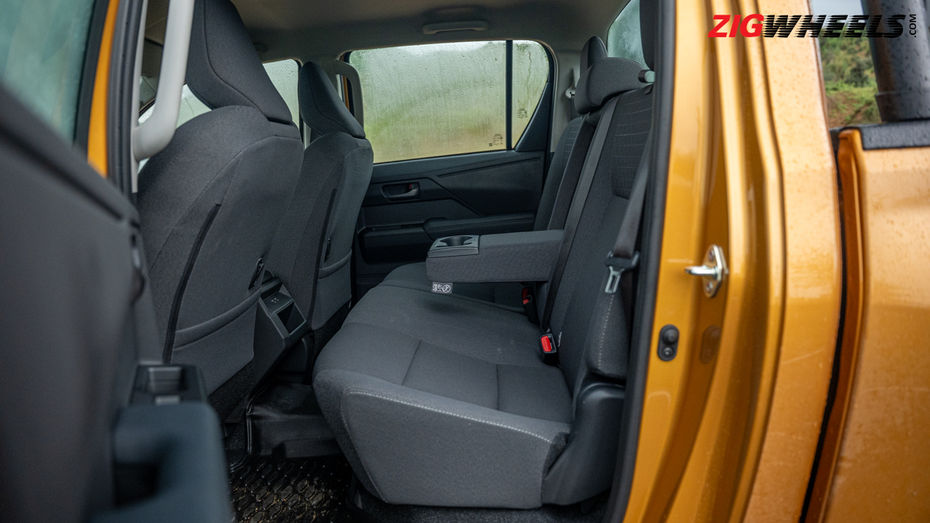
The backseat, however, is more or less the same old story. Accessing it is a more difficult climb than the front row; under-thigh support even for someone of an average height is strictly okay, the headroom available is also ideally suited to somebody who is under 6-feet tall, and the back angle is quite upright.
First, a glance at the storage options:
Dual gloveboxes.
1-litre bottle holders in the doors.
Flip-open cupholders in front of the side AC vents.
Big storage under the front armrest with a 220v socket (like before)
Another bottle holder in between the front occupants.
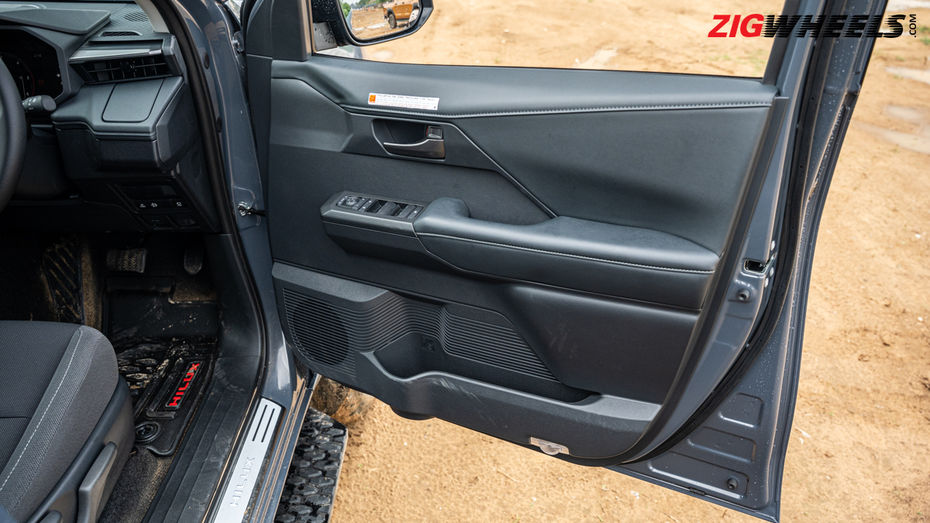
Practical, but feature-loaded would be an overstatement. Here’s what you get:
Fabric seats that adjust only manually (including height adjustment)
Rake and reach steering
Manual AC with no rear vents.
One-touch up/down power windows all around.
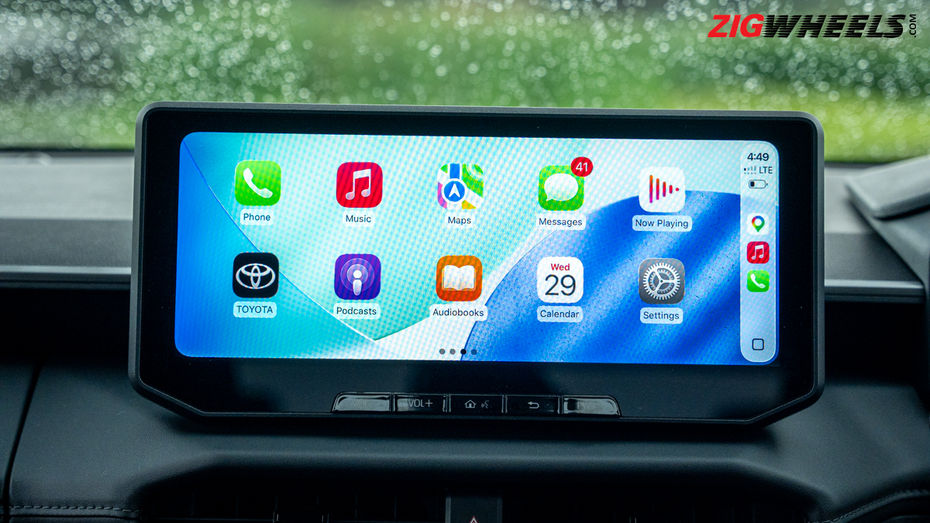
That’s about it. Of course there’s a new 12.3-inch touchscreen and a TFT driver’s display. The touchscreen is responsive and gets both wireless Apple CarPlay and Android Auto, but sets no benchmarks for user experience. Same goes for the nondescript 8-speaker sound system that’s decent, but that’s about it.
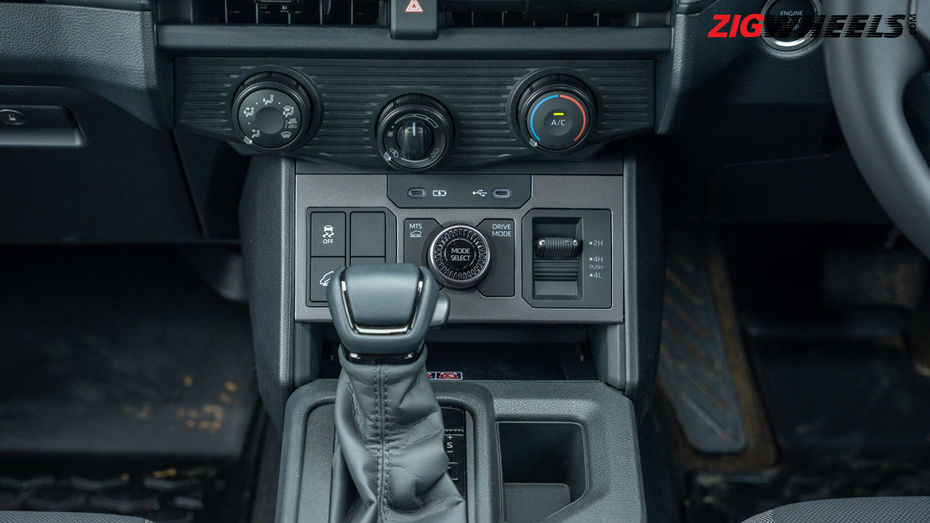
Evidently, Toyota knows the Hilux buyer isn’t frill-driven, so they’re happy to let them drive without too many of them, even though they’re charging them like they have given said frills.
24-25 cabin-sized trolley bags or at least 6-8 full-sized suitcases should fit in here.
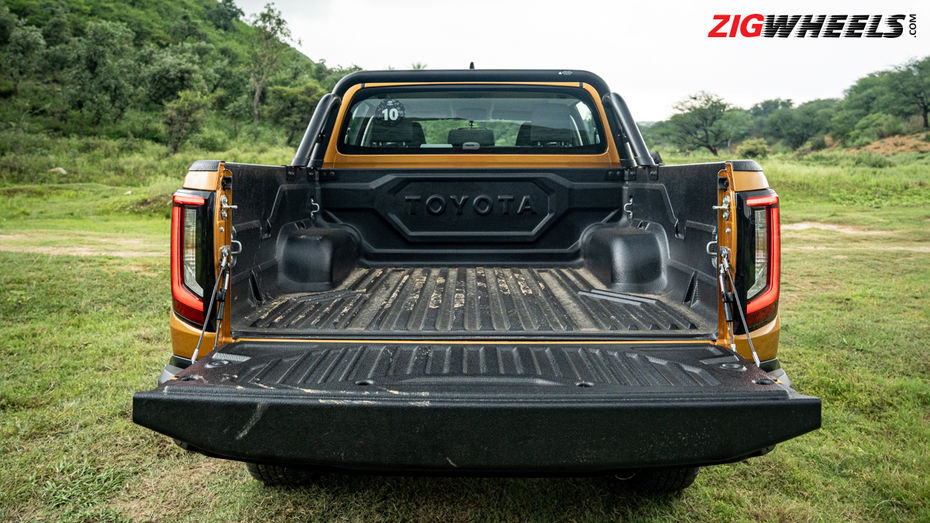
Jokes aside, the loading bed can take everything from a family of plants, to a few hundred kilos of cement bags or bricks, or even a full mobile overlanding camp setup.
First, the two notable changes. One, the ride quality is better than before. This doesn’t mean it’ll be as comfortable as your average monocoque crossover and it still feels stiff, especially at the rear. The Hilux runs double wishbone front suspension and leaf springs at the rear. You will feel the road surfaces as they change; the rear end will hop over speed breakers and it is a bit jiggly over uneven roads.
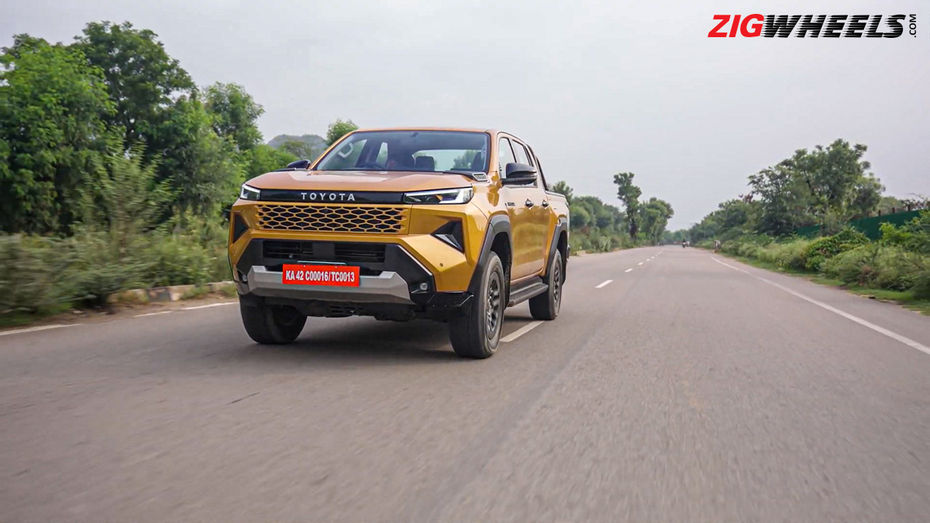
What Toyota’s managed to do is take some of the sharpness out of the suspension’s responses. Vibrations from bumpy roads are better muted, you can have a hot beverage without needing a sniper’s focus at every sip and the Hilux feels more comfortable as a daily driver. These changes are more apparent in the front row than the rear.
Second, the steering is a little lighter. The steering doesn’t feel drastically lighter at parking speeds but is easier to manoeuvre once you’re past 25-30kmph. If you like that sense of heft while driving (like you get in the Innova Crysta or Fortuner), it’s still there.
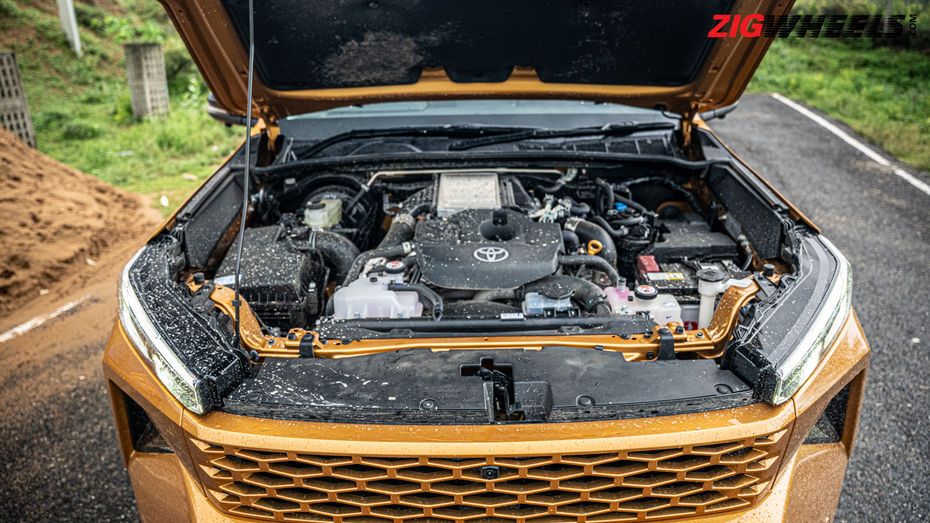
Otherwise, the drive experience is familiar. No manual transmission anymore, but you get the same 2.8-litre diesel with no mild-hybrid assist option a la Fortuner. The engine note is audible and the air intake in equal measure, but vibrations are reasonably well controlled. The 6-speed automatic transmission offers relaxed gear changes and has a manual mode, though no paddle-shifters.
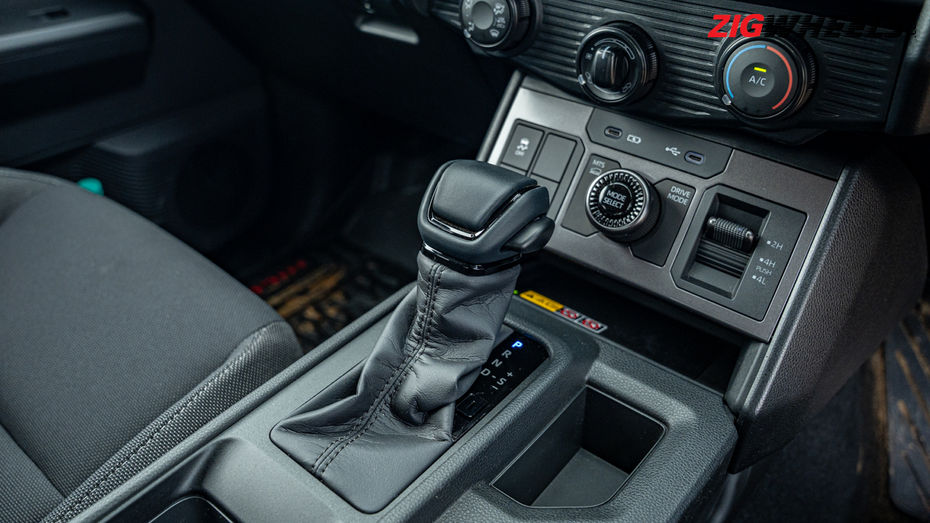
The Hilux is a big, heavy pick-up truck. It will need care to manoeuvre in the city; it will feel its size through curves and corners, and it will happily soldier along when the roads end, albeit with a fair bit of tossing and rolling.
Of course, with foam cell suspension and lift kits almost featuring like mandatory accessories for enthusiast buyers, changing how the Hilux behaves after you buy is a big part of the experience.
|
Technical Specifications |
Toyota Hilux |
|
Drive |
Rear-Wheel Drive / 4x4 |
|
Engine |
2.8-litre, 4-cylinder turbo-diesel |
|
Transmission |
6-speed automatic |
|
Power |
204 PS |
|
Torque |
500 Nm |
Safety features include 7 airbags, ABS with EBD, brake assist, front and rear parking sensors and a 360-degree camera with, unfortunately, average clarity.
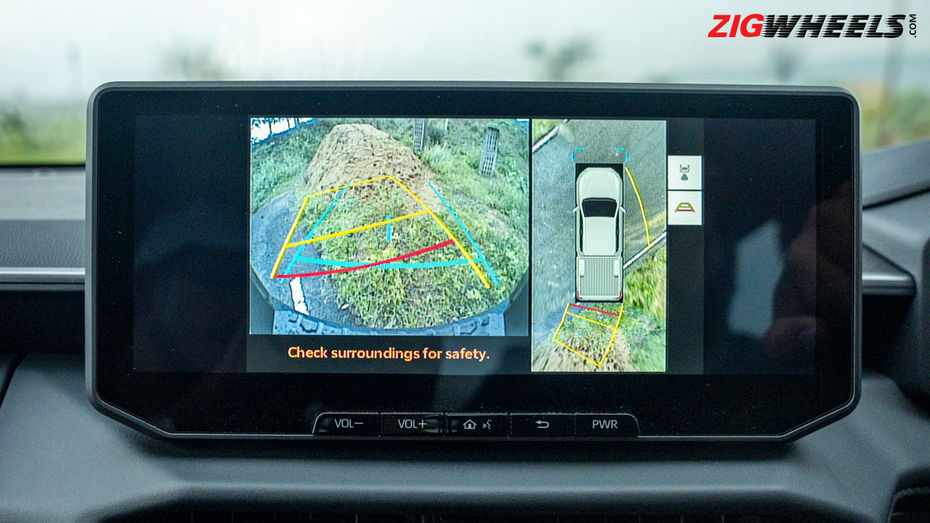
No ADAS, no auto-dimming IRVM, and where’s the rear defogger!
The new Hilux gets major upgrades on almost every front. It looks a lot more modern and the cabin design and experience, especially in the front row, definitely feel like a big upgrade. The features package is still more of a mixed bag because of how much is missed for this price. I don’t believe that rugged and functional has to mean you sacrifice comfort and convenience. However, even with all of this modernisation, it doesn’t change the fact that the Toyota Hilux is a lifestyle pick-up made for a very specific purpose, and it’s not the most massy purpose in the first place. But if you decide to buy the Hilux as an emotional indulgence and don’t necessarily have much use for the capability, you will be happy to know the experience living with it is a lot more comfortable than ever before.
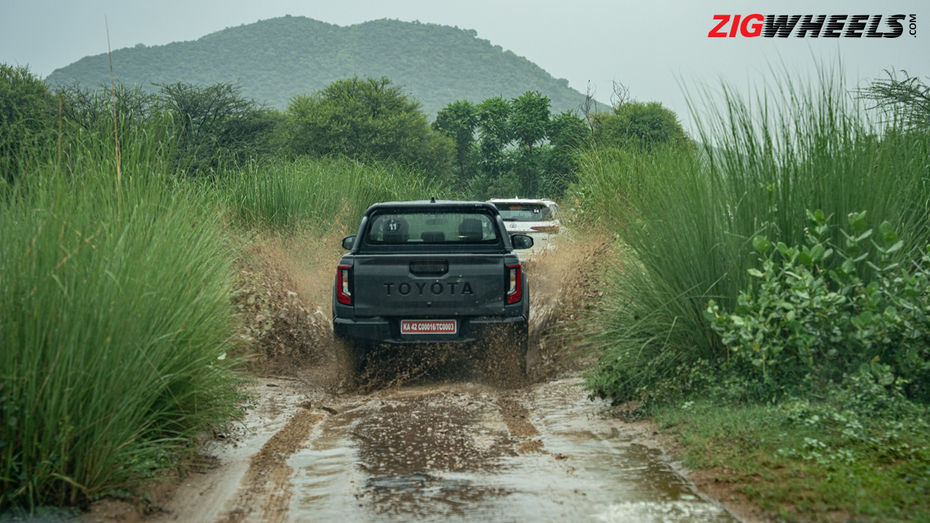
For those who want the Hilux, there are sure-shot improvements across the board while it maintains the capability that’s non-negotiable as well.


2026 Toyota Hilux : Improved Ride, Better Interior Too!
Toyota Hilux Gets a New Face, Yet Still A Lot Of Features Missing
2026 Toyota Hilux LAUNCHED! The Next-Gen Iconic Pickup Truck Now In...
Toyota Fortuner
Kia Sorento
Skoda Kodiaq
MG Hector Tomahawk PHEV
India's largest automotive community
Toyota Fortuner
Toyota Innova Crysta
Toyota Urban Cruiser Hyryder
Toyota Camry
Toyota Innova Hycross
Maruti Suzuki Brezza
Tata Punch
Maruti Suzuki FRONX
Tata Nexon
Mahindra Thar
Skoda Superb 2026
Rs. 50.00 Lakh
Skoda Slavia Facelift
Rs. 11.99 Lakh
Volkswagen Virtus Facelift
Rs. 11.99 Lakh
Honda Elevate Facelift
Rs. 11.91 Lakh
Volvo EX90
Rs. 1.20 Crore
 2026 Mahindra XUV 7XO Scores A Perfect 5 Stars In BNCAP Crash Tests, More Points Than The Tata Safari!
 Hyundai Bayon Upcoming SUV Confirmed: To Rival Even Its Bigger Brother, Creta
 2026 Mercedes-Benz GLC Electric Launch Confirmed! Bookings Open On…
 2026 BMW 7 Series Facelift And i7 Facelift Launched: Sleeker And Pack In Much More Screen
Skoda Auto Volkswagen India Private Limited Signs MoU With JSW: Partnership To Strengthen Their Automotive Foothold?
2026 BMW 7 Series Facelift And i7 Facelift Launched: Sleeker And Pack In Much More Screen
Skoda Auto Volkswagen India Private Limited Signs MoU With JSW: Partnership To Strengthen Their Automotive Foothold?