Price:
The new Bajaj Pulsar 125 has been launched, with many significant changes. Prices of the different variants are: Rs 92,990 for the Single Seat (LCD), Rs 99,291 for the Single Seat (TFT), Rs 1,01,288 for the Split Seat (TFT), and Rs 1,04,318 for the Split Seat (TFT+).
Design:
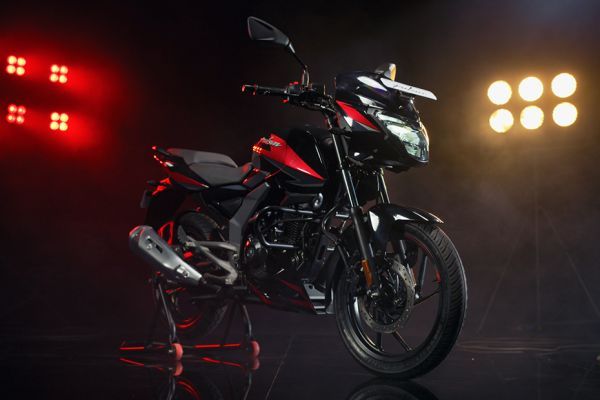
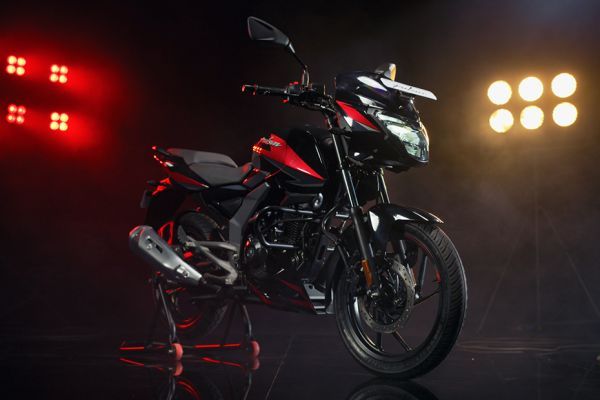
The new Pulsar 125 gets an all-new LED headlight design with integrated DRLs. The new graphics and revised tank extensions make it look sportier than before. It is available in single- and split-seat variants. The front number plate position is now mounted on the cowl above the headlight, which seems like an afterthought and makes the clean flyscreen area look untidy in our opinion.
Features:
A generational change is the shift to the new 5-inch TFT console, as seen on the Pulsar N160 SS. It gets Bluetooth connectivity, Google Maps Navigation, document storage, call/SMS alerts, and music controls. One of the very practical additions to this list of features is the new Integrated Starter Generator (ISG), which enables smoother, silent starts. Alas, the TFT display and ISG features are limited to the top three variants only; the base variant gets a coloured LCD console with Bluetooth connectivity and turn-by-turn navigation and no ISG. That said, all variants come with a kick start lever.
The bike gets 3 ride modes: Sport, Road, and Rain, along with a new Crawl Tech feature, which allows you to ride at low speeds in bumper-to-bumper traffic with just clutch modulation. This effectively helps you not stall the bike and also avoid fatigue. It also gets a Type-C charging port (optional on the base variant, standard across the rest) underneath the display on the left side for convenience, and a hazard light switch for safety. The riding modes and hazard lights are only for the TFT variants. None of the variants get a belly pan except the top, and same goes for the double horn.
Engine:
The new Pulsar 125 gets an all-new air cooled engine, mated to a 5-speed gearbox. The power and torque figures are: 12.1 PS at 8500 rpm and 11.4 Nm at 6500 rpm, respectively. The refinement levels are expected to go up as well. For perspective, the previous model produced 11.8 PS of power at 8500 rpm and 10.8 Nm of torque at 6500 rpm.
Suspension, Brakes & Other Details:
A major chassis update is the new diamond-type frame, replacing the older double cradle frame, making it stiffer and improving the handling. And, the bike now gets a monoshock at the rear, instead of the twin shock absorbers on the last-gen bike. However, the bike will continue to get a telescopic fork and the same 17-inch alloy wheels as the previous model (but the fork is a different 31mm unit).
A 240 mm front disc is available on the base variant, whereas the ones with the TFT consoles have a larger 260mm rotor. The 130 mm rear drum brake with Combined Braking System (CBS) are common across all variants. Similar to the last model, the tyre and wheel sizes are to remain the same: 80-section front and 100-section rear, with 17-inchers at both ends. The ground clearance at 184 mm is also an improvement over the last-gen’s 165 mm.
The new Pulsar 125 is quite lighter at 131 kg at the kerb than the last-gen model’s kerb weight of 144 kg to 146 kg, depending upon the variant, and that should make the newer model an even more agile handler. The bike is easy to get on as the seat height is at just 795 mm. However, the fuel tank capacity has been reduced to 11 litres compared to the 15 litre tank found on the last-gen model.
Rivals:
The new Bajaj Pulsar 125 will compete with these rivals: Honda Shine 125, Honda SP 125, Hero Super Splendor 125 and Hero Glamour 125.