Big, Boxy And A Plug-in Hybrid: Is This JSW Motor’s First SUV?...
- Sep 29, 2026
- Views : 11308



 Follow us

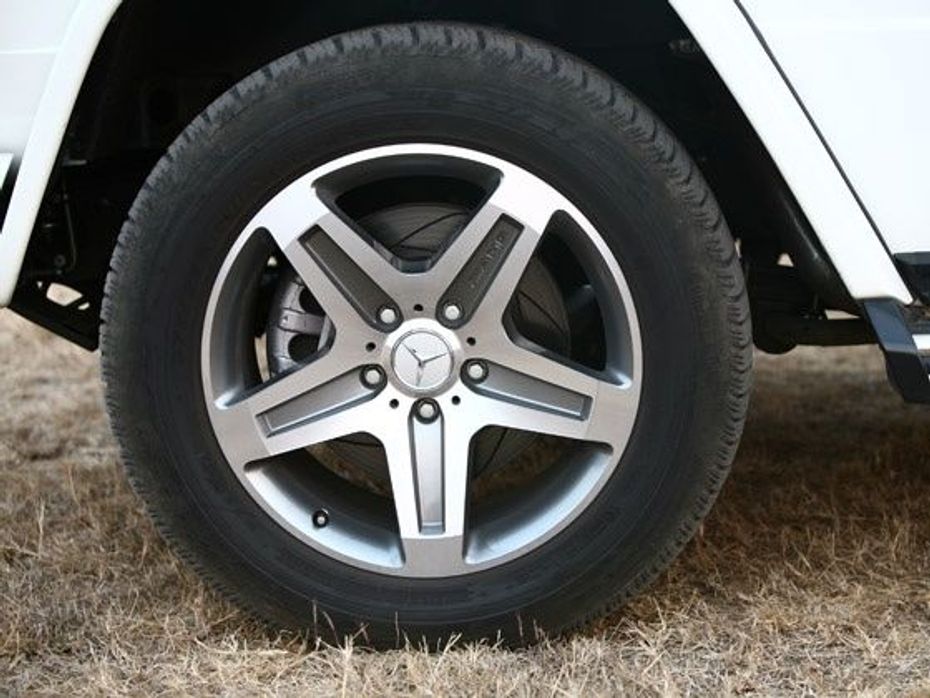
Modern day cars no longer come with a shaft that needs to be turned manually to start them. They are now faster, better and quicker that their predecessors. But driving faster also meant getting the car to stop quicker. A new type of brake, with a rotor having a support (the brake caliper) for the brake pads was invented. These had a much better response than the drum brakes used before them and as a rotor, more commonly known as the disc, was used, the name of these new kind of brakes was disc brakes.
Frederick William Lanchester in his Birmingham, UK automobile factory developed the first working model of the caliper type disc brake. It came into production with his Lanchester Legacy. Although, with only a limited choice of metals available at that time, copper was the option Lanchester had. Poor condition of roads, put the disc brake concept back on the drawing board as copper wore out pretty quickly.
About half a century later, other companies also started experimenting with different metals till in 1953, a disc brake developed by Dunlop was seen on the Jaguar C-type. This disc brake paved the way for many mass producer who got inspiration from Dunlop and developed their own sets of disc brakes.
The usual setup was using a pair of disc brakes for the front hubs and a pair of drums for the rear until the Chevrolet Corvette Stingray that came with a four wheel disc braking system.
In a number of tests, when disc brakes were compared to drum brakes, discs always had the upper hand. The cooling of the rotor in disc brakes was much faster and there was no brake fade, a phenomenon where the brake’s functioning reduces due to overheating of the drums.
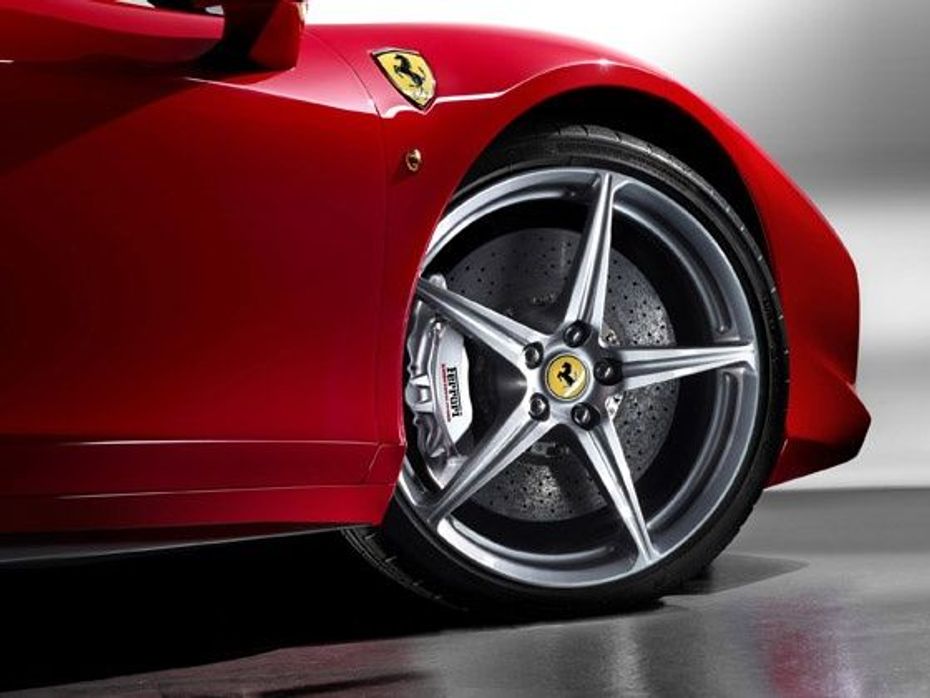
As cars went faster, and more options of metals available with manufacturers, they started experimenting with different materials until they came up with the Ceramic Disc Brakes. As cars became faster, they needed a better stopping power. Conventional Disc Brakes were not very successful as they could not handle the pressure and temperature and would bend in the process of running, thus making them unsafe.
Ceramic disc brakes not only could withstand greater temperatures, they could also handle greater mechanical stress. Ceramics were a blessing in disguise for such high powered vehicles. Reinforced with carbon fibre and ceramic, this brake could also stop faster than the cast iron brakes. Not only that, these brakes were not affected with the sudden change in temperature that may happen during a splash.
Another set of disc brakes that was very effective was using the same cast iron or aluminum alloy material but drilling holes in them. More commonly seen on bikes, perforated disc brakes cooled much faster and hence could take up more distance than any other type of disc brake. This made them comparatively less expensive than Ceramic disc brakes and they had an equally good performance, if not better.

Big, Boxy And A Plug-in Hybrid: Is This JSW Motor’s First SUV?...
All-New Hyundai Bayon Compact SUV Revealed! Sportier Compact SUV To...
India’s List Of Luxury Carmakers To Expand Soon And It’s...
"Tesla Roadster Sucks" Says Elon Musk, Find Out Why
2026 Honda Elevate Facelift Launched At Rs 11.80 Lakh! Honda Finally...
Renault Duster Hybrid Launched At Rs 16.99 Lakh! Most Powerful Hybrid...
Toyota Glanza Facelift Launched At Rs 6.99 Lakh! Premium Hatchback...
Hyundai Bayon Launched At Rs 10 Lakh! A Cup Of Vanilla Ice Cream, Yet...
Mahindra XUV 3XO ZNG Launched At Rs 9.99 Lakh: All You Need To Know!
India's largest automotive community
Hyundai Bayon
₹ 10.00 Lakh
Tesla Roadster
₹ 50.06 Lakh
Audi Q3
₹ 51.99 Lakh
Toyota Glanza
₹ 6.99 Lakh
Volvo EX90
₹ 1.26 Crore
 Hyundai Bayon Explored In Detail With 17 Images: Is It Good Value For Money?
 Jeep Announces Pickup Truck For India: Is The Gladiator Coming Soon?
 2026 Mercedes-AMG GT Electric SUV Unveiled: Powerful Performance Now In An Electrifying Package!
 Honda Elevate ZX+ Black Variant Explored: Is the Top-End Variant The Best Looking Elevate?
Mahindra Bolero Bold Edition Launched: Exclusive Accessory Pack With Bronze Accents And Dual-tone Interiors!
Honda Elevate ZX+ Black Variant Explored: Is the Top-End Variant The Best Looking Elevate?
Mahindra Bolero Bold Edition Launched: Exclusive Accessory Pack With Bronze Accents And Dual-tone Interiors!