2018 Hyundai Elite i20 Review: The 5 Big Differences
- Mar 19, 2018
- Views : 44653



 Follow us

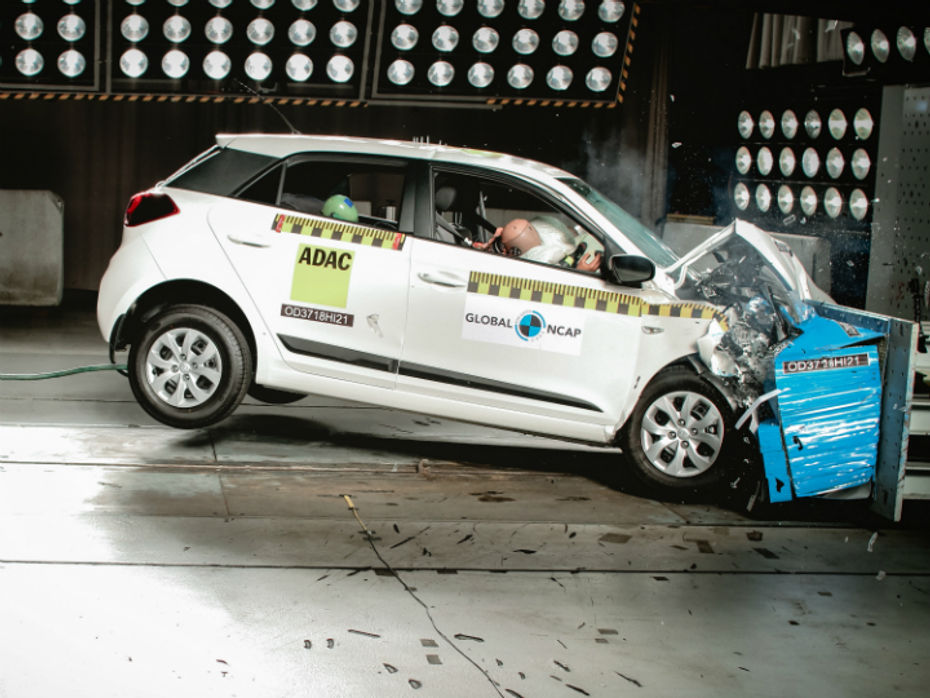
Global NCAP’s latest crash tests have revealed that the India-made, Africa-spec Hyundai i20 hatchback has scored a low 3-star overall rating. The car shares its structure and features with the Elite i20 sold in India and the crash test rating could apply to the India-spec hatchback - except the top-of-the-line Asta (O) variant - as well.
Why did the i20 score so low?
The i20’s overall structure has been marked as unstable by Global NCAP, a characteristic also seen on the recently tested Maruti Suzuki Swift.
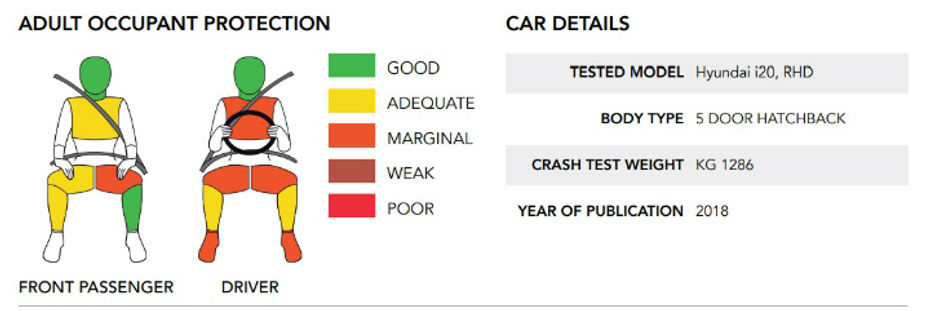
While adult occupants at the front had dual front airbags and seatbelt pretensioners, some dangerous structures behind the dashboard supported by the Tranfascia tube made upper torso and knee protection adequate at best. Surprisingly, the driver footwell has been reported to be unstable in a frontal crash at 64kmph, resulting in a poor safety for the driver’s ankle and foot. The i20 scored 60 per cent in adult occupancy safety, with an overall score of 10.15 points out of a possible maximum of 17.

The child-safety rating of the i20 was rated as under par mainly because the child seats were not anchored by ISOFIX anchors, which are not available in the car sold in African markets. This resulted in increased risks for larger children being exposed to head injuries. These shortcomings meant the i20 scored a subpar 2-star rating in child safety - scoring 37 per cent - with an overall score of 18.16 points out of a possible maximum of 49.

The Elite i20 sold in India gets a four-channel ABS with EBD, dual front airbags, pretensioners for the front seatbelts and impact-sensing door unlock as standard in India. Hence, the 3-star adult safety rating and 2-star child safety rating would apply to the India-spec hatch too.
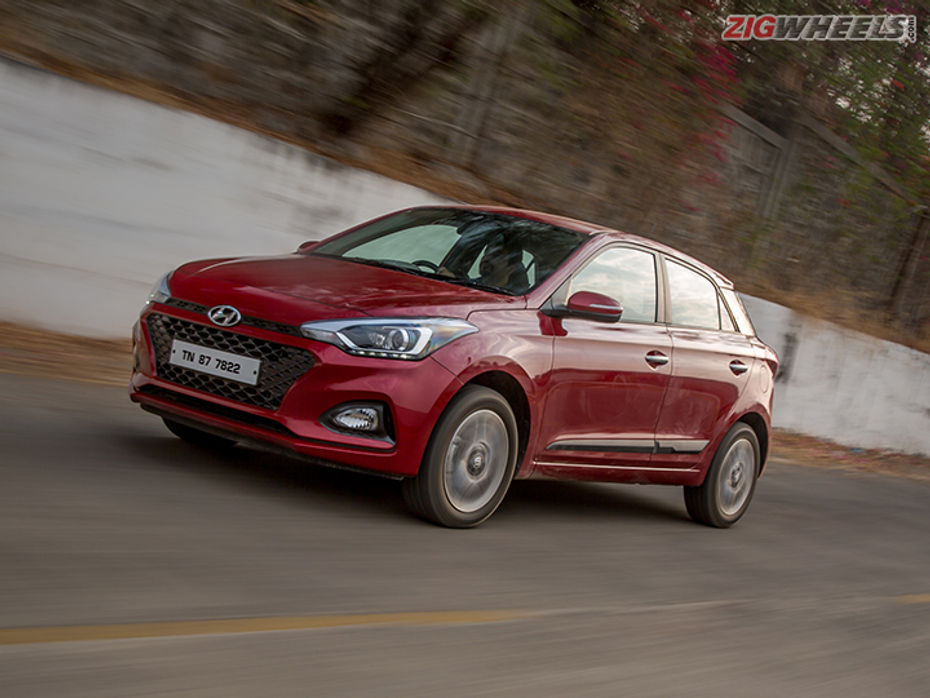
Only the top-of-the-line Asta (O) variant gets side and curtain airbags, height-adjustable front seatbelts and ISOFIX child seat anchors, all of which could potentially help it fare better in a crash. This variant is priced quite high though - the Asta (O) petrol MT is priced at Rs 7.99 lakh while the Asta (O) diesel MT is priced at Rs 9.24 lakh, ex-showroom Delhi.
Here’s how cars in this segment fare, in decreasing order of safety:
1) Volkswagen Polo (Tested 2014)
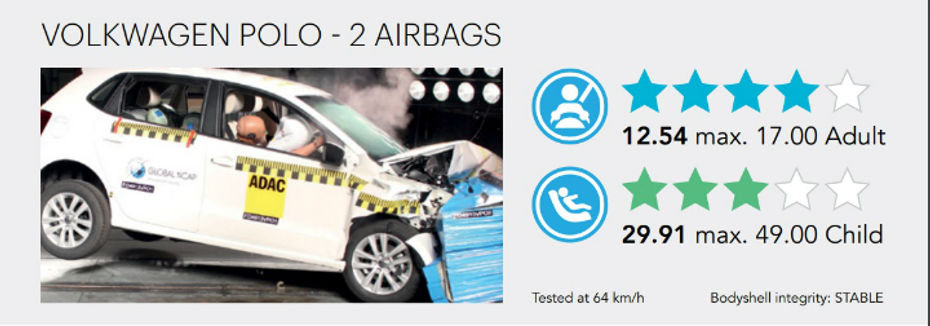
Bodyshell - Stable
Adult Safety - 4 Stars, 74 per cent score
Child Safety - 3 Stars, 61 per cent score
2) Toyota Etios Liva (Tested 2016)
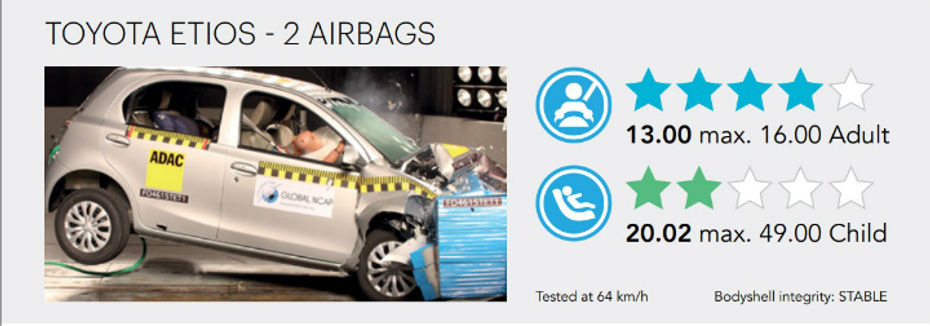
Bodyshell - Stable
Adult Safety - 4 Stars, 81 per cent score
Child Safety - 2 Stars, 41 per cent score
3) Hyundai i20 (Tested 2018)
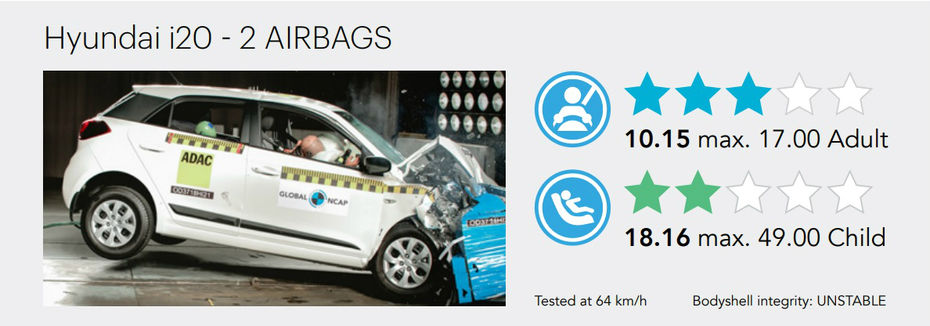
Bodyshell - Unstable
Adult Safety - 3 Stars, 60 per cent score
Child Safety - 2 Stars, 37 per cent score
4) Maruti Suzuki Swift (Tested 2018)
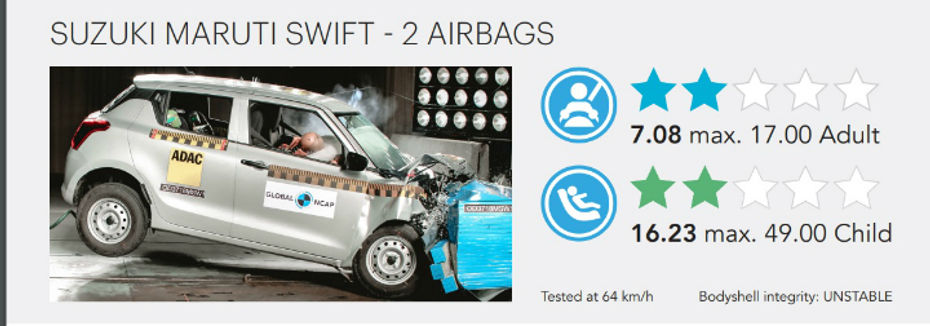
Bodyshell - Unstable
Adult Safety - 2 Stars, 42 per cent score
Child Safety - 2 Stars, 33 per cent score


2018 Hyundai Elite i20 Review: The 5 Big Differences
2018 Hyundai Elite i20 Petrol Automatic: Road Test Review
Disappointing: Maruti Suzuki Swift Scores 2 Stars In Latest Global...
Global NCAP 2018: Is India On The Right Path To Car Safety?
Hyundai Bayon Upcoming SUV Confirmed: To Rival Even Its Bigger...
Mahindra Thar Roxx vs Scorpio N: Why Character Still Wins
EXCLUSIVE: Tata Tigor To Be Replaced By Tata Aeris
2026 Toyota Hilux LAUNCHED! The Next-Gen Iconic Pickup Truck Now In...
Maruti Brezza Prices Start At Just Rs 7.40 Lakh: Find Out Full...
Mahindra Scorpio Lifestyler Unveiled: Mahindra Returns to Lifestyle...
India's largest automotive community
Mahindra Thar
₹ 10.32 Lakh
BMW i7
₹ 1.95 Crore
BMW 7 Series
₹ 1.95 Crore
BMW i5 LWB
₹ 79.60 Lakh
Maruti Suzuki Baleno
₹ 5.99 Lakh
Skoda Superb 2026
Rs. 50.00 Lakh
Skoda Slavia Facelift
Rs. 11.99 Lakh
Tata Aeris
Rs. 6.00 Lakh
Mercedes-Benz Maybach S-Class Facelift
Rs. 3.00 Crore
Honda Elevate Facelift
Rs. 11.91 Lakh
 2026 Mahindra Thar OG Launched At Rs 10.32 Lakh: Here's What's New
 Tata Launches Legend Series And Dark Edition For Sierra: Gets More Luxury And Stealth!
 MG Hector Tomahawk EV Short Review: So Comfortable!
 5 Things We Love About The MG Hector Tomahawk EV
Maruti Finally Launches AMT for Dzire, Baleno, Swift S-CNG! Now Worry Lesser In Traffic
5 Things We Love About The MG Hector Tomahawk EV
Maruti Finally Launches AMT for Dzire, Baleno, Swift S-CNG! Now Worry Lesser In Traffic