














New Car
Explore all New Cars of 2024


 Follow us


Rains bring with them the twin hazards of skidding and aquaplaning. It can be a scary situation to be caught in either of them and can spell disaster if reacted to in an instinctive manner.
A skid usually occurs when there’s a loss of traction due to hard braking on a slippery road or when you’re taking a sharp turn at high speeds. Aquaplaning, on the other hand, occurs when water builds up in front of your car’s tyres with such pressure that your car loses contact with the road, rises up and slides, or rather floats, over a thin layer of water between the tyres and the surface. It can occur at any speeds – even 50kph – though at higher speeds, the danger rises exponentially. During aquaplaning, you may even lose steering ability briefly as the tyres are unable to draw any traction from the road.
While skidding and aquaplaning are not inevitable, here are some precautions to prevent them:
1. Tyre Check: Bald or worn-out tyres are more susceptible to hydroplaning. Ensure they have sufficient tread depth. You can check the tread depth by taking this simple one rupee coin test. Also, keep tyres inflated with the correct air pressure.
2. Go Slow: The faster you go, the more difficult it gets for tyres to expel water from under them. When the roads are wet, drive slowly and carefully, especially on curves.
3. Water Alert: Avoid driving through puddles and waterlogged roads and stay in the middle lane as water tends to pool in the outer lanes.
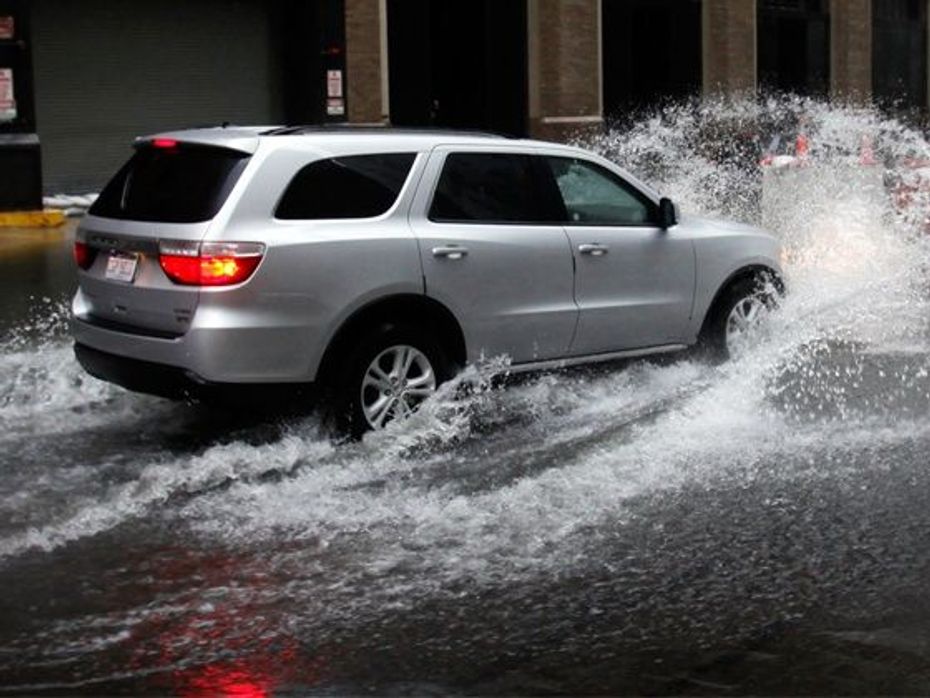
Alright, so you may have followed all the precautions, but what must you do in case your car still skids or aquaplanes?
1. While your instinct would be to slam the brakes, stay calm and refrain from hard braking. If your car has antilock braking system or ABS, then brake normally. Pump the brakes with gentle thrusts and steer the car into the direction you want it to go.
2. Do not accelerate either. Gently lift your foot off the gas pedal to slow down the car until it regains traction.
3. During aquaplaning, your car might start swaying sideways over the water. Try steering the car in the direction you want it to go (though it’s possible you may not have any steering control at all) until your tyres reconnect with the surface.
India's largest automotive community