

New Car
Explore all New Cars of 2024


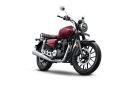
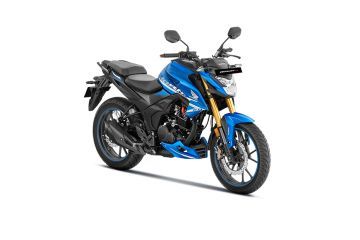
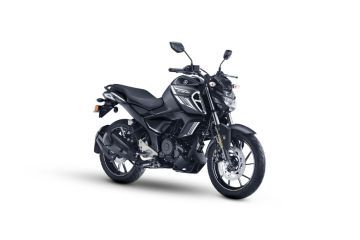
| Key Highlights | Honda Hornet 2.0 STD | Yamaha FZS-FI V3 Dark Knight |
|---|---|---|
| Engine Type | 4 Stroke, SI Engine | Air cooled, 4-stroke, SOHC, 2-valve |
| Max Power | 17.26 PS @ 8500 rpm | 12.4 PS @ 7250 rpm |
| Basic Info | Honda Hornet 2.0 STD | Yamaha FZS-FI V3 Dark Knight |
|---|---|---|
| Rating |
310 reviews
|
902 reviews
|
| Brand Name | Honda | Yamaha |
| Ex-Showroom Price | Rs. 1.39 Lakh View On Road Price | Rs. 1.21 Lakh View On Road Price |
| Engine Type | 4 Stroke, SI Engine | Air cooled, 4-stroke, SOHC, 2-valve |
| Max Power | 17.26 PS @ 8500 rpm | 12.4 PS @ 7250 rpm |
| Fuel Type | Petrol | Petrol |
| Colors | ||
| Brakes Front | Disc | Disc |
| Brakes Rear | Disc | Disc |
| Wheel Size | Front :-431.8 mm,Rear :-431.8 mm | Front :-431.8 mm,Rear :-431.8 mm |
| Wheels Type (Pressed Steel/ Alloy) | Alloy | Alloy |
| ABS | Single Channel | Single Channel |
| Starting | Self Start Only | Self Start Only |
| Speedometer | Digital | Digital |
| EMI |
Rs. 4,004
@
9.45% (36 months)
|
Rs. 3,506
@
9.45% (36 months)
|
| Insurance | Rs. 11,702 Hornet 2.0 Insurance | Rs. 8,760 FZS-FI V3 Insurance |
| Brochure |
Download
Brochure
|
Download
Brochure
|
Engine |
|
|||||||||||||||||||||||||||||||||||||||||||||
|---|---|---|---|---|---|---|---|---|---|---|---|---|---|---|---|---|---|---|---|---|---|---|---|---|---|---|---|---|---|---|---|---|---|---|---|---|---|---|---|---|---|---|---|---|---|---|
Brakes |
|
|||||||||||||||||||||||||||||||||||||||||||||
Performance |
|
|||||||||||||||||||||||||||||||||||||||||||||
Tyres |
|
|||||||||||||||||||||||||||||||||||||||||||||
Dimensions |
|
|||||||||||||||||||||||||||||||||||||||||||||
Electricals |
|
|||||||||||||||||||||||||||||||||||||||||||||
Features |
|

 TVS Apache RTR 160 4V
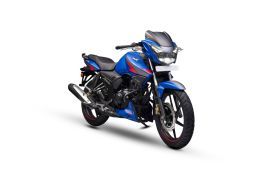 TVS Apache RTR 160
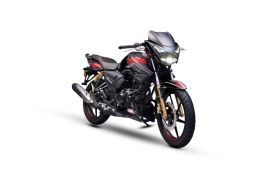 TVS Apache RTR 180
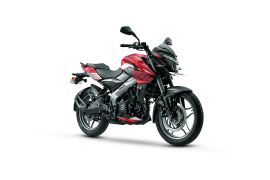 Bajaj Pulsar NS200
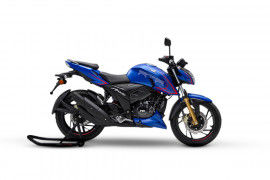 TVS Apache RTR 200 4V
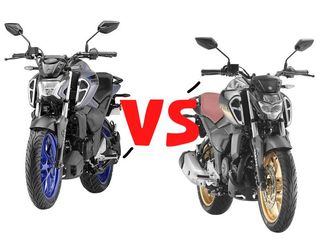
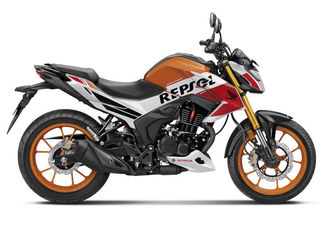
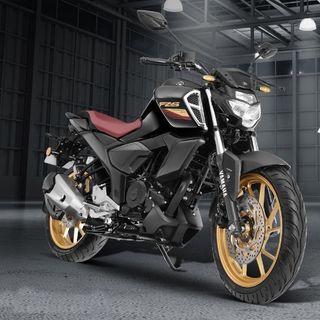
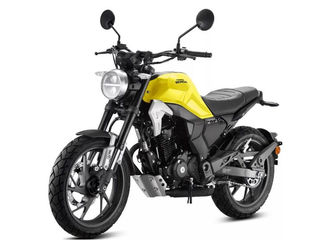
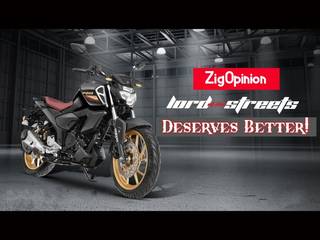
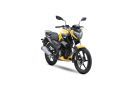
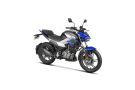
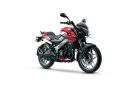
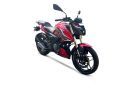
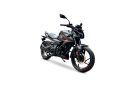
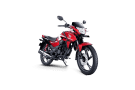
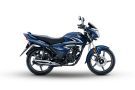
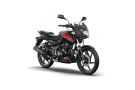
The Yamaha FZS-FI V3 is cheaper than Honda Hornet 2.0 by Rs. 17,300.
For the STD version, 184.40 cc Petrol engine of Hornet 2.0 produces 17.26 PS @ 8500 rpm of power and 15.9 Nm @ 6000 rpm of torque. Whereas for the Dark Knight version, 149 cc Petrol engine of FZS-FI V3 produces 12.4 PS @ 7250 rpm of power and 13.3 Nm @ 5500 rpm of torque
Good machine and good meilage very comfort but back mono suspension very hard.Seat comfort not good all overall not a good.
Hornet 160 r is the best among its segment and still it gives a mileage of 46+ km in city in highway if we go within160 kmph it would give a mileage of 50+ and it's very sporty look and good all over but the gears are little1bit tight for shifting when the chain is dirty
Mostly recommend this bike for better ride best mileage and best feeling like riders
Mostly recommend this bike for better ride best mileage and best feeling like riders
Best bike for mileage.Kept in perfect riding condition.I use it to tour as well.
Good experience i am used this bike last 8 year i am very happy
Very good bike my father like this bike i have by this vike
Parts breaksoo, Tyer, Horn, Front light, Back light
Experience is good.Handling is very smooth, Tyre greep is also better than 160 cc bikes.
The bike is very value for money, Good handling, Reliable engine and electronics, Excellence mileage, Good riding posture for daily rides and commuting, And good mid and low acceleration in which mostly driver drive, Pull aggressively till 90 kmph, Which i think is good considering the price but the only problem is the tank panel and it's finish, If that can be sorted this will be a b****r bike.
Bike quality of riding and balance of bike is awesome.Once i was free hand and bike go down but balance.I love this bike.
Nice bike but not for family because if your mother has back problems or your are four members in your family then your money is waste to purchase a bike
The Yamaha FZS-FI V3 is a solid choice for riders seeking a balanced blend of style, performance, and affordability. With its sleek design and sharp lines, it catches the eye on the road. The engine delivers smooth power, also offering decent performance on highways. You should expect around 45 kmpl in the city and over 50 kmpl on highways. However, the seat could be more comfortable for long rides. Overall, it's a reliable bike that offers good value for money in its segment.
Embarking on adventures: my yamaha fzs v3 149cc journey the yamaha fzs v3 149cc is more than just a bike; it's a thrilling journey waiting to be embarked upon.From the moment i first laid eyes on its sleek design to every ride i've taken, It has exceeded all expectations.With its powerful engine, Agile handling, And comfortable ride, It's the perfect companion for any adventure.Whether navigating city streets or cruising along winding roads, The yamaha fzs v3 never fails to deliver an exhilarating experience.Its reliability and durability ensure that every ride is not just a journey, But an unforgettable memory in the making.
As a symbol urban high-class, which comprehends divinity with practicality, the Yamaha FZS-FI V3 verifies its case. The combination of a 149cc refined engine typifies performance and fuel efficiency by offering more value per dollar. The inline skate design features classic allure with eye-catching color accents specially to brighten up the roads in urban areas. Navigating the FZS-FI V3 through each curve would feels like a joyful ride with the pointed corner flashing with precision. If you are looking for that ‘’street skill’’ feel and functionality the FZS-FI V3 is a show of sophistication on these streets.
Every ride on the Yamaha FZS- FI V3 is a incarnation of Power and refinement, making bounding atop it feel like entering a world of Looks and supremacy. It actually rules the Highways thanks to its powerful machine and lean, athletic Design. Its ultramodern features and superb workmanship extend an instigative and comfortable ride, while its smooth Performance and sharp running make maneuvering through city business a own experience. It's further than exclusively a bike; it represents Yamaha's fidelity to quality and invention, making each ride a fashionable statement on the road.
The Yamaha FZS-FI V3, which offers a balance of power and style in every direction, is my top choice to embrace style and performance. My bike is a work of art, with tough looks and interesting performance. Thanks to the excellent engine and quick handling, it’s a pleasant and confident ride on the city streets and on the highways. Every curve in the car should attract attention, and I love how useful features like the aggressive graphics, sporty look and LED headlights assure a strong presence on the road and comfortable seats for touring is more interesting and beautiful.
The Yamaha FZS-FI V3 is the combination of exciting ride and cool looks. It's 149cc engine offers a smooth ride with commendable fuel efficiency. The bike's handling is very sensitive so it can be effectively used both in the city for the daily commute and for the ride on the main street. The bike is fitted with single-channel ABS for superb safety, while on the other hand, it manifests with its muscular look and sporty look. It becomes a faithful companion that gives thrill of life without sacrificing the comfort level.