3 New Major Design Details Mahindra XUV 3XO Will Pack Over...
- Apr 12, 2024
- Views : 9826


 Follow us

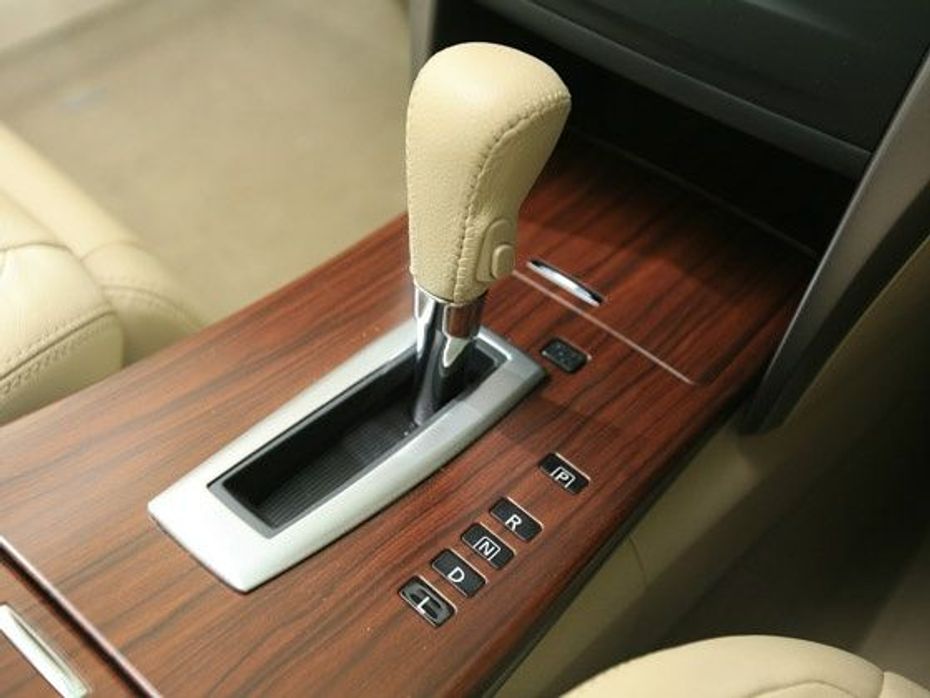
Shifting gears at the right RPM is surely no less than having the precision a Formula One driver has. But, in practical terms, it is not possible for an everyday driver to do the same. So, what if there was a technology that adjusted the gear ratio of the transmission according to the driver’s gear and the speed at which he/she is driving. This would not only avoid high wear and tear of the engine, clutch plates etc. it would also bring up the efficiency of the engine and increase engine life expectancy. Continuously Variable Transmission or CVT is the idea behind keeping engines better for a longer time. Primarily found in automatic transmissions, a CVT plays the role of a smooth gear transition even while the driver has the control of the gears in a paddle shift or tip-tronic mode, the smooth transition is taken care by the CVT. Naturally, when the gear transition is smooth, it also reduces knocking in the engine.
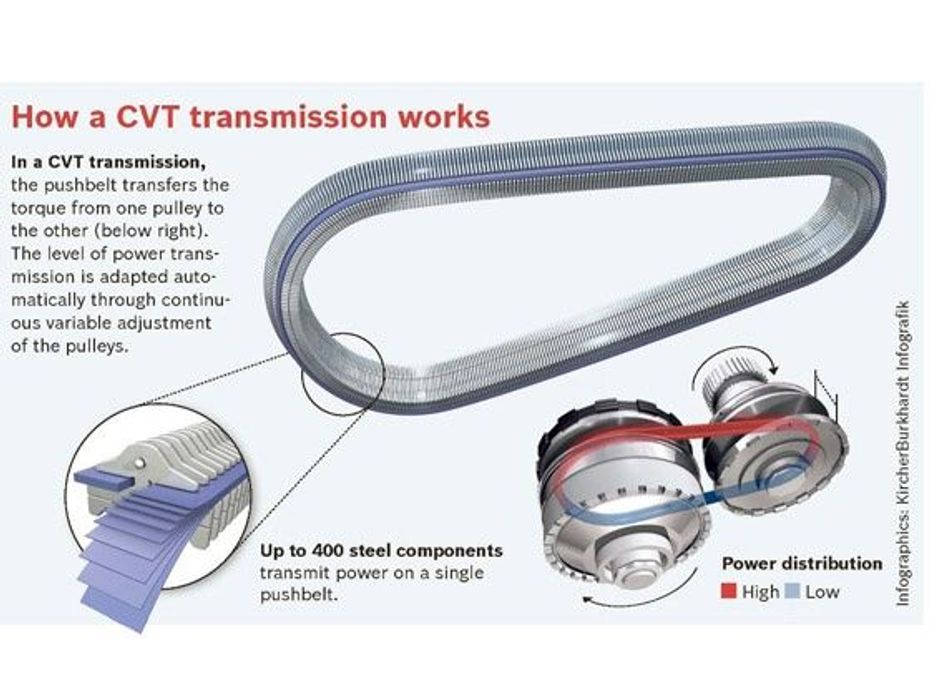
Unlike traditional automatic transmission which have a certain levels at which the gears would shift which locking wheels typically which are in a manual, a CVT has a pully based system in which two pulleys are connected to each other with a chain or a metal pulley. One pulley is connected to the engine and the other, to the drive wheels. This makes the engine decide on its own as to which gear to run the car in. The basic refernce in CVT is given as low gear and high gear since there is no specified ratio which a CVT follows.
The low-gear high-gear theory comes from the drive pulley having a variable diameter which visually looks like tow inverted cones facing each other. The variable diameter is made in such a way that it adjusts according to the input given to the engine by the driver. When the car is in idle or slow position, the distance between the cones is maximum and the belt takes more time to complete the cycle. As the speed is increased, the distance between the cones also decreases and the transition from a low speed to higher speed was smoother. The distance between the cones becomes the least, with space for the movement of the belt, when the engine is at its lowest torque. Mostly, CVTs were earlier used in tractors, snowmobiles etc. The main reliability factor came at the use of rubber belts.
As technology improved, rubber belts were replaced with metal bands with teeths in them. They could not only handle high values of torque, but, also had a higher reliablilty factor.
3 New Major Design Details Mahindra XUV 3XO Will Pack Over...
Tata Curvv: A Much Clearer Look At Its Interior Ahead Of Its Unveiling
Citroen Basalt vs Tata Curvv: Exterior Design Compared
10 New Features Expected In The Upcoming 2024 Mahindra XUV 3XO...
The Fronx Has Been Rebadged! Meet The Toyota Urban Cruiser Taisor,...
Here’s How Fuel Efficient The 2024 Maruti Suzuki Swift Sold In...
MG Hector And Hector Plus Blackstorm Edition Launched At Rs 21.25...
Mahindra XUV300 Facelift Teased, Gets A New Name
Citroen Basalt Vision, Its SUV Coupe For India, Revealed
India's largest automotive community