Don't Want To Buy The VW Polo? Lease It Instead!
- Jun 26, 2019
- Views : 4580


 Follow us

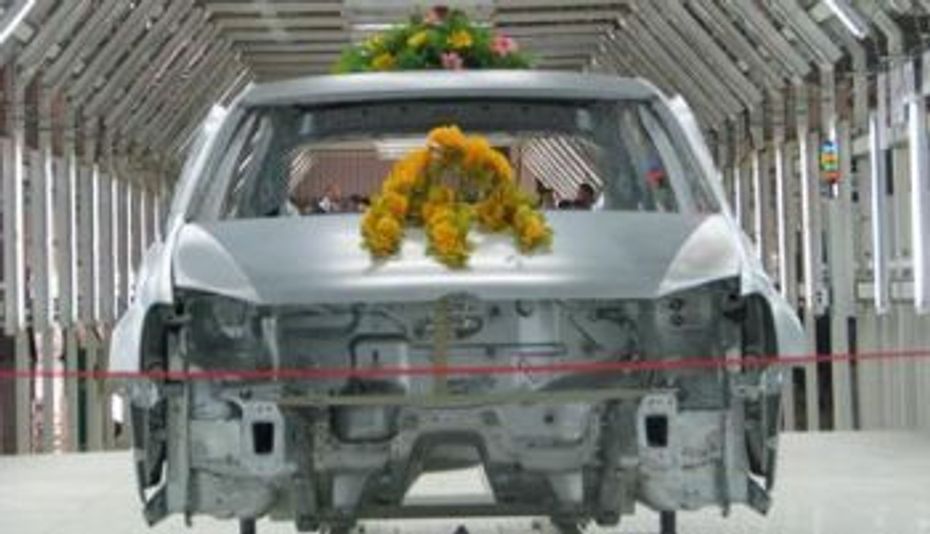
Spread across 575 acres, the Volkswagen Chakan plant was inaugurated on 31st March, 2009. The state-of-the-art facility was constructed in a span of seventeen months with the total financial commitment of Rs 3,800 crore by Volkswagen India Pvt. Ltd. It currently hosts 720 workers under its roof. With 35% automated manufacturing, it is still not entirely comparable to the Volkswagen plants in Germany which are 98% automated but the Indian facility is technologically well-armed to produce 1,10,000 cars annually.
The plant began with its pre-series production of the new Polo yesterday, which will be ready for launch in India by 2010. The first finished body of the Polo was rolled to the paint shop by the hands of Dr. Philipp Rosler, Minister of Economics, Labour and Transportation of the German Federal State of Lower Saxony. This was a pre-run to the official production of the new Polo scheduled to commence at the Chakan plant by end of 2009. The new Polo will be a premium hatchback offering from Volkswagen and it will be specifically tailored for the Indian market. The car will be launched with three engine options namely - two petrol variants and one diesel variant. All the Polo models sold in India will come equipped with air-condition unlike the European market where the base versions of the Polo do not feature air-conditioning.
The ground clearance will also be increased on the models sold in India and the final model of the Polo to be sold in India will be unveiled at the Auto Expo in New Delhi, next year. The car will be available in silver, white, red and blue colours and the company officials are also contemplating on introducing an orange paint scheme for India to go with the sporty image of the Polo. Quality control is one of the key areas that the company is focusing on and all the quality checks will be strictly undertaken at the manufacturing level before the Polo hits series production at the plant. The idea behind this approach is to make sure that the problems are not high-lighted at the cost of the end-user.

Speaking to the media, Jorg Muller, President and Managing Director of Volkswagen Group India said, "We will begin with 50% localisation of the new Polo in India and then gradually increase the local content to 80% over the period of next two years. The plant has begun its operations a year ahead of its schedule and we are well on our way to fulfilling our commitment towards to the Indian market." Sales for the Polo in India will start sometime around June 2010 while the series production of the Polo will commence by the end of this year at the Chakan plant.
Immediate on cards is the production of the Skoda Fabia which will begin from next month onwards at the plant. By this year-end the company will also hire 280 more employees taking the total number of workers to 1,000. By the end of 2010, this number will be raised to 2,500 employees at the Chakan plant. Muller also said that the company is open to setting up a vendor park inside the premises of the Chakan plant and is currently in talks with a couple of local as well as international vendors for the same reason.
Don't Want To Buy The VW Polo? Lease It Instead!
Volkswagen’s Polo, Vento Facelift Revealed In Spy Pics
Volkswagen Launches Polo, Ameo And Vento Cup Edition
Volkswagen Polo, Vento & Ameo Cup Edition Teased; Unveil Tomorrow...
2019 Polo Facelift Caught Testing Ahead Of Its Launch
Volkswagen Polo, Ameo And Vento Sport Edition Launched
Volkswagen Polo Pace And Vento Sport Launched
Volkswagen Polo Gets A Smaller 1.0-Litre Engine
Volkswagen Polo GTI Showcased At Frankfurt
India's largest automotive community